
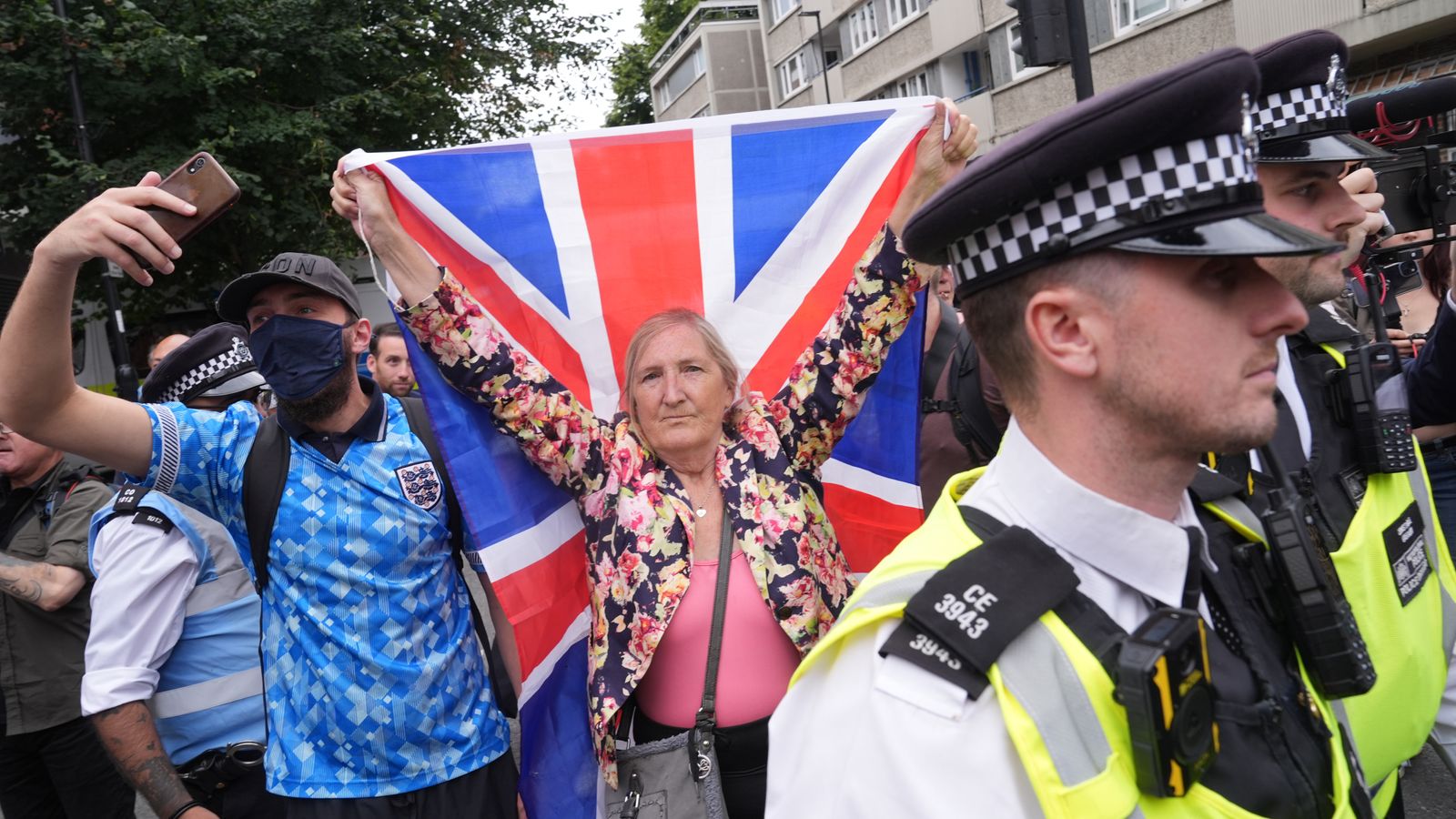
Masked Protesters Target Migrant Hotels in Dramatic UK Confrontation

In recent months, debates surrounding migration, housing, public services and community tensions have become some of the most discussed issues in the United Kingdom. Across the country, questions about how to manage migration pressures have created strong opinions, political disagreements and, in some cases, public demonstrations.

One incident that attracted significant attention involved a large group of masked protesters gathering near migrant accommodation facilities. The confrontation quickly became a symbol of the wider tensions surrounding immigration policy and the challenges faced by communities trying to navigate a rapidly changing social landscape.

The scene was dramatic. A large crowd arrived near hotels being used to house migrants, creating a tense atmosphere that drew the attention of residents, authorities and media observers. The presence of masked individuals added to concerns about security and public order, while the event sparked renewed discussions about the balance between the right to protest and the responsibility to maintain safety.
The incident highlighted how deeply divided opinions have become regarding migration in Britain. For some people, the use of hotels as temporary accommodation for migrants represents a sign that the current system is under pressure. They argue that local communities should have more influence over decisions affecting housing availability, public resources and infrastructure.
Others emphasize that migrants, regardless of their circumstances, should be treated with dignity and that public debate must avoid creating hostility toward vulnerable groups. They argue that protests targeting accommodation sites can increase fear and tension among people who are already facing uncertainty.
At the center of the debate is a much larger question: how can a country manage migration effectively while protecting social stability and respecting human rights?
Rising pressure on Britain’s migration system
The United Kingdom has experienced significant political and public debate over migration levels for many years. Governments have faced pressure from different sides: some citizens demand stricter controls and faster action to reduce arrivals, while others call for more humanitarian approaches and better support systems.
The use of hotels to provide temporary accommodation has become one of the most controversial aspects of the discussion. Supporters of the policy argue that emergency housing is necessary when existing facilities cannot handle demand. They say that governments must provide basic shelter while asylum claims are processed.
Critics, however, argue that using hotels for extended periods can place financial pressure on taxpayers and create difficulties for communities where accommodation is located. Some residents worry about the impact on local services, schools and housing availability.
These disagreements have contributed to growing frustration, particularly in areas where communities feel they have not been adequately consulted.
The impact on local communities
For people living near migrant accommodation sites, the situation can be complicated. Some residents express concerns about changes in their neighborhoods, while others say they want to support people who have experienced difficult journeys.
Communities often contain a wide range of opinions.
Some residents believe their concerns about resources and infrastructure are legitimate and should be discussed openly.
Others worry that anger surrounding migration can sometimes lead to unfair generalizations or hostility toward individuals who have little control over government policies.
The challenge for local authorities is finding ways to address practical concerns while preventing division from escalating.
Communication, transparency and community involvement are often seen as important factors in reducing tensions. When people feel ignored, frustration can grow. When communities are included in discussions, there may be more opportunities for understanding different perspectives.
The role of protests in democratic societies
Public demonstrations are a long-standing part of democratic societies. Citizens have the right to express disagreement, criticize government decisions and demand change.
However, protests also raise questions about responsibility and public safety.
Authorities must balance several priorities: protecting freedom of expression, preventing violence and ensuring that residents and workers are able to go about their daily lives safely.
The appearance of masked protesters can create additional concerns because anonymity may make it more difficult to identify individuals involved in unlawful behavior. At the same time, not every person wearing a mask during a demonstration necessarily has harmful intentions.
Understanding the difference between peaceful protest and criminal activity remains an important part of maintaining public order.
Political reactions and national debate
Events like this often become part of broader political arguments. Different parties and public figures may interpret the same incident in very different ways depending on their views on immigration and national policy.
Some politicians argue that the government must take stronger action to reduce pressure on the asylum system. They point to concerns about costs, housing shortages and public confidence.
Others argue that political debate must remain focused on solutions rather than anger. They emphasize the importance of protecting social cohesion and avoiding language that could increase tensions between different groups.
The challenge for political leaders is addressing public concerns while avoiding further polarization.
The human side of the issue
Behind the political arguments are real people affected by these decisions.
Migrants staying in temporary accommodation often include individuals waiting for asylum decisions or attempting to rebuild their lives after difficult experiences. Their situations can involve uncertainty, separation from family members and concerns about the future.
At the same time, local residents also have their own concerns about housing, public services and community change.
Recognizing both perspectives is essential for a balanced discussion.
Complex issues rarely have simple solutions. Migration policy involves legal systems, economic factors, humanitarian responsibilities and the needs of communities.
The importance of accurate information
During moments of public tension, information spreads quickly through social media and online platforms. Images and videos from protests can attract widespread attention, but they may not always provide the complete context.
Accurate reporting is important because misunderstandings can increase fear and conflict.
Responsible discussions require separating confirmed facts from rumors and considering multiple perspectives before reaching conclusions.
This is especially important when dealing with sensitive issues involving communities, migration and public safety.
Searching for long-term solutions
The debate over migration in Britain is unlikely to disappear soon. Finding long-term solutions requires addressing several interconnected challenges.
These may include improving the speed of asylum processing, ensuring effective border management, supporting local communities and creating clear policies that the public understands.
A sustainable approach requires cooperation between national government, local authorities, community organizations and citizens.
Short-term reactions may address immediate problems, but lasting solutions require careful planning and open discussion.
A moment that reflects a wider conversation
The confrontation involving masked protesters near migrant hotels represents more than a single event. It reflects broader questions about identity, resources, responsibility and the future direction of British society.
Strong emotions are understandable when communities feel uncertain about rapid changes. However, the way societies respond to disagreement can shape the future.
A democratic society depends on the ability to debate difficult issues while maintaining respect for different people and viewpoints.
The challenge is not simply deciding whether migration is positive or negative. The challenge is creating systems that are fair, effective and capable of addressing legitimate concerns while protecting human dignity.
Conclusion
The incident involving hundreds of masked protesters targeting migrant accommodation has become another example of the growing tensions surrounding migration in the United Kingdom.
It has raised important questions about public confidence, community involvement, government responsibility and the limits of protest.
While people may hold very different opinions about immigration policy, the need for constructive dialogue remains essential.
The future of migration debates in Britain will depend not only on political decisions but also on how communities, leaders and citizens choose to respond to disagreement.
Finding common ground will not be easy, but it remains necessary for building a society that is both secure and respectful.