
Chris Philp Reveals What French Police Told Him on Channel Beach
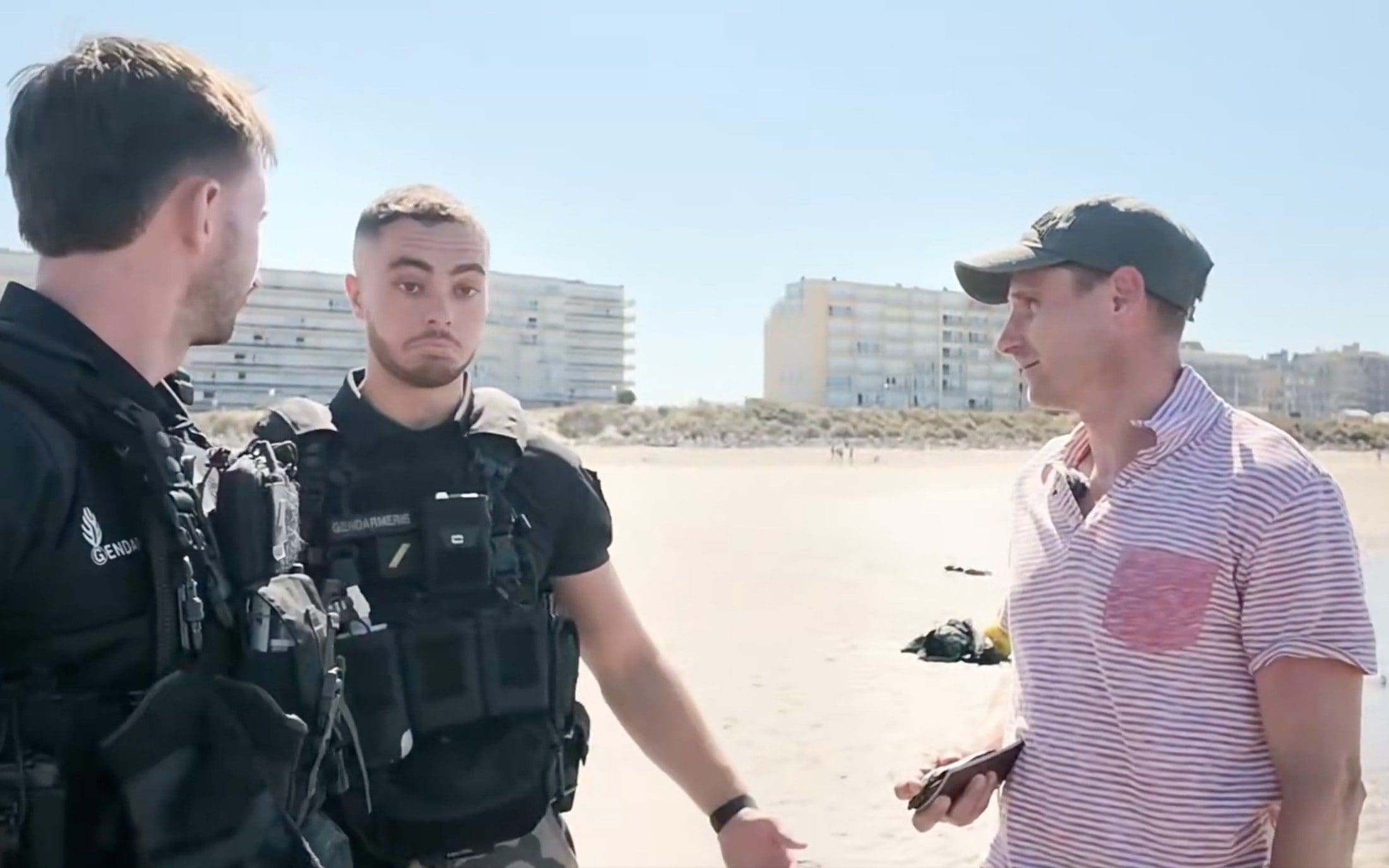
Chris Philp, the UK’s Shadow Home Secretary, has claimed that French police privately admitted they had been instructed not to intervene directly as groups of migrants launched small boats across the English Channel. His comments came after he spent time on beaches along France’s northern coast observing migrant crossings and speaking with French officers.
According to Philp, one French officer told him, “Our order is to let them go.” He said this remark reflected what he described as a policy of limited intervention, with officers remaining on the beach as migrants pushed overloaded inflatable boats into the sea. Philp argued that the scene demonstrated a significant gap between the commitments made by the French government and what was actually happening on the ground.
Philp described witnessing several attempted crossings in which groups of migrants rushed toward waiting dinghies while around a dozen French gendarmes observed from the shoreline. He said officers did not enter the shallow water to stop the departures, even when violence broke out among migrants competing for places on the boats. When journalists questioned the officers about their lack of action, Philp said one policeman replied that entering the water would be “too dangerous.”
The Conservative politician argued that the French response was inconsistent with the substantial financial support Britain has provided to France to combat illegal migration. The UK has committed significant funding to strengthen French border enforcement, surveillance technology, and policing operations aimed at disrupting people-smuggling networks. Philp claimed that taxpayers would expect far more active enforcement in return for that investment.
His visit to France also attracted attention because of a separate incident at sea. While being interviewed aboard a fishing vessel in the English Channel, a nearby French naval vessel fired 17 shots from a handgun into the water. Philp said there had been no warning of any live-fire exercise and initially believed the shots were intended as intimidation. He later said French officials informed him that the gunfire formed part of a routine training exercise, but he rejected that explanation as “not credible,” insisting the timing and proximity of the firing raised serious questions.
French military authorities strongly denied Philp’s interpretation. They stated that the firing was a standard small-arms training exercise conducted in accordance with international safety procedures. Officials said the exercise had nothing to do with Philp, the BBC crew accompanying him, or the nearby fishing boat, adding that the vessel was outside the firing area and that all required safety measures had been observed. Naval experts interviewed by British media also suggested that routine weapons training at sea is common and said there was no clear evidence the shots were intended to intimidate the British politician.
Despite these reassurances, Philp maintained that the incident highlighted broader concerns about France’s approach to Channel security. He argued that French authorities appeared more willing to conduct military exercises than to prevent people smugglers from launching boats carrying migrants toward Britain. He said he intended to raise the matter with the French ambassador and called for tougher action against criminal smuggling gangs.
The British government, however, has continued to defend its cooperation with France. Officials say joint operations have prevented tens of thousands of attempted crossings and that new agreements tie future British funding to measurable enforcement results. They acknowledge that more work remains to be done but argue that cross-border cooperation is producing progress, even if difficult weather conditions and organised criminal networks continue to create challenges.
The episode has become part of the wider political debate over illegal migration across the English Channel. Supporters of Philp argue that his observations reveal serious weaknesses in French enforcement and justify calls for tougher policies. Critics, meanwhile, say isolated comments from individual officers and disputed incidents at sea should not be treated as proof of official French policy. French authorities continue to insist that their forces act within the law while balancing humanitarian responsibilities, operational safety, and international maritime obligations.