
Labour Promises Bigger Pensions – But Experts Say One Key Question Still Needs an Answer

Pensions have long been one of the most politically sensitive issues in Britain. With millions of retirees depending on the state pension as a significant source of income, even modest policy changes can have far-reaching consequences. It is therefore unsurprising that political parties frequently promise stronger financial security for pensioners, particularly during periods of economic uncertainty and rising living costs.
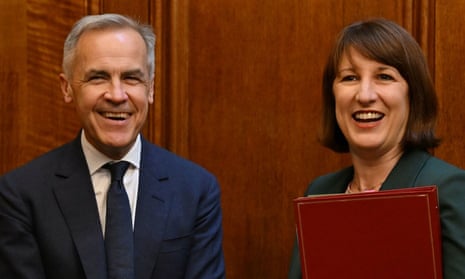
Recent debate surrounding Labour’s approach to pensions has once again placed retirement policy firmly in the spotlight. Supporters argue that the party is committed to protecting older people and ensuring pensioners share in future economic prosperity. Critics, however, contend that the biggest challenge is not the ambition of the promises but the practical question of how they would be funded over the long term.
That debate highlights one of the most difficult realities facing any government.
Increasing pension payments is generally popular.
Paying for those increases is considerably more complicated.
Britain’s ageing population has steadily increased pressure on public finances. Improvements in healthcare mean people are living longer than previous generations, creating welcome social progress but also increasing the long-term cost of pensions, healthcare, and social care. At the same time, economic growth has often struggled to keep pace with rising public spending demands.
These demographic trends mean that every government, regardless of political party, faces difficult choices.
Should taxes rise?
Should borrowing increase?
Should spending be reduced elsewhere?
Or should governments attempt to stimulate stronger economic growth to generate additional revenue?
There are no simple answers.
Labour has consistently argued that protecting pensioners remains a central priority. Many supporters believe that older citizens who have contributed through decades of work deserve financial security in retirement. Rising household bills, inflation, and pressures on fixed incomes have strengthened calls for policies that prevent pensioners from falling behind the wider economy.
Those arguments resonate with many voters.
Retirement should provide stability rather than financial anxiety.
However, economists frequently point out that pension policy cannot be considered in isolation.
Every increase in public expenditure has consequences elsewhere in the budget.
This is where the central criticism often emerges.
The key question is sustainability.
A policy may be desirable.
It may even be affordable today.
But can it remain affordable over the next twenty or thirty years?
That question becomes increasingly important as the ratio of working-age taxpayers to retired citizens gradually changes.
Experts from across the political spectrum often agree on one point: demographic pressures are becoming more significant.
Where they disagree is how governments should respond.
Some argue that maintaining or increasing pension support is essential to protect living standards and reduce poverty among older people. Others suggest that reforms may eventually be required to ensure the system remains financially sustainable for future generations.
Possible options discussed by policy specialists include encouraging greater private pension saving, increasing labour market participation among older workers who wish to remain employed, reviewing retirement ages in line with life expectancy, or pursuing broader economic reforms designed to increase productivity and tax revenues.
Each approach has advantages.
Each also carries political risks.
Governments therefore tend to proceed cautiously.
Public confidence plays an enormous role in pension policy.
Unlike many other areas of government spending, pensions involve long-term planning by individuals and families. Workers often make financial decisions decades before retirement. Frequent or unpredictable policy changes can create uncertainty, making long-term financial planning more difficult.
For this reason, stability itself has value.
Political parties therefore seek to reassure voters that pension promises are both reliable and sustainable.
The debate surrounding Labour’s proposals also reflects broader disagreements about the role of the state.
Supporters of more generous public pensions argue that retirement security should not depend primarily upon private wealth or investment performance. They believe the state has an important responsibility to provide a dependable income that protects older citizens from poverty.
Others emphasise the importance of balancing support for pensioners with fairness between generations.
Working-age taxpayers also face rising housing costs, childcare expenses, student debt, and increasing tax burdens.
Any expansion of pension spending must therefore be considered alongside competing priorities across education, healthcare, infrastructure, defence, and public services.
This creates a complex political balancing act.
Governments must support current pensioners while ensuring younger generations do not face disproportionate financial pressures.
Achieving both objectives simultaneously is challenging.
Economic growth frequently becomes the deciding factor.
If the economy expands strongly, governments generally enjoy greater fiscal flexibility.
Higher employment, stronger productivity, and increased business investment generate additional tax revenues without necessarily increasing tax rates.
Conversely, periods of slow growth make every spending commitment more difficult to finance.
This explains why pension debates often become intertwined with discussions about taxation, productivity, immigration, industrial strategy, and public borrowing.
Everything is connected.
A larger pension promise cannot be evaluated independently from the wider economic environment.
That is why many economists caution against focusing solely on headline announcements.
The details matter.
How quickly would increases be introduced?
Which pensioners would benefit most?
Would additional support be universal or targeted?
How would long-term costs evolve?
Would offsetting savings be identified elsewhere?
These technical questions often determine whether ambitious political commitments become sustainable public policy.
For voters, the challenge is distinguishing between political aspiration and detailed implementation.
Campaign promises naturally emphasise objectives rather than administrative complexity.
Opposition parties highlight ambitions.
Governments must ultimately explain budgets.
Both perspectives play an important role within democratic debate.
It is entirely reasonable for political parties to argue that pensioners deserve stronger financial protection.
It is equally reasonable for economists and fiscal experts to ask how those commitments would be financed over time.
Neither position excludes the other.
Indeed, responsible policymaking requires both ambition and realism.
The future of Britain’s pension system will likely remain one of the defining political issues of the coming decades.
An ageing population, changing labour markets, economic uncertainty, and evolving public expectations ensure that pension reform will continue to generate intense discussion regardless of which party forms the government.
Ultimately, the success of any pension policy will depend not simply upon the generosity of the promise but upon its durability. Pensioners need confidence that commitments made today will remain affordable tomorrow. Younger workers need confidence that the system they help finance will still exist when they eventually retire.
That balance—between generosity, fairness, and long-term sustainability—is likely to remain at the heart of Britain’s pension debate for many years to come.