

Farage’s Reform Issues Warning to Andy Burnham: “Take Us On and We’ll Storm It!”
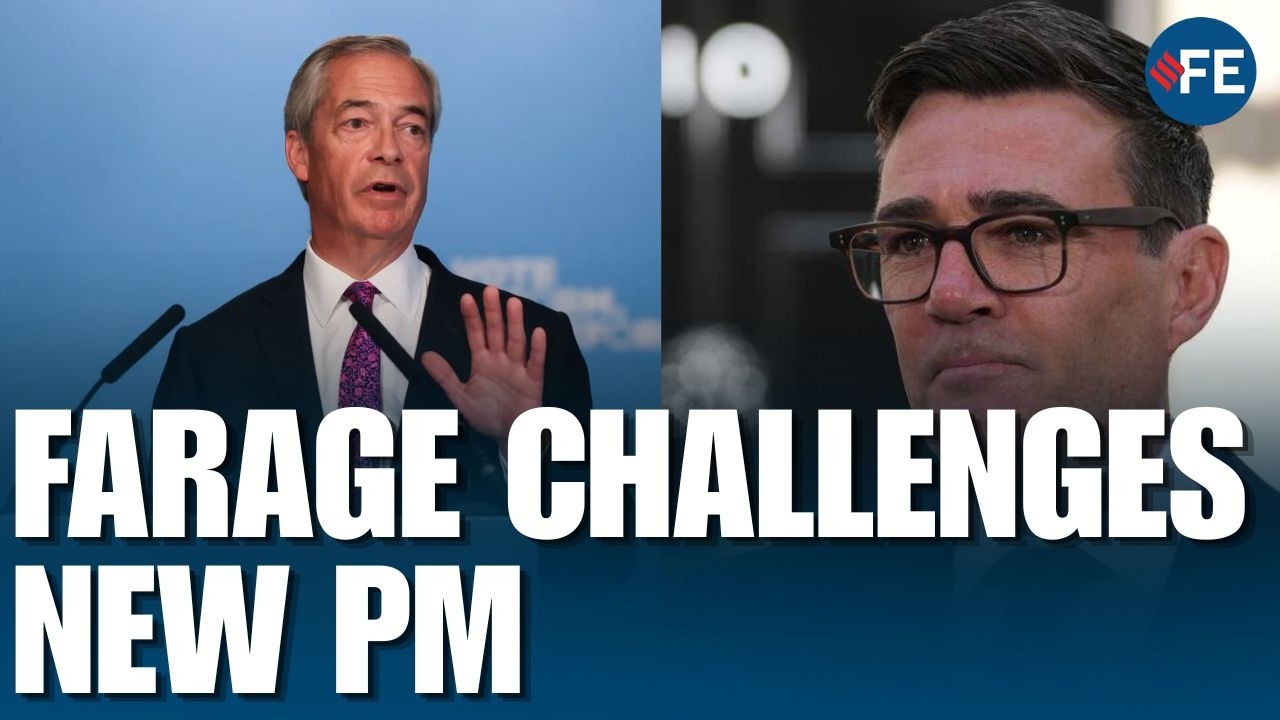
Nigel Farage’s Reform UK has issued a blunt warning to Andy Burnham, sending a clear message to one of the most powerful political figures in northern England:
Take us on, and we will come for you.
The language could hardly be more aggressive.
Burnham has built a formidable political reputation in Greater Manchester. He has served as Mayor since 2017, developed a strong personal connection with voters across the region and established himself as one of Labour’s most recognisable figures outside Westminster.
But Reform believes that reputation can be challenged.
And the party is increasingly willing to say so publicly.
The warning is not simply about one election.
It reflects a much bigger battle over the future of northern politics.
For decades, Labour has enjoyed enormous electoral strength across Greater Manchester and the wider North West.
Reform wants to change that.
Burnham has been warned
Andy Burnham is not an ordinary Labour politician.
His political career has included senior Cabinet positions, a leadership contest and more than a decade as one of the most recognisable figures on Labour’s left.
As Mayor of Greater Manchester, he has developed a political brand that is distinct from the Westminster leadership.
He presents himself as a champion of northern communities.
He has repeatedly attacked central government over transport, investment and regional inequality.
And he has cultivated an image as a politician who understands the concerns of people outside London.
That makes him a particularly valuable target for Reform.
If Reform can challenge Burnham politically, the symbolism would be enormous.
Why Reform sees an opportunity
The political environment has changed dramatically.
Traditional Labour loyalties are weakening.
Working-class voters are increasingly willing to consider parties outside Labour.
The Conservatives have lost support in many northern communities.
And Reform has been trying to fill the space created by that political fragmentation.
Farage’s argument is that Labour can no longer assume that northern voters will automatically support it.
The message is simple:
Your history does not guarantee your future.
That is precisely the kind of political challenge that Reform wants to deliver.
The Burnham factor
Burnham’s greatest political strength is also potentially his greatest vulnerability.
His popularity is strongly associated with his personal political identity.
That means voters can support Burnham even when they are dissatisfied with Labour.
But it also means that if Reform can persuade voters that Burnham represents the same political establishment they have grown tired of, his personal popularity could become less decisive.
This is where Farage’s strategy becomes interesting.
Rather than simply attacking Labour nationally, Reform can attack individual political figures.
And few figures would carry more symbolic value than Burnham.
“Take us on and we’ll storm it”
The phrase used by Reform is deliberately confrontational.
It is not the language of a party satisfied with becoming a minor opposition force.
It is the language of a movement that believes it can win.
That distinction matters.
Political parties need confidence to expand.
If Reform continually describes itself as a protest party, voters may conclude that it is incapable of governing.
But if it openly challenges powerful Labour figures, it sends a different message.
It says:
We believe we can beat you.
For Farage, that psychological battle is crucial.
Manchester is no longer politically predictable
Greater Manchester remains strongly associated with Labour.
But the political geography of the region has changed.
Brexit weakened some traditional Labour loyalties.
The Conservatives have struggled to maintain their previous support.
The Greens have become more competitive.
And Reform has begun targeting voters who feel that neither Labour nor the Conservatives represent them.
The result is a much more complicated political landscape.
A voter can be strongly supportive of the NHS and still vote Reform.
A voter can favour higher public spending while also wanting much tighter immigration controls.
Another voter may support Labour nationally but be attracted to Burnham’s local political identity.
Political labels are becoming less reliable.
The Gorton and Denton warning
The recent Gorton and Denton by-election provided a particularly important illustration of this fragmentation.
Labour was pushed into third place.
The Green Party won.
Reform finished second.
The result demonstrated that traditional Labour areas can become highly competitive.
It also showed that Reform’s appeal is not necessarily restricted to former Conservative voters.
For Farage, that is strategically important.
If Reform can compete in Labour territory, the party’s potential parliamentary reach becomes much larger.
And that puts politicians such as Burnham under greater pressure.
Reform does not need to defeat Burnham tomorrow
There is another important point.
Reform does not necessarily need to defeat Burnham immediately.
The party can gain politically simply by becoming competitive.
If it takes enough votes from Labour, it can force Labour to spend more resources defending previously comfortable areas.
It can make Labour candidates nervous.
It can increase media attention.
And it can create the impression that Reform is becoming a permanent part of the political landscape.
That is how insurgent parties grow.
First they are ignored.
Then they are mocked.
Then they become a threat.
Eventually, established parties are forced to respond.
Farage has used this strategy before
This is not a new political technique for Nigel Farage.
For years, he has attempted to pressure established parties by arguing that their traditional voters are abandoning them.
He did it with the Conservatives during the Brexit era.
He challenged both major parties through UKIP.
And he later rebuilt the movement under Reform UK.
The strategy has always involved creating pressure from outside the traditional political system.
Now the target is increasingly Labour.
And northern England is one of the most important battlegrounds.
Labour faces a difficult choice
How should Labour respond?
It could attack Reform aggressively.
It could argue that Farage’s policies are unrealistic.
It could question the party’s economic plans.
It could challenge its immigration proposals.
Or it could simply ignore the provocation.
Each option has risks.
Attack Reform too aggressively and Labour may give Farage more publicity.
Ignore Reform and the party could grow without sufficient challenge.
The more complicated answer is probably the most effective:
Challenge Reform on policy while understanding why voters are attracted to it.
That is much harder than simply calling Farage extreme.
The working-class question
At the heart of this battle is a fundamental question about the meaning of working-class politics.
Labour has historically claimed the strongest connection to working people.
But working-class voters are not a single political bloc anymore.
Their concerns are diverse.
They care about wages.
They care about housing.
They care about public services.
They care about immigration.
They care about crime.
They care about national identity.
They care about taxes.
And they care about whether politicians actually listen to them.
Reform has recognised this fragmentation.
Its challenge to Labour is therefore not merely ideological.
It is electoral.
Burnham’s political brand
Burnham has one significant advantage.
He has spent years building a personal political brand.
His reputation in Greater Manchester is not entirely dependent on the Labour Party.
That makes him different from many Westminster politicians.
But it also means Reform will probably focus heavily on the difference between Burnham’s local popularity and Labour’s national performance.
The party can ask voters:
Do you support Andy Burnham?
Or do you support the Labour political establishment?
Those are not necessarily the same question.
A fictional conversation on a Manchester street
Imagine a fictional exchange between two voters.
“Would you ever vote Reform?”
“I’m not sure.”
“What about Burnham?”
“I like him.”
“Would you vote for him?”
“Maybe.”
“What if Reform was the alternative?”
“That would be different.”
The conversation is fictional, but it illustrates the strategic problem.
Burnham’s personal popularity does not automatically guarantee that every voter who likes him will support Labour candidates elsewhere.
Reform wants to exploit exactly that gap.
Reform’s biggest challenge
However, Farage should not underestimate Burnham.
A popular local politician is difficult to defeat.
Burnham understands the political culture of Greater Manchester.
He has extensive local networks.
He knows how to campaign.
And he has experience dealing with national governments of different political colours.
Reform cannot simply assume that national anger will overwhelm local loyalty.
It will have to build a serious organisation.
It will need credible candidates.
It will need local activists.
And it will need policies that make sense at a regional level.
From protest to governing
This is where Reform faces its greatest challenge.
The party has become extremely effective at identifying voter anger.
But governing requires something different.
If Reform promises lower taxes, voters will eventually ask how that will be funded.
If it promises lower immigration, voters will ask how the policy will work in practice.
If it promises major changes to public spending, voters will ask which services will be affected.
If it promises to transform Britain, voters will ask for detailed plans.
Political movements can grow on anger.
Governments survive on delivery.
Why Burnham matters to Farage
Burnham represents something Farage wants to challenge.
He represents an established political figure with a strong regional identity.
He has considerable political experience.
He has built relationships with local communities.
And he has demonstrated that Labour can maintain support even when national governments become unpopular.
If Reform can successfully challenge that political model, it sends a message far beyond Greater Manchester.
It says that no Labour politician is automatically safe.
That is the real prize.
The psychological battle
Politics is often about expectations.
If Labour believes Burnham’s political position is unassailable, it may campaign defensively.
If Reform believes it can win, it will campaign aggressively.
And if voters begin to believe that Reform can win, they may become more willing to vote for it.
That is why the language matters.
“Take us on and we’ll storm it” is not simply a threat.
It is an attempt to create an expectation of victory.
Farage wants voters to think:
Reform can win here.
Once that belief takes hold, political behaviour can change.
The North is becoming a new battlefield
For decades, British politics treated northern England as broadly divided along predictable lines.
That era is disappearing.
Labour still has enormous support.
But Reform is growing.
The Conservatives are attempting to recover.
The Greens are expanding in some areas.
Independent local identities are becoming more important.
And voters are increasingly comfortable switching parties.
That creates opportunities for everyone.
But Reform believes it has the most momentum.
What happens next?
The battle between Reform and Labour is likely to become increasingly personal.
Farage will continue targeting senior Labour figures.
Labour will continue questioning Reform’s credibility.
Burnham will defend his record in Greater Manchester.
And voters will increasingly be asked to decide whether the political establishment deserves another chance.
For Reform, the objective is much bigger than one seat.
It wants to prove that the party can break Labour’s traditional grip on northern England.
For Labour, the objective is equally clear.
It must demonstrate that its relationship with working-class communities has not been permanently broken.
A warning Labour cannot ignore
The most important part of Reform’s message is not the aggressive language.
It is the confidence behind it.
A few years ago, the idea of Reform seriously challenging Labour in Greater Manchester would have seemed unlikely.
Today, the party is openly discussing it.
That change tells us something about the wider transformation of British politics.
Traditional loyalties are weakening.
New parties are becoming credible.
And voters are increasingly willing to experiment.
Andy Burnham may remain one of Labour’s strongest regional politicians.
But Reform wants voters to believe that even his political fortress can be challenged.
That is why the warning matters.
It is not simply:
“We want your votes.”
It is:
“We are coming for your territory.”
And if Nigel Farage succeeds in convincing enough northern voters that Reform can actually win, the political consequences could extend far beyond Greater Manchester.
The battle has begun.
Burnham has been warned.
And Reform clearly believes the next stage of Britain’s political realignment will be fought on the streets, estates and communities of the North.
Whether Farage’s movement can turn that confidence into actual electoral victories remains to be seen.
But one thing is already clear:
Reform no longer intends to ask Labour for permission to enter northern politics.
It intends to storm the gates.