

Nigel Farage Hit by Poll Blow Days Before Clacton By-Election

Nigel Farage was supposed to be turning the Clacton by-election into the ultimate political comeback.
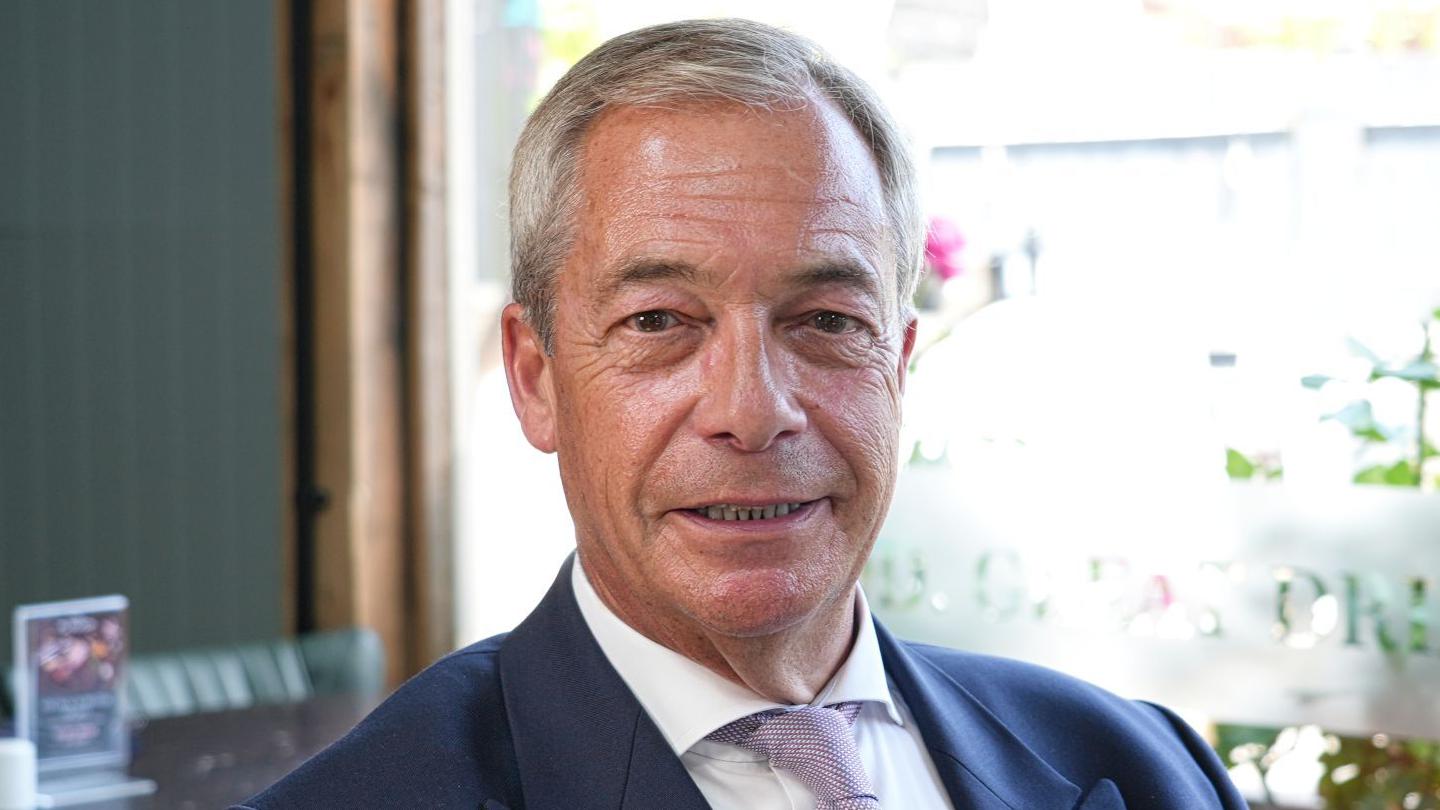
Instead, a series of uncomfortable polls has raised an awkward question: is the Reform UK leader really as secure as he thinks?
Farage has deliberately presented the contest as something much bigger than a normal parliamentary by-election. He wants voters to see it as a battle between himself and what he calls the political establishment. After resigning his seat, he immediately announced that he would stand again, effectively asking Clacton voters to give him a fresh mandate.
The strategy is obvious.
Farage wants to turn controversy into political momentum.
He wants to argue that attempts to scrutinise him have been politically motivated.
He wants to demonstrate that voters, rather than Westminster institutions, should decide his future.
And, most importantly, he wants a decisive victory that can be presented as proof that his political movement remains unstoppable.
But the polling has introduced a complication.
A recent Opinium survey found that 52 per cent of respondents believed Farage should not be re-elected as Clacton’s MP, while only 27 per cent thought he should be returned. The poll was conducted nationally rather than exclusively among Clacton voters, so it should not be mistaken for a prediction of the constituency result.
That distinction is crucial.
Farage could still win Clacton comfortably.
Indeed, there is no current constituency poll showing that he is in serious danger of losing.
At the 2024 general election, Farage won the seat with 46.2 per cent of the vote and a majority of 8,405. Reform finished comfortably ahead of the Conservatives, Labour and the other parties.
The local political landscape is therefore very different from the national picture.
But the national polling still matters.
Why?
Because Farage is not treating this as an ordinary local election.
He is turning it into a referendum on himself.
And once a politician does that, national perceptions become relevant.
The latest Ipsos research is even more striking.
Asked in a hypothetical head-to-head contest, 33 per cent of British adults said they would prefer satirical candidate Count Binface to win the Clacton by-election, compared with only 21 per cent who preferred Farage.
That sounds extraordinary.
How could a fictional aristocrat wearing a bin defeat one of Britain’s most experienced political campaigners?
The answer is that the poll is not necessarily measuring the actual Clacton electorate or predicting the final result.
It is measuring broader public attitudes towards Farage and the by-election.
And those attitudes are clearly not as favourable as the Reform leader would like.
That is the real warning.
Farage has spent years cultivating an image as the politician who speaks for ordinary voters against an unpopular political establishment.
Yet the polling suggests that a substantial part of the public is not convinced by that narrative.
Even more damagingly, the same Ipsos survey found that 54 per cent believed Farage should resign and leave Parliament, while only 16 per cent thought he was right to resign and seek re-election.
That puts Farage in an unusual position.
He is trying to make his resignation look like an act of democratic courage.
His critics see it as a political manoeuvre designed to escape pressure surrounding allegations about financial support and parliamentary standards.
The public appears much closer to the second interpretation.
Opinium found that 42 per cent believed Farage’s decision to trigger the by-election was primarily a political strategy to strengthen his position, compared with just 19 per cent who thought it was mainly about allowing voters to judge his actions directly.
That is a serious problem for the “people versus the establishment” message.
If voters believe the by-election was designed primarily to protect Farage politically, the entire narrative changes.
Instead of being the victim of an establishment campaign, he becomes a politician attempting to use an election as a shield against controversy.
Farage will strongly reject that interpretation.
And he has an obvious counterargument.
He can say that he has voluntarily put his future in the hands of voters.
He could have remained an MP while the controversy continued.
Instead, he resigned and asked the people of Clacton to decide.
There is something democratically powerful about that argument.
A politician who is prepared to put his position on the line is taking a significant risk.
But it is only a risk if defeat is genuinely possible.
And that is where the Clacton contest becomes fascinating.
The major political parties have chosen not to field candidates against him.
That means the contest has taken an extraordinary shape.
Instead of a traditional Labour-Conservative-Reform battle, Farage’s most prominent challenger is Count Binface, the satirical candidate created by comedian Jon Harvey.
The Guardian reported that the major parties were boycotting the contest, leaving Binface as Farage’s most notable opponent.
Farage can therefore argue that the political establishment is refusing to fight him.
His opponents can argue that the by-election is essentially a political stunt.
Both narratives have some credibility.
But there is another candidate who could make the contest more interesting: John Stevens of Rejoin EU.
His campaign is focused on opposition to Brexit and a pro-European message.
That creates a potentially serious alternative for voters who want to register opposition to Farage without voting for a novelty candidate.
Still, the central fact remains.
There is currently no constituency poll showing that Farage is about to lose.
That means headlines about a “poll blow” need to be interpreted carefully.
A national poll saying that many people do not want Farage re-elected is not the same thing as a Clacton poll showing another candidate ahead.
The difference between the two could hardly be more important.
By-elections are unusual elections.
Turnout can be dramatically lower than at a general election.
Local campaigning matters.
Candidate recognition matters.
Tactical voting can matter.
And voters who are angry with a national politician do not necessarily turn that anger into a vote for whichever challenger is most likely to defeat him.
In Clacton, those dynamics could strongly favour Farage.
He already has an established political base.
He won the seat only two years ago.
His supporters are highly motivated.
And his opponents are divided between protest, satire and competing political messages.
That is a formidable advantage.
But Farage should not become complacent.
His greatest strength is also his greatest weakness.
Everything is about Nigel Farage.
Reform UK is heavily associated with its leader.
His personal popularity drives attention to the party.
His speeches dominate its media coverage.
His arguments on immigration, Brexit and national sovereignty define its political identity.
That means when Farage is under pressure, Reform is under pressure.
The Clacton by-election therefore has significance far beyond one parliamentary seat.
A decisive Farage victory would allow him to say that the controversy has failed.
He could return to Parliament claiming that voters have rejected his critics.
He could portray the result as a direct endorsement of his leadership.
And he could use that mandate to strengthen Reform’s position nationally.
A narrow victory would tell a different story.
It would still be a win.
But it would suggest that the Farage machine is less dominant than expected.
A surprisingly strong performance by an opponent could create even more political trouble.
And a defeat would be catastrophic.
Farage would have resigned his parliamentary seat only to fail to win it back.
That would transform a political gamble into a political disaster.
It would raise questions about his leadership of Reform.
It would embolden internal rivals.
And it would give opponents the most powerful possible symbol that the Farage era is beginning to weaken.
This is why the polling matters even if it does not predict the result.
It changes the atmosphere.
Politics is partly about expectations.
If everyone expects Farage to win by a huge margin, anything less can be interpreted as failure.
If he wins comfortably, the poll controversy disappears almost immediately.
If he wins narrowly, journalists will ask why.
If turnout is low, critics will argue that his mandate is weaker than he claims.
And if an alternative candidate unexpectedly performs strongly, the entire political story changes.
Farage therefore needs more than victory.
He needs a convincing victory.
He needs to demonstrate that Clacton still belongs to Reform.
He needs to show that his political base has not been damaged by the controversies surrounding him.
And he needs to make the result useful nationally.
That is a tall order.
The wider political environment is also changing.
Reform has enjoyed significant national support, but recent polling suggests that the party’s dominance is not guaranteed.
The political right is increasingly fragmented.
The Conservatives remain a significant force.
New political movements are emerging.
And Labour under Andy Burnham is attempting to rebuild its position.
In that environment, Farage cannot afford a setback.
The Clacton election is therefore becoming something of a test.
Not necessarily a test of whether he can win the seat.
He probably can.
It is a test of how strong his personal political brand really is.
Can he convert controversy into support?
Can he persuade voters that his resignation was an act of democratic principle rather than political strategy?
Can he convince Clacton residents that the election is about their future rather than his personal difficulties?
And can he return to Westminster with a mandate strong enough to silence his critics?
Those questions will matter long after the votes are counted.
For now, Farage can point to one reassuring fact.
There is no published constituency poll demonstrating that he is losing Clacton. Polling analysts explicitly caution that national favourability figures should not be treated as a forecast for the by-election.
But he cannot ignore the warning signs.
The public is sceptical.
Many voters do not think he should be re-elected.
Many believe his resignation was primarily strategic.
And some would even prefer a satirical candidate to win.
That may sound absurd.
But politics has always contained an element of theatre.
Farage understands theatre better than most politicians.
He has spent decades turning political conflict into compelling television.
He knows how to create headlines.
He knows how to frame elections as battles between ordinary people and elites.
He knows how to make himself the centre of the story.
Now he has created a contest in which he is almost entirely the story.
That could be his greatest advantage.
It could also become his greatest mistake.
If he wins decisively, Farage will claim vindication.
If he struggles, the same decision to resign and force a by-election will suddenly look reckless.
The Clacton voters therefore have a remarkable amount of power.
They are not merely choosing an MP.
They are potentially deciding whether Farage’s political gamble pays off.
And that is why the poll blow matters.
It does not prove that Farage will lose.
It does not even show that he is currently behind in Clacton.
But it proves something that may be even more uncomfortable for Reform.
Nigel Farage is not universally popular.
His political future cannot be taken for granted.
And when a politician turns an election into a referendum on himself, every vote becomes a judgement on his leadership.
Farage has asked Clacton to judge him.
Soon, the voters will have their answer.
The question is whether the result will give him the triumphant mandate he expects — or expose just how fragile his political position has become.