
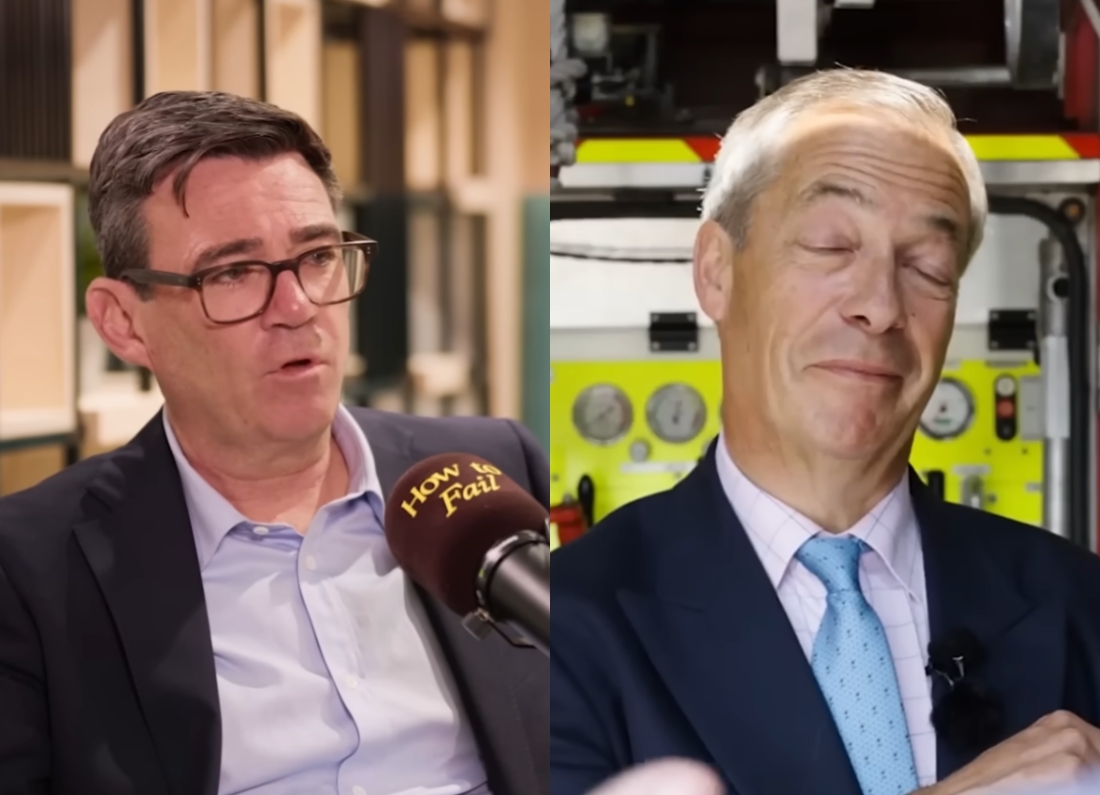
Reform has dropped to third place in a major new poll as Andy Burnham’s arrival in Downing Street keeps reviving Labour’s numbers.
Lord Ashcroft’s latest survey puts Labour on 27%, up six points from his previous poll on 29 June. The Conservatives are up two to 23%. Reform’s down three to 18%. The Greens are fourth on 15%, down two, followed by the Lib Dems on 8%, down one.
The poll of 5,303 adults ran between 30 July and 3 August. Labour leads the Conservatives by four points and Reform by nine. The commanding position Reform held under Starmer has genuinely disappeared since Burnham took over.
A seat projection from @LeftieStats using the Ashcroft figures puts Labour on 269 seats, the Conservatives on 193, Reform down to 37, with the SNP on 49, the Lib Dems on 36, the Greens on 23 and Plaid Cymru on 12. That would make Labour the largest party without an overall majority. Worth noting this seat estimate comes from Stats for Lefties, not Ashcroft himself, and shouldn’t be confused with the polling. Translating national vote share into seats gets particularly messy when support splits five or six ways.
How Ashcroft actually measures this
Ashcroft doesn’t ask the standard “which party if there were an election tomorrow” question. He asks people to rate, 0 to 100, how likely they are to vote for each party at the next election. The voting-intention figure comes from whichever party gets a respondent’s highest score, provided it’s above 50. Anyone who doesn’t rate a single party above 50 counts as undecided or unlikely to vote, and gets excluded from the headline percentages.
That makes direct comparison with YouGov, Survation or More in Common imperfect. The movement since Ashcroft’s last poll is still clear regardless: Labour’s up six points, both Labour and the Conservatives have moved ahead of Reform, and Farage’s party has gone from a three-way tie for first to unambiguous third.
Even Ashcroft calls it a real bounce
Writing up the findings, the Conservative peer acknowledged the “Burnham bounce” is genuine. Former Labour voters who’d drifted away are now more likely to say they’d come back, and focus group participants described the new PM as warmer and more focused than his predecessor.
The detailed numbers give Burnham a big lead over his rivals personally too. Asked to pick the best PM among the three main contenders, 44% chose Burnham, against 17% for Badenoch and 15% for Farage. He led Farage 57% to 19% head-to-head, and Badenoch 44% to 25%. 38% think Burnham’s most likely to be PM after the next election, against 14% for Farage and 6% for Badenoch. 54% said they believe he has a plan for government; 27% said he doesn’t, 18% weren’t sure.
This follows More in Common polling putting Labour four points ahead of Reform, YouGov placing the two level, and Survation recording a narrow Labour lead. Hypothetical polling before Burnham took over had already suggested he could restore Labour’s lost support. The first real surveys of his premiership suggest that’s actually happening.
Not everything in the poll favours Labour
Of 19 government proposals tested, only six were seen by a majority as both welcome and affordable. Asked how extra spending should be funded, 44% said cuts elsewhere, 28% preferred higher taxes, only 4% backed more borrowing. Asked what they actually expect to happen, though, 39% predicted higher taxes against 29% expecting cuts. Almost half, 49%, think taxes will end up higher under Burnham than they would’ve been under Starmer. Only 4% expect them lower.
That gives the Conservatives and Reform an obvious line of attack. It hasn’t stopped Labour’s recovery so far. Voters can doubt the cost of Burnham’s programme while still preferring him to the alternatives, and apparently are.
Reform’s problem isn’t just one poll anymore
Reform led national polling for more than a year, sometimes by double digits over both main parties. That’s changed fast. Farage’s own personal standing has cratered alongside it, More in Common recently put him at -32, his lowest since the 2024 election, and YouGov recorded -46.
Ashcroft’s result adds a second problem on top: Labour’s recovering, but so are the Conservatives. That leaves Farage squeezed between a new PM pulling back former Labour voters and a Tory party reclaiming ground on the right. One poll, using a different method from most voting-intention surveys, can’t settle whether this realignment holds until the actual election. But Reform’s losing ground across multiple pollsters now, and Labour’s moved ahead in more than one of them.
The Burnham bounce isn’t just a better approval rating anymore. It’s changing the actual order of the parties.