

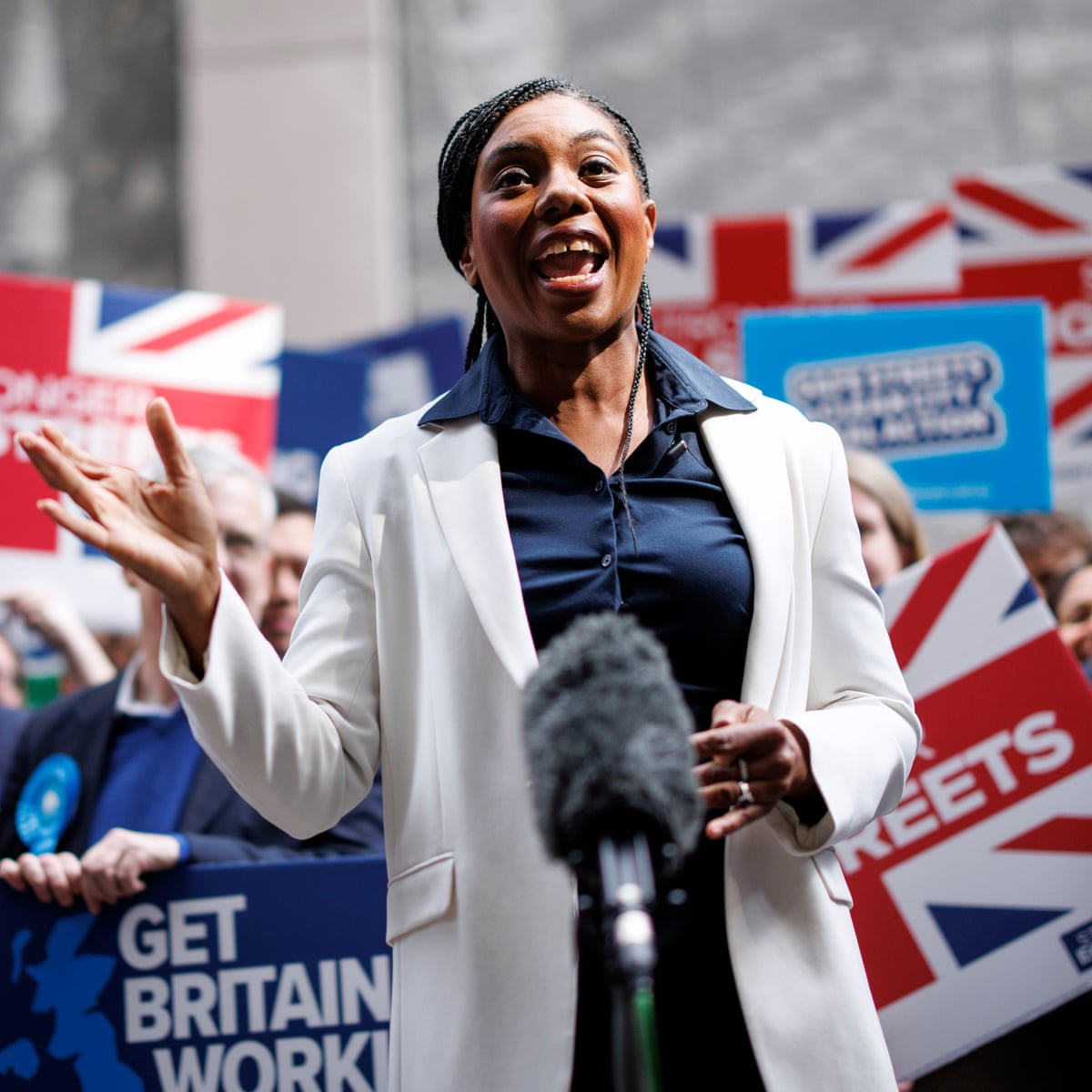
‘Disaster’ for Kemi Badenoch as Reform Mocks the Tories After By-Election Defeats
The Conservative Party is facing another uncomfortable moment as Reform UK seeks to capitalise on a series of electoral setbacks for Kemi Badenoch’s party.

For Nigel Farage and his supporters, the message is becoming increasingly straightforward: the Conservatives can no longer assume that they are the natural home of voters on the political right. Reform has established itself as a serious challenger, and every Conservative defeat gives Farage another opportunity to argue that the old political order is collapsing.
The latest by-election battles have therefore become more than isolated contests. They are part of a much larger struggle for the future of Britain’s right-wing vote.
Yet there is an important complication. Reform itself has also experienced setbacks, meaning that neither Farage nor Badenoch can safely assume that the next general election will follow today’s polling patterns. Recent events demonstrate just how unpredictable British politics has become.
A painful period for the Conservatives
Kemi Badenoch has been trying to rebuild the Conservative Party after its devastating 2024 general-election defeat.
The task was always going to be difficult.
The Conservatives entered opposition after fourteen years in government, carrying the political baggage of their record while simultaneously attempting to convince voters that they had learned the lessons of defeat.
Then came Reform.
Farage’s party has targeted many of the same voters who once regarded the Conservatives as their political home. Immigration, taxation, national sovereignty, government spending and opposition to what Reform describes as excessive regulation have all become central areas of competition.
This creates an extraordinary problem for Badenoch.
She needs to make the Conservatives distinctive.
But if she moves towards Reform’s positions, Farage can argue that Reform is setting the agenda. If she refuses to move in that direction, Reform can accuse the Conservatives of being too moderate.
It is a political trap.
The problem became particularly visible during the 2026 local elections. Reform made major gains across England, while the Conservatives suffered significant losses. Badenoch nevertheless insisted that the Conservatives were “coming back”, pointing to victories including the party’s recovery of Westminster council and later its by-election victory in Aberdeen South.
That means the picture is more complicated than a simple Conservative collapse.
There have been genuine signs of recovery.
But the scale of Reform’s challenge remains impossible to ignore.
Why Reform is celebrating
For Reform UK, Conservative defeats are politically valuable even when Reform itself does not win the seat.
The reason is simple.
Every time the Conservatives lose support to Reform, Labour, the Liberal Democrats or another party, the argument that the Tories are no longer capable of rebuilding their old coalition becomes easier to make.
Farage can portray Reform as the party of the future while describing the Conservatives as an organisation struggling to recover from the mistakes of the past.
That message has particular force among former Conservative voters.
Many of them did not necessarily abandon conservative principles.
They abandoned the Conservative Party.
That distinction is crucial.
A voter who once supported David Cameron, Theresa May, Boris Johnson or another Conservative leader may still believe in lower taxation, tighter immigration controls, national sovereignty and a smaller state.
But if that voter concludes that the Conservative Party failed to deliver those objectives, Reform provides an alternative.
Once that psychological barrier has been broken, winning the voter back becomes extremely difficult.
Badenoch cannot simply blame Reform
The temptation for Conservative politicians is to treat Reform as the cause of their problems.
But Reform’s rise is also a symptom of a deeper problem.
The Conservative Party has to explain why so many of its former voters became dissatisfied in the first place.
Immigration is an obvious example.
The Conservatives repeatedly promised to reduce immigration and tackle illegal migration while in government. When voters concluded that those promises had not been delivered, Reform was able to argue that the Conservatives had failed.
The same argument applies to taxation and public spending.
Conservative governments promised lower taxes but ultimately presided over a substantial tax burden. Reform has used this contradiction to claim that the Conservatives no longer represent traditional conservative economic principles.
Whether every Reform proposal would actually solve these problems is a separate question.
But politically, the argument is powerful.
The irony of the by-election defeats
There is another reason the latest developments are fascinating.
Reform’s own recent electoral record has not been perfect.
In the Makerfield by-election, Labour’s Andy Burnham secured a comfortable victory over Reform, a result Conservatives seized upon as evidence that Farage’s advance could be stopped.
Then, in Aberdeen South, the Conservatives achieved a significant victory, winning their first Scottish parliamentary by-election since 1967.
These results are important because they demonstrate that British politics is not moving inexorably in one direction.
Reform is powerful.
But it is not unstoppable.
The Conservatives are weak.
But they are not dead.
Labour has suffered major setbacks.
But it can still win important contests.
That makes the next general election extraordinarily difficult to predict.
The bigger battle is over the right
The most important consequence of Reform’s rise may be the transformation of the Conservative Party itself.
For decades, the Conservatives were the principal political force on Britain’s right.
Today, that position is contested.
Farage has created a party capable of attracting voters who previously had nowhere else to go. Reform can now threaten the Conservatives in constituencies where a Conservative victory would once have been considered relatively secure.
That forces Badenoch to make a difficult strategic choice.
Should she attempt to outflank Farage?
Or should she try to rebuild a broader Conservative coalition that includes moderate voters who may be uncomfortable with Reform?
The problem is that both strategies involve risks.
A harder-right Conservative Party could alienate centrist and moderate voters.
A more moderate Conservative Party could leave Reform with an open field on the right.
Recent commentary has argued precisely this point, suggesting that Badenoch’s attempt to compete with Reform on its own territory risks damaging the Conservatives without necessarily defeating Farage.
That is perhaps the central strategic question facing her leadership.
Reform has reason to be cautious too
However, Farage should not become too confident.
Political momentum can disappear quickly.
Recent polling has demonstrated that Reform’s position can fluctuate dramatically. One poll published in August placed Labour ahead of Reform, with the Conservatives also moving ahead of Farage’s party.
That is a useful reminder that today’s political headlines are not necessarily tomorrow’s election results.
Reform’s opponents will also become increasingly sophisticated.
The more successful Reform becomes, the more attention its policies, candidates, finances and internal organisation will receive.
A protest movement can survive controversy more easily than a potential governing party.
Once voters begin considering Reform as a possible government, they will ask harder questions.
Can it manage the economy?
Can it run public services?
Can its councillors govern effectively?
Can it maintain internal discipline?
Can it deliver the radical changes it promises without creating new problems?
Those questions cannot be answered simply by attacking Labour or the Conservatives.
Badenoch’s personal position
The situation is also significant for Badenoch personally.
The Conservative leader has attempted to project herself as a politician willing to confront Labour and resist Reform rather than simply follow either party.
Her personal ratings have reportedly improved from their very low levels in late 2025, giving her at least some reason for optimism.
But leadership ratings and party performance are different things.
Badenoch may become more popular while the Conservatives remain electorally weak.
Alternatively, the party could improve while her personal position remains difficult.
The challenge is to make those two things reinforce one another.
Her greatest asset may be that she can still present herself as something different from the politicians who led the Conservatives during their long period in government.
Her greatest problem is that voters may decide that “different” is not enough.
They will want evidence that the Conservatives can actually win.
The Farage factor
For Reform, meanwhile, Nigel Farage remains the central political asset.
He has spent decades building a reputation as an outsider who can challenge established political parties.
That reputation is extremely valuable.
When Conservatives suffer defeats, Farage can argue that voters are abandoning the old political system.
When Reform suffers a setback, he can argue that the party is still building its organisation.
This gives Reform considerable political flexibility.
But eventually the party will have to move beyond that narrative.
If it wants to govern Britain, it must prove that it can offer more than dissatisfaction.
It needs a coherent economic programme.
It needs credible candidates.
It needs organisational discipline.
And it needs to convince voters that its representatives can manage institutions rather than simply disrupt them.
The Tories’ real nightmare
The worst possible scenario for the Conservatives is not necessarily that Reform becomes the largest party overnight.
It is that Reform remains strong enough to prevent the Conservatives from recovering.
That is a subtler but potentially more devastating problem.
Suppose the Conservatives rebuild some support but Reform retains a substantial share of the right-wing vote.
The result could be a permanently divided right.
Labour could benefit from that division in some constituencies.
The Liberal Democrats could benefit in others.
Reform could win seats of its own.
And the Conservatives could remain trapped in opposition.
That is why every by-election is so important.
It provides another piece of evidence about whether voters are returning to the Conservatives—or continuing to look elsewhere.
No one should declare victory yet
The headline describing the situation as a “disaster” for Badenoch captures the political drama, but it should not be mistaken for the final verdict on her leadership.
The Conservatives have demonstrated that they can still win.
Their Aberdeen South victory was a significant achievement, and Badenoch has attempted to use such results to argue that the party is rebuilding.
Likewise, Reform’s defeats demonstrate that Farage’s party has vulnerabilities of its own.
The political landscape is therefore much more fluid than either side would like to admit.
That may be the most important lesson.
Reform cannot assume that every Conservative voter will eventually join it.
The Conservatives cannot assume that every Reform supporter will eventually return.
Labour cannot assume that the collapse of one opposition party will automatically benefit it.
And voters themselves have become much less predictable.
The battle is only beginning
The real significance of the latest by-election defeats is therefore not the individual seats.
It is what they reveal about the struggle for Britain’s political future.
Kemi Badenoch is attempting to rebuild the Conservative Party.
Nigel Farage is attempting to replace much of the political establishment with Reform.
Labour is attempting to retain power while defending itself against challenges from both sides.
Meanwhile, voters are increasingly willing to abandon parties they supported for generations.
That makes the next general election potentially one of the most unpredictable in modern British politics.
For Reform, every Conservative defeat is an opportunity.
For Badenoch, every Reform victory is a warning.
But neither side can afford to celebrate too early.
The Conservatives have already shown that they can recover in individual contests. Reform has shown that it can survive setbacks and remain a major political force.
The political battle between Badenoch and Farage is therefore far from finished.
Indeed, it may only now be entering its most important phase.
The Conservatives once dominated Britain’s political right.
Reform wants to take that position from them.
And Kemi Badenoch now faces perhaps the defining challenge of her leadership:
Can she rebuild the Conservative Party before Nigel Farage convinces enough voters that they no longer need it?
That is the question that will determine whether today’s by-election defeats become merely painful setbacks—or the beginning of a much larger Conservative crisis.