


Raging Nigel Farage’s Bombshell Clacton-on-Sea Announcement Leaves Supporters Stunned

Nigel Farage has stunned supporters with a dramatic announcement surrounding his return to Parliament after the extraordinary Clacton-on-Sea by-election, turning what was already an unusual political contest into an even more remarkable episode.
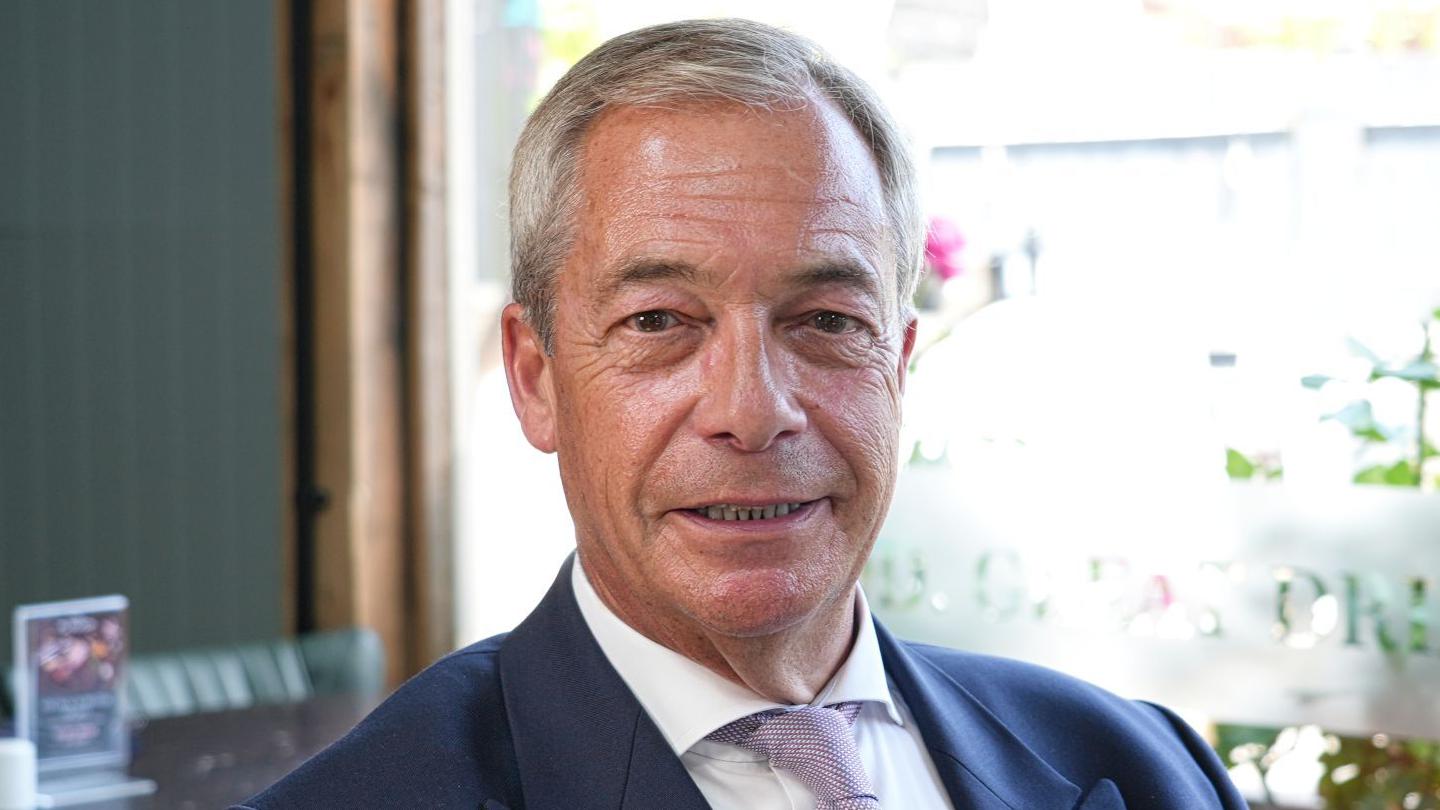
The Reform UK leader secured victory in the Clacton by-election with 22,239 votes, comfortably defeating his nearest challenger, the satirical candidate Count Binface, who received 9,455 votes. Yet Farage’s victory was overshadowed by his decision not to attend the official count, after he claimed that police had warned him about an organised campaign intended to disrupt the event.
The announcement came at a particularly sensitive moment for Farage.
He had personally triggered the by-election after resigning his parliamentary seat only weeks earlier. His decision was widely interpreted as an attempt to secure a fresh mandate from voters after mounting controversy surrounding his financial affairs and an investigation into donations and gifts that he allegedly failed to declare correctly.
Farage had therefore presented the election as an opportunity to settle the argument once and for all.
Instead, the contest became one of the strangest by-elections in modern British politics.
The major political parties chose not to field candidates. Labour, the Conservatives, the Liberal Democrats and the Greens effectively stayed out of the contest, arguing that the election was little more than a publicity exercise designed to help Farage rebuild his political position. That decision left Farage facing a remarkable collection of more than 30 candidates, including Count Binface and other independent or novelty candidates. The ballot featured 34 candidates, making it the longest in British by-election history.
Farage nevertheless insisted that the election represented something much bigger.
His campaign attempted to frame the contest as a battle between ordinary voters and the political establishment. By forcing himself to seek re-election, he argued that he was giving the people of Clacton the opportunity to decide whether they still wanted him as their MP.
The result gave him the answer he wanted.
Farage won decisively.
But the circumstances surrounding his victory have left political observers divided over what the result actually means.
The Reform leader increased his raw vote compared with the 2024 general election, when he received 21,225 votes. His latest total of 22,239 therefore allowed him to claim that he had secured more votes than when he first won the constituency.
However, turnout was only around 44.4 per cent, substantially lower than at the general election. And because the main political parties did not compete, Farage was never confronted by a conventional Labour, Conservative or Liberal Democrat challenger.
That makes the result difficult to interpret as a straightforward national political victory.
The most extraordinary aspect of the result was perhaps Count Binface’s performance.
The satirical candidate collected 9,455 votes — almost 27 per cent of the total. His extraordinary second-place finish meant that a candidate wearing a bin-shaped helmet became Farage’s principal electoral challenger.
That was not what many people expected when the by-election began.
Yet it reflected the unusual political circumstances created by the decision of the major parties to boycott the contest. With mainstream opposition absent, voters who wanted to register a protest against Farage had very different options from those available in a normal parliamentary election.
For some, Binface became a humorous protest vote. For others, the result may have reflected frustration at the entire political spectacle.
Farage, however, has insisted that the scale of his victory should not be dismissed.
His supporters argue that the people of Clacton had the opportunity to reject him and instead returned him to Westminster. They say this gives him a clear mandate to continue leading Reform UK and pursuing the issues that have made the party increasingly influential in British politics.
But there is an uncomfortable complication.
Farage himself was not present when the result was officially declared.
He had already told supporters that he had achieved what he described as a resounding victory. Reuters reported that Farage said he would not attend the count after claiming that police had warned him about an organised campaign to disrupt the event. He complained that he would not stand on a stage after winning only to be “demeaned and humiliated”.
The claim immediately generated controversy.
Essex Police confirmed that it had a robust security operation in place but disputed the suggestion that it had advised Farage to stay away from the count. Reports subsequently highlighted the discrepancy between Farage’s account and the police position.
That has created an extraordinary political image.
Farage called the election himself.
He campaigned for a new mandate.
He won.
And yet he was absent from the room when the voters’ verdict was formally announced.
For a politician who has built much of his career around direct contact with supporters and highly visible media appearances, the decision was striking.
It also fed criticism from opponents who argued that Farage had manufactured a political event primarily to control the narrative surrounding him.
The financial controversy is particularly important.
Farage’s decision to resign and fight another election came after questions about a £5 million gift from cryptocurrency billionaire Christopher Harborne. A parliamentary standards investigation into the matter is expected to continue following his return to Parliament.
Farage has denied wrongdoing and has defended the circumstances surrounding the money. But the by-election cannot itself settle the parliamentary investigation.
Winning an election does not automatically clear a politician of allegations concerning parliamentary rules.
That means the political drama may not be over.
If the investigation eventually finds that Farage breached parliamentary rules and sanctions are imposed, there could potentially be further consequences for his position as an MP. The possibility of another by-election would create an extraordinary scenario in which Clacton could once again be asked to vote on Farage’s future.
For supporters who believed the Clacton contest would finally put the financial controversy behind him, that possibility will be deeply frustrating.
The election was supposed to provide closure.
Instead, it may have merely postponed the argument.
There is also a wider question about Reform UK’s national prospects.
Farage remains one of the most recognisable figures in British politics, but the party’s national position has become less secure. Recent analysis has suggested that Reform’s momentum has weakened, while Labour has improved its position under Prime Minister Andy Burnham.
That means Farage’s Clacton victory cannot automatically be treated as evidence that Reform UK is on course for a national breakthrough.
Clacton is a distinctive constituency.
Farage has a long-established political profile there, and Reform has built a particularly strong local base. The absence of major-party candidates made the contest even more favourable to him.
The national political landscape is very different.
In a general election, Reform would have to compete against Labour, the Conservatives, Liberal Democrats, Greens and potentially other parties across hundreds of constituencies. Voters would have far more choices, and tactical voting could become significant.
That is why the Clacton result may tell us more about Farage’s personal resilience than about Reform UK’s national strength.
Even so, there is no denying the psychological importance of the victory.
Farage has spent decades attempting to gain a permanent foothold in Westminster. He finally achieved that in 2024, only to surrender the seat and force another election. His return demonstrates that his political career remains remarkably difficult to extinguish.
His supporters will see that as proof of his enduring popularity.
His critics will see it as a victory achieved under unusually favourable circumstances.
Both interpretations will now compete for attention.
The extraordinary performance of Count Binface makes the story even more complicated.
Almost 9,500 people voted for the satirical candidate. That is a substantial number, especially considering that he was not running a conventional parliamentary campaign. His result suggests that a significant proportion of Clacton voters wanted to send a message about the nature of the election itself.
The fact that Binface finished so far ahead of the other challengers should not be ignored.
It shows that political protest can take many forms.
Some voters may have been angry about Farage. Others may have been angry about the major parties refusing to contest the seat. Others may simply have viewed the election as an opportunity to participate in an extraordinary political event.
Whatever their motivation, their votes transformed the contest.
And that leaves Farage with a complicated victory.
He has returned to Parliament.
He has secured more votes than he did in 2024.
He has demonstrated that his personal support in Clacton remains formidable.
But he has also emerged from a by-election surrounded by renewed questions about his finances, his national popularity and the circumstances under which the contest was conducted.
The announcement that he would not attend the count added another layer of controversy.
Rather than ending the drama, it ensured that the election would continue to dominate headlines even after the votes had been counted.
For Farage, the challenge now is to convert the victory into political momentum.
He will need to return to Westminster and focus on the wider national agenda. Reform UK will need to demonstrate that its support extends beyond constituencies where Farage himself has exceptional personal recognition. And Farage will have to deal with the continuing parliamentary investigation that helped trigger the by-election in the first place.
That is a formidable political test.
The Clacton result has given him something he desperately wanted: another parliamentary mandate.
But it has not removed every problem.
Indeed, in some respects, it may have created new ones.
The low turnout and absence of major-party opposition give his critics ammunition to argue that the result was less impressive than the headline percentage suggests. Count Binface’s extraordinary second-place finish gives opponents another way to portray the election as a political spectacle rather than a conventional test of public opinion. And the disagreement over the alleged security warning has created yet another controversy around Farage’s decision to avoid the count.
Nevertheless, Farage has achieved the immediate objective.
He is back in Parliament.
His supporters have reason to celebrate.
But the bombshell announcement that he would stay away from the official count ensured that his victory was unlike almost any other parliamentary win.
The question now is whether Clacton represents the beginning of a new chapter for Farage or simply another dramatic episode in a political career that has rarely been short of controversy.
For the moment, the answer remains unclear.
What is certain is that Farage has survived another extraordinary political gamble. He forced a by-election, faced an unprecedented ballot, watched a satirical candidate become his nearest challenger, skipped the official declaration and still walked away as the winner.
The result may have stunned his critics.
But the continuing questions surrounding his political future suggest that the story is far from finished.