

Furious BBC Bias Row Erupts Over Question Time Makerfield By-Election Specialist
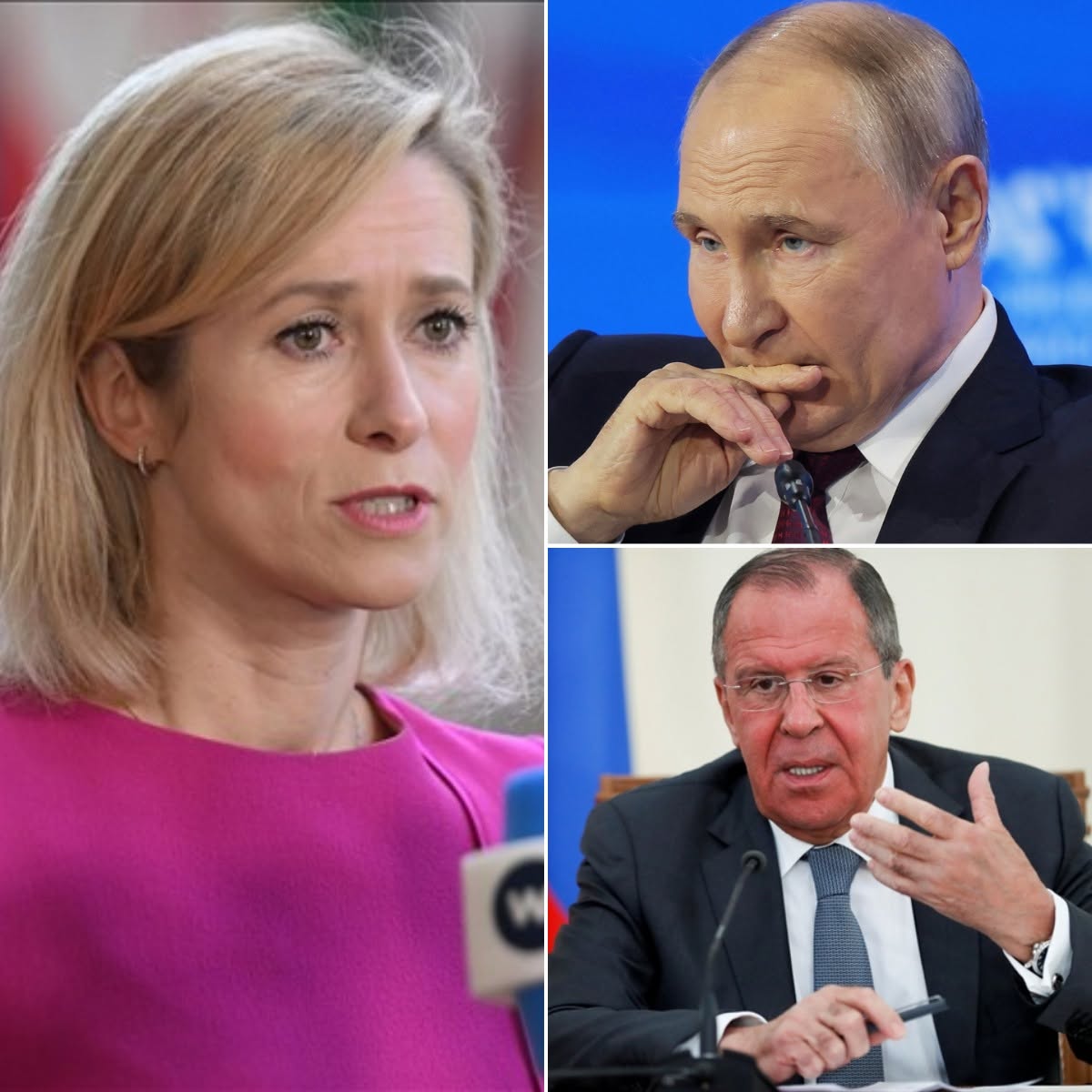
The BBC has been dragged into a furious impartiality row over its Question Time special from Makerfield, after the broadcaster decided not to include the Restore Britain Party candidate on the panel despite the party claiming it had significant support in the constituency.
The controversy erupted ahead of the Makerfield by-election, one of the most closely watched political contests of 2026, with Andy Burnham standing for Labour against candidates from Reform UK, the Conservatives, the Liberal Democrats, the Greens and several smaller parties.
Restore Britain accused the BBC of denying its candidate, Rebecca Shepherd, a platform at a crucial moment in the campaign.
But there was an important twist.
Ofcom subsequently ruled that the BBC had not breached its broadcasting rules.
The regulator concluded that, based on the evidence available when the programme was broadcast, the BBC had made a reasonable editorial decision and had included an appropriately wide range of significant political views.
The decision has done little to end the political argument.
Instead, it has highlighted the increasingly difficult question facing broadcasters during elections: how should they decide which parties deserve a place on a televised debate when there are far more candidates than available seats on the panel?
The row began with Restore Britain
The BBC’s Makerfield special was broadcast on June 4, ahead of the June 18 by-election.
Fourteen candidates were standing in the contest.
That immediately created a practical problem for Question Time.
The programme normally has a limited number of panellists, meaning that it was impossible to give every candidate equal airtime.
The BBC ultimately selected five candidates:
- Labour’s Andy Burnham
- Reform UK’s Robert Kenyon
- Conservative candidate Michael Winstanley
- Green Party candidate Sarah Wakefield
- Liberal Democrat candidate Jake Austin.
Rebecca Shepherd of Restore Britain was left out.
Her party objected strongly.
The complaint argued that Restore Britain deserved representation, particularly because polling suggested the party had become a meaningful factor in the contest.
That turned a routine editorial decision into a major political controversy.
Why the BBC’s decision attracted so much attention
The Makerfield by-election was not an ordinary contest.
Burnham was not simply a local candidate.
The Greater Manchester mayor was standing for Parliament at a moment when Labour’s national leadership was under intense pressure.
His victory was widely expected to put him in a position to challenge for the Labour leadership.
That meant the by-election was being watched nationally.
The Question Time special therefore became an important opportunity for candidates to present themselves directly to voters.
For a smaller party, appearing on a programme watched by a national audience could be particularly valuable.
Restore Britain argued that excluding its candidate meant depriving voters of an opportunity to hear a significant alternative voice.
Critics subsequently accused the BBC of bias.
The central complaint was not simply that Shepherd had been left off one television programme.
It was that the broadcaster had potentially influenced which political parties voters regarded as serious contenders.
The BBC defended its editorial judgement
The BBC’s position was that it had to make a judgement about which candidates were most significant.
With 14 candidates competing for a limited number of places, there was no way to include everyone.
The broadcaster therefore considered factors such as electoral support and political significance.
That is an important distinction.
The BBC was not required to invite every candidate simply because they were officially standing in the election.
Ofcom confirmed that broadcasters have editorial freedom when deciding who appears on election programmes, provided their coverage complies with the Broadcasting Code.
The regulator’s rules require due impartiality and appropriate weight to significant political views, but they do not create an automatic entitlement for every candidate to appear on every programme.
That principle was central to Ofcom’s eventual decision.
Ofcom investigates the complaint
Because the controversy occurred during an election period, the complaint was considered by Ofcom’s Election Committee.
This is significant because election coverage receives particular scrutiny.
Ofcom’s rules require broadcasters to maintain due impartiality when covering elections and to ensure that significant political views are appropriately represented.
The regulator examined the evidence available to the BBC at the time of the broadcast, including past and current levels of electoral support.
Its conclusion was clear.
The BBC had made a reasonable editorial decision not to include Restore Britain’s candidate.
Ofcom also concluded that the programme contained an appropriately wide range of significant views and that those views had been given due weight.
Consequently, the complaint was not upheld.
That finding is important when assessing claims that the BBC was found guilty of political bias.
It wasn’t.
The regulator explicitly found that the BBC had complied with the relevant rules.
But Ofcom issued an important warning
The regulator did not simply dismiss the issue.
Ofcom acknowledged that Britain’s political landscape is changing rapidly.
It reminded broadcasters that during an election period they must continue to monitor new evidence of political support.
That includes polling, electoral performance and other indicators that could demonstrate that a party’s significance has changed.
In other words, an editorial decision that is reasonable today may not necessarily remain reasonable tomorrow.
This is particularly relevant to newer political movements.
A party can move from the political margins to serious contention surprisingly quickly.
Broadcasters therefore cannot simply rely indefinitely on historic election results.
They must keep reassessing the situation.
The problem with measuring political importance
This is where the argument becomes complicated.
What makes a political party “significant”?
Is it the number of MPs it has?
Its previous election result?
Its current polling?
Its membership?
Its social-media following?
Its local support?
Or the possibility that it could influence the result?
There is no single perfect answer.
A party with no MPs can nevertheless be highly influential in a by-election.
Conversely, a party with a substantial national vote share might have relatively little support in a particular constituency.
The BBC therefore has to make judgements based on several factors.
That inevitably creates accusations of bias from parties that are excluded.
The five candidates who appeared
The final panel reflected the BBC’s decision to focus on the five largest or most established political groupings in the contest.
Burnham represented Labour.
Robert Kenyon represented Reform UK.
Michael Winstanley represented the Conservatives.
Sarah Wakefield represented the Greens.
Jake Austin represented the Liberal Democrats.
The programme was consequently structured as a contest between the main political forces likely to influence the result.
The decision also allowed the BBC to maintain a manageable panel.
But Restore Britain argued that this approach overlooked its own growing support.
That is the fundamental disagreement.
Burnham dominated the political attention
Ironically, much of the programme’s political importance ultimately centred on Burnham himself.
The former Greater Manchester mayor was using the by-election to make his case to voters, but his national ambitions were impossible to ignore.
During the programme, he confirmed that he would seek the Labour leadership if he secured sufficient support from Labour MPs.
That transformed the programme into something much bigger than a local election debate.
It became an unofficial launchpad for Burnham’s national political ambitions.
The Independent’s analysis similarly argued that, despite attempts to portray the event as a normal by-election debate, much of the programme was effectively about Burnham’s potential route to Downing Street.
That inevitably made the BBC’s decision over the panel even more controversial.
Reform’s Robert Kenyon also attracted attention
The other major political figure on the panel was Reform UK’s Robert Kenyon.
His appearance became controversial for an entirely different reason.
Kenyon faced questions about previous sexist comments made on social media.
One audience member sharply criticised him, saying she would rather have a career politician than a plumber who was sexist. The intervention received strong applause from the audience.
Kenyon struggled during parts of the exchange, further shifting attention towards Reform’s candidate rather than the broader policy debate.
This generated criticism from some Reform supporters, who argued that Kenyon had been subjected to an unusually hostile line of questioning.
Others argued that the audience had every right to challenge a candidate about statements he had previously made.
Again, the dispute illustrates how difficult it is to separate legitimate scrutiny from accusations of bias.
Was the programme actually biased?
That depends on what is meant by “bias”.
There is a legitimate debate about whether Restore Britain should have been represented.
There is also a legitimate debate about the way individual candidates were questioned.
But those are different from establishing that the BBC breached its impartiality obligations.
On the specific complaint concerning Restore Britain’s exclusion, Ofcom found that the BBC had not breached the rules.
That should be central to any assessment of the controversy.
At the same time, Ofcom’s reminder about the changing political landscape is important.
The regulator effectively told broadcasters that they must not become complacent.
Political support can change rapidly.
A party that appears marginal at one point can become highly significant shortly afterwards.
The BBC faces a difficult balancing act
The controversy exposes a problem that broadcasters cannot easily solve.
A five-person panel cannot represent 14 candidates.
But excluding smaller parties can create the impression that only established parties matter.
Including every candidate would make the programme unmanageable.
And choosing candidates according to a fixed formula could produce strange results.
For example, a party could have significant national support but almost no local support.
Another party might have no MPs but be polling strongly in the constituency.
A third might have historically performed well but be collapsing in current polling.
There is therefore no completely objective formula.
Editorial judgement is unavoidable.
And wherever editorial judgement exists, accusations of bias will follow.
The changing political landscape makes the problem harder
The rise of newer political movements has made traditional broadcasting rules more difficult to apply.
For decades, broadcasters could broadly focus on Labour, Conservatives and Liberal Democrats, with the Greens and other parties receiving varying levels of coverage.
That political landscape has changed dramatically.
Reform UK has become a major electoral force.
Other emerging parties are attempting to break into the political system.
Meanwhile, traditional parties have seen their vote shares and support fluctuate considerably.
Ofcom explicitly recognised this changing environment in its Makerfield decision.
The implication is clear.
Broadcasters cannot simply rely on old assumptions about which parties matter.
The BBC itself acknowledges the challenge
The issue was later discussed during parliamentary evidence.
Matt Brittin, appearing before MPs, said the BBC had examined the Makerfield decision closely following the complaint.
He explained that Question Time has a limited panel and that selection requires judgement.
He also acknowledged that political circumstances are changing dynamically and said broadcasters cannot simply look at historical parliamentary representation.
Current vote share and voting intention can also be relevant.
That is significant.
The BBC’s own leadership recognises that traditional measures of political importance may no longer be sufficient.
Restore Britain can still claim a political victory
Although the formal complaint failed, Restore Britain has succeeded in generating national attention.
Its exclusion from Question Time became a news story in its own right.
The party was able to argue that the BBC’s decision had raised questions about representation and fairness.
In politics, publicity matters.
A small party may receive more attention from a controversy than it would have received from several minutes on a television panel.
The BBC’s decision therefore did not necessarily silence Restore Britain.
It may have had the opposite effect.
The bigger issue is trust
The most important consequence of the controversy may have little to do with the Makerfield result itself.
It concerns public trust in political broadcasting.
People who already believe the BBC is biased against smaller parties will view the decision as evidence supporting their argument.
People who believe broadcasters should prioritise parties with meaningful electoral support will see the same decision as entirely reasonable.
Ofcom’s ruling provides a more measured conclusion.
The regulator found that the BBC acted within the rules.
But it also reminded broadcasters to keep reviewing political support as circumstances change.
That is perhaps the most useful lesson from the entire controversy.
The final verdict
The claim that the BBC was formally found to have breached impartiality rules over the Makerfield Question Time special is not supported by Ofcom’s ruling.
The regulator considered the complaint and decided that the BBC had made a reasonable editorial choice.
But the controversy itself is entirely understandable.
With 14 candidates standing and only five places available, someone was always going to be excluded.
Restore Britain believed it had enough support to deserve a seat.
The BBC disagreed.
Ofcom ultimately sided with the broadcaster.
Yet the regulator’s warning about Britain’s rapidly changing political landscape should not be ignored.
The BBC and other broadcasters will increasingly face difficult decisions over how much airtime emerging parties deserve.
And if those decisions are not transparent and carefully reviewed, accusations of bias will inevitably continue.
The Makerfield special therefore leaves behind a much bigger question than whether Rebecca Shepherd should have appeared on one programme.
Who gets to decide which political voices Britain gets to hear?
For now, the answer remains the broadcasters — subject to rules requiring due impartiality.
But as Britain’s political landscape continues to fragment, that responsibility is becoming more difficult, more controversial and more politically consequential than ever.
Leave a Reply
You must be logged in to post a comment.