
‘We Are a CHRISTIAN Nation!’—Tommy Robinson Just Declared ‘War’ On Muslims

Britain is once again confronting one of its most explosive political arguments: what does it mean to be British in an increasingly diverse country?
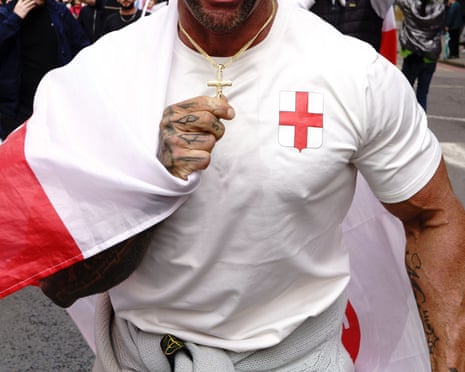
Few figures have made that question more controversial than Tommy Robinson. A longtime anti-Islam activist and prominent figure on Britain’s nationalist right, Robinson has repeatedly placed immigration, Islam, national identity, and freedom of speech at the center of his political messaging. His rhetoric has attracted supporters who believe Britain has lost confidence in its own cultural identity—and fierce critics who accuse him of turning legitimate political disagreements into hostility toward Muslims.
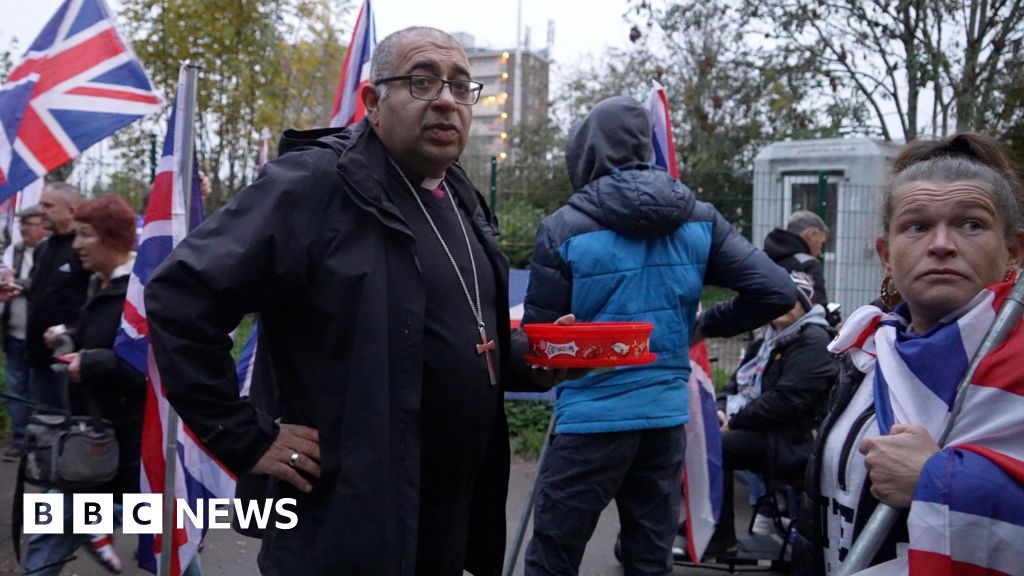
The phrase “We are a Christian nation” has become part of this increasingly charged political language. On the surface, it can be interpreted as a statement about Britain’s history and cultural heritage. Britain undeniably has deep Christian traditions: its monarchy, historic institutions, churches, holidays, architecture, and centuries of political history have all been influenced by Christianity.
But Britain is also a modern, pluralistic society.
That is where the controversy begins.
When political activists invoke Christianity as the defining identity of the nation, some supporters hear a call to rediscover Britain’s historical roots. Critics, however, may hear an implied message that Muslims and other religious minorities are somehow less British.
That distinction is crucial.
A country can recognize its historical Christian heritage without declaring that citizens of other faiths are outsiders. The difficult political question is whether Britain can preserve its historical identity while maintaining equal citizenship for people with different religious and cultural backgrounds.
For Robinson’s supporters, the answer is increasingly urgent.
They argue that Britain has experienced decades of rapid demographic and cultural change without sufficient public discussion. They point to immigration levels, the growth of Muslim communities, debates over integration, and concerns about parallel communities. They believe politicians have avoided discussing these issues honestly because they fear accusations of racism or Islamophobia.
For Robinson’s critics, however, this argument goes too far. They argue that the existence of a large Muslim population does not represent a threat to Britain’s national identity. Millions of British Muslims are citizens, workers, students, parents, neighbors, and members of local communities. Their lives are part of contemporary Britain.
The central disagreement therefore is not simply about religion.
It is about belonging.
Who gets to define British identity?
Can someone be completely British while being Muslim?
Can Britain remain culturally Christian while guaranteeing full religious freedom?
Can immigration be reduced without turning the debate into hostility toward people who have already built their lives in the country?
These questions have become increasingly difficult to avoid.
Robinson’s political appeal rests partly on his willingness to confront subjects that mainstream politicians often approach cautiously. His supporters see him as someone prepared to say what others will not. His opponents see the same characteristic as evidence that political boundaries are being pushed deliberately.
That division helps explain why his appearances and political statements can generate enormous attention.
For supporters, controversy demonstrates that the establishment is uncomfortable with uncomfortable truths.
For opponents, controversy demonstrates the danger of inflammatory rhetoric.
Both interpretations can reinforce the same political cycle: the more controversial the message becomes, the more attention it receives.
Social media intensifies that process.
A short video, speech, slogan, or photograph can travel across Britain within hours. Context can disappear while emotional reactions multiply. A statement intended for one audience can quickly reach millions of people who interpret it through completely different political perspectives.
This is particularly important when the subject is Islam.
There is a legitimate distinction between criticizing a religion, criticizing a political ideology, criticizing government policy, and attacking people because of their religious identity. Democratic societies must leave room for criticism of religious ideas. At the same time, individual Muslims should not be treated as collectively responsible for the actions of extremists or foreign governments.
That distinction is often lost in heated political debates.
A discussion about immigration can become a discussion about Islam. A discussion about Islamist extremism can become a discussion about Muslims generally. A discussion about British history can become an argument about who belongs in Britain.
Once those categories collapse into one another, rational debate becomes much harder.
Britain’s Christian heritage is a historical reality. So is its religious diversity.
The country contains ancient churches alongside mosques, synagogues, temples, and secular institutions. British cities have been shaped by generations of migration. Manchester, Birmingham, Leicester, London, Bradford, and many other communities would be difficult to understand without recognizing the contribution of people whose families arrived from different parts of the world.
That does not mean every aspect of immigration policy has been successful.
Nor does it mean concerns about integration should automatically be dismissed.
There are serious questions about housing, infrastructure, public services, border enforcement, asylum processing, social cohesion, and the ability of communities to integrate successfully. Governments have a responsibility to address those questions.
But there is a difference between demanding effective immigration policy and portraying an entire religious population as an enemy.
That difference may determine the future of Britain’s political debate.
If politicians refuse to discuss legitimate concerns, they risk leaving an opening for more radical voices. But if political movements define millions of ordinary citizens as a collective threat, they risk turning legitimate concerns into social division.
The challenge is therefore enormous.
Britain needs a conversation about immigration that is neither evasive nor hateful.
It needs to be possible to argue for lower immigration without demonizing immigrants.
It needs to be possible to criticize Islamist extremism without treating Muslims as extremists.
It needs to be possible to celebrate Christian history without denying the rights of other religions.
And it needs to be possible for Muslims to participate fully in British society without being required to abandon their faith.
That may sound like a compromise, but compromise is precisely what democratic politics is supposed to produce.
The alternative is permanent cultural warfare.
In such an environment, every election becomes a referendum on identity. Every terrorist attack becomes an excuse for collective suspicion. Every immigration statistic becomes ammunition. Every nationalist rally becomes a counter-protest. Every statement by a controversial activist becomes another flashpoint.
The country becomes trapped in a cycle where fear generates anger and anger generates more fear.
Robinson’s rhetoric is therefore part of a much larger political phenomenon. Across Europe and elsewhere in the West, movements are challenging established assumptions about multiculturalism, immigration, national identity, and political correctness.
Some of these movements have genuine electoral support.
Others remain relatively marginal.
But together they demonstrate that the old political consensus surrounding immigration has weakened.
The question now is what replaces it.
Britain could move toward substantially tighter immigration controls and a stronger emphasis on national integration. It could attempt to redefine citizenship around a clearer set of shared values. Or it could continue its existing model while attempting to manage its contradictions.
Whatever path Britain chooses, the debate over national identity will not disappear.
The phrase “We are a Christian nation” will continue to resonate with some people because it speaks to history, tradition, and a desire for cultural continuity.
But the phrase can also provoke a legitimate question: what does being a Christian nation mean in a country where citizens have many different faiths—and where millions of people do not practice any religion at all?
The answer cannot simply be determined by a slogan.
It must be negotiated through democratic institutions, elections, public debate, and the everyday experience of citizens.
Britain’s future will not be decided solely by politicians or activists. It will also be shaped by ordinary people who live together in increasingly diverse communities.
The country therefore faces a choice.
It can allow political disagreements over identity to become a permanent battle between opposing communities.
Or it can recognize that national identity is complicated enough to contain both history and change.
Britain can remember its Christian heritage without declaring Muslims the enemy.
It can control its borders without abandoning democratic values.
It can debate immigration without abandoning civility.
And it can defend freedom of speech while recognizing that words have consequences.
That may be a less dramatic conclusion than declaring “war” on an entire religious population.
But it is ultimately the more important one.
Because the real question facing Britain is not whether one religion will defeat another.
It is whether a modern democracy can preserve a sense of national identity while ensuring that every citizen—Christian, Muslim, Jewish, Hindu, atheist, or otherwise—can genuinely regard Britain as home.