


Linton-on-Ouse and the Growing Debate Over Britain’s Asylum Accommodation Policy
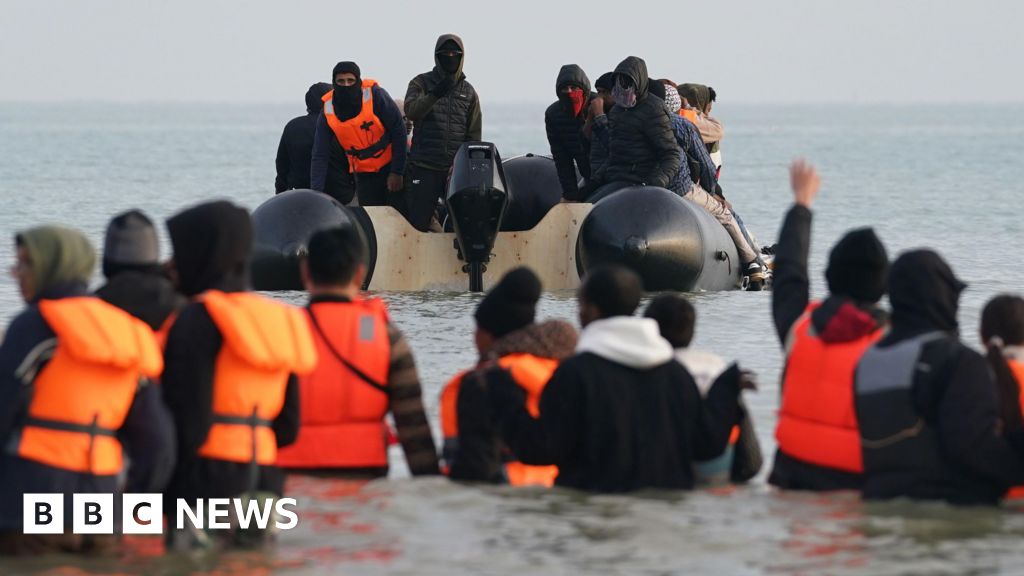
A new controversy over asylum accommodation has erupted in Britain after plans emerged to house around 1,200 asylum-seeking men at the former RAF Linton-on-Ouse site in North Yorkshire. The proposal has generated intense concern among some local residents and politicians because the facility would be located close to a small village whose population is only a fraction of the number of people potentially accommodated at the former military base. Critics have warned that the scale of the proposed accommodation could dramatically alter the demographic balance of the community, while the Government argues that former military facilities can provide a cheaper and more manageable alternative to the increasingly controversial use of hotels.
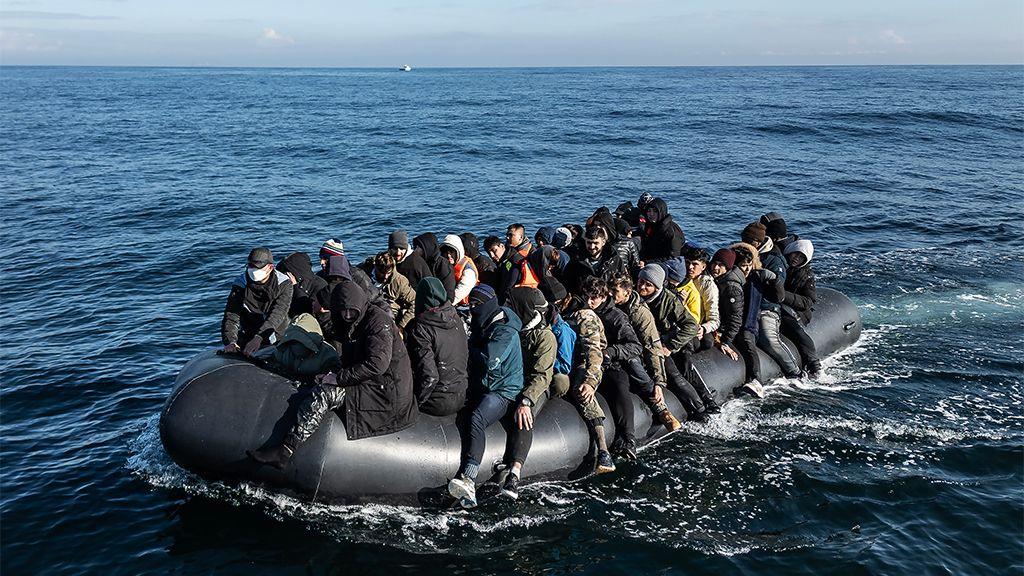
The striking headline that women could be “outnumbered six to one” captures the anxiety surrounding the proposal, but it is important to understand what the figure actually represents. It is not a prediction that every woman in the village will literally be surrounded by six asylum seekers. Rather, it is a comparison between the estimated number of predominantly male asylum seekers who could be accommodated at the site and the existing population of the surrounding community. The proposed facility could therefore create an unusually large difference between the number of adult men living temporarily in the area and the existing local population.
At the centre of the controversy is Linton-on-Ouse, a small rural community in North Yorkshire. The former RAF base has already been considered for asylum accommodation in the past. In 2022, the Conservative Government proposed using the site to house as many as 1,500 male asylum seekers. That proposal was eventually abandoned following substantial local opposition and concerns about the suitability of the location. Four years later, the site has returned to the centre of the national immigration debate.
The Government’s current approach is driven by a straightforward but politically difficult objective: reducing Britain’s dependence on asylum hotels. Hotels are expensive, difficult to manage as a long-term solution and have become a major source of political criticism. Ministers argue that using large former military facilities could provide more controlled environments and reduce the cost to taxpayers.
There is a practical logic to this argument. Former military bases often already possess extensive infrastructure, large buildings, access roads, security arrangements and facilities designed to accommodate significant numbers of people. Converting such properties for temporary accommodation may therefore be cheaper than continuing to rent thousands of hotel rooms across the country. It can also make it easier for authorities to provide food, healthcare, administrative services and other forms of support in a centralised location.
However, the fact that a site is cheaper does not automatically mean that it is suitable. The central criticism from opponents of the Linton-on-Ouse proposal concerns scale. A facility accommodating around 1,200 people would contain a population several times larger than that of the nearby village. Even if the asylum accommodation operates largely as a self-contained site, such a dramatic difference in population size inevitably raises questions about transport, policing, healthcare, local services and the relationship between residents and the wider community.
Rachael Maskell, the Labour MP representing York Central, has been among those raising concerns about the plan. Her opposition is particularly notable because it demonstrates that the issue does not fit neatly into a simple Conservative-versus-Labour argument. Questions about the location and management of asylum accommodation can divide political parties as well as communities. Maskell has argued that Linton-on-Ouse is an inappropriate location and has questioned whether the Government has properly considered the consequences for local residents.
Supporters of the Government’s policy, however, make a different argument. They point out that asylum seekers need somewhere to live while their claims are processed. People who arrive in Britain and make an asylum claim cannot simply be left without accommodation while government officials determine whether they qualify for protection. Britain has legal obligations relating to asylum and refugee protection, and the processing of claims is therefore an unavoidable part of the immigration system.
This distinction is also important when discussing the phrase “illegal migrants”. People who arrive in the United Kingdom irregularly and subsequently claim asylum are not necessarily legally classified as criminals simply because they have arrived without prior permission. Their claims have to be assessed individually. Some applicants may eventually be found to have no right to remain and can become subject to removal, while others may be granted protection because they meet the requirements for refugee or other forms of humanitarian protection.
The terminology surrounding immigration can therefore influence how the public understands the issue. Describing everyone seeking asylum as an “illegal migrant” suggests that their legal status has already been determined, when in many cases the asylum process is precisely what determines that status. At the same time, concerns about irregular entry are legitimate subjects for political debate, particularly when large numbers of people arrive through dangerous routes and the Government struggles to process applications quickly.
Another major concern is security. Residents of small communities understandably want reassurance that adequate policing, CCTV, staff and emergency services will be available. According to reports about the proposed arrangements, the Government intends the site to have security measures, support services and facilities designed to make it as self-contained as possible. The accommodation would not constitute a prison or detention centre, however, meaning that residents would not necessarily be permanently confined to the site.
That distinction has generated further controversy. Some opponents believe that if people are not detained, the presence of more than a thousand adult men could have a significant impact on nearby communities. Others argue that asylum seekers should not automatically be portrayed as a threat simply because they are predominantly male or because they come from other countries. Being an asylum seeker does not itself indicate criminal behaviour, and broad assumptions about individuals based on their immigration status can unfairly stigmatise people whose claims may ultimately be accepted.
The safety of women has nevertheless become a central part of the political discussion. Headlines focusing on women being “outnumbered” are designed to evoke concerns about vulnerability and public safety. Those concerns should not simply be dismissed, particularly when communities are being asked to absorb a population several times their normal size. But they also need to be separated from unsupported assumptions that asylum seekers as a group will commit crimes. Any serious discussion should focus on evidence, policing arrangements, safeguarding procedures and individual behaviour rather than nationality or immigration status alone.
The debate is also connected to a broader geographical question. The Government has argued that asylum accommodation should be distributed more fairly rather than concentrated in particular cities or poorer communities. Prime Minister Andy Burnham has reportedly defended the principle that communities across Britain should contribute to managing the asylum system rather than leaving the burden concentrated in a limited number of locations.
In principle, geographical distribution may sound reasonable. If the country has a national asylum system, it is understandable that accommodation should not depend entirely on a small number of local authorities. Yet “fair distribution” becomes more complicated when the population of the accommodation facility is dramatically larger than the population of the community surrounding it.
A village of a few hundred people is fundamentally different from a city of hundreds of thousands. A facility containing more than a thousand residents might be relatively insignificant in a large urban area but transformative in a tiny rural settlement. The same number of people can therefore have very different effects depending on where they are placed.
Infrastructure is another important consideration. Rural communities often have limited public transport, fewer medical facilities, fewer shops and fewer public services than major towns and cities. If hundreds or thousands of additional people depend on those services, pressure can increase rapidly. Even if the Government provides many services directly at the accommodation site, residents may still travel into nearby communities, creating additional demand for buses, roads, shops and healthcare.
This is why meaningful consultation matters. Communities may be willing to accept difficult national responsibilities if they believe that decisions are being made fairly and transparently. Conversely, if residents learn about major changes to their community without adequate consultation, opposition can become much stronger.
The controversy at Linton-on-Ouse also illustrates the difficulty of solving Britain’s asylum problem by changing accommodation rather than addressing the underlying causes of the backlog. Moving asylum seekers from hotels to military bases may reduce hotel expenditure, but it does not by itself resolve delays in processing applications. Nor does it automatically reduce the number of people attempting to reach Britain.
A successful asylum policy requires several components working together. Applications need to be processed quickly and fairly. People who genuinely qualify for protection need to receive decisions and support without unnecessary delays. Those whose claims are rejected and who have no legal basis to remain need an effective removal system. At the same time, the Government must address the international and domestic factors that contribute to irregular migration.
The Linton-on-Ouse dispute therefore represents a much bigger question than the future of one former airbase. It asks how Britain should balance humanitarian responsibilities, border control, taxpayer costs and the interests of local communities.
There are legitimate arguments on both sides. The Government is right to recognise that hotels are an expensive and unsustainable way of accommodating large numbers of asylum seekers. Former military sites may offer practical advantages and could potentially save substantial amounts of public money. Yet critics are also justified in asking whether a small village is an appropriate location for a facility whose population could be several times larger than the surrounding community.
The strongest solution would avoid both extremes. It would neither assume that every asylum seeker is a threat nor dismiss every concern expressed by local residents as prejudice. Instead, decisions should be based on evidence, proportionality, security assessments, infrastructure capacity and transparent consultation.
Britain’s immigration debate has become increasingly emotional, but the Linton-on-Ouse controversy demonstrates why careful language and accurate information matter. The headline about women being “outnumbered six to one” is powerful, but the underlying issue is fundamentally about numbers, scale, planning and public confidence. A small community can legitimately question whether it has the infrastructure to support a facility containing more than a thousand additional people without treating every asylum seeker as a danger.
Ultimately, the Government will be judged not simply by whether it succeeds in closing asylum hotels, but by whether the alternative system is cheaper, faster, safer and fairer. If former military bases are to become a major part of Britain’s asylum accommodation strategy, ministers will need to demonstrate that they can operate these sites effectively while protecting both the rights of asylum seekers and the interests of local residents.
The controversy at Linton-on-Ouse is therefore unlikely to disappear quickly. It reflects a much wider struggle over Britain’s immigration system and the question of how national responsibilities should be shared locally. For the Government, the challenge is to prove that replacing hotels with former military facilities is more than a change of address. It must form part of a credible strategy capable of processing asylum claims efficiently, reducing costs, protecting vulnerable people and maintaining public trust.
For local residents, meanwhile, the central demand is straightforward: if their community is going to experience such a dramatic change, they want guarantees that safety, infrastructure and quality of life will not be treated as secondary considerations. That is a reasonable demand in any democratic society. The challenge for Britain is to find a policy that recognises those concerns without abandoning its legal and humanitarian responsibilities toward people seeking protection.