
Farage Says Burnham ‘Doesn’t Have the Guts’ to Tackle Small Boats Crisis
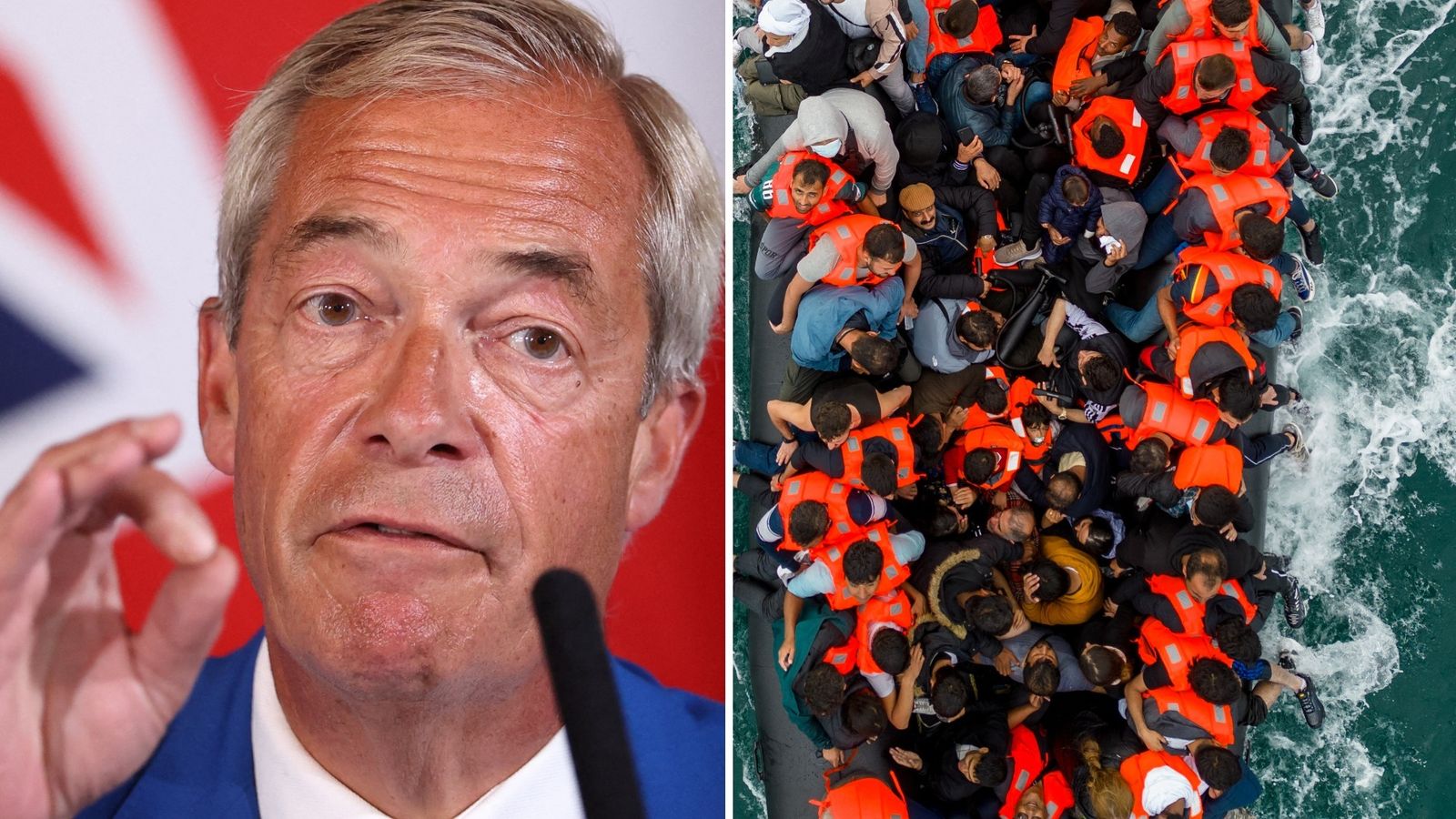
The issue of small boats crossing the English Channel has become one of the most controversial political and social questions in Britain. In recent years, thousands of migrants have attempted to reach the United Kingdom in small, often dangerously overcrowded boats. The situation has created serious challenges for the British government, local authorities, border agencies, and communities. It has also become a major source of political disagreement, particularly over how Britain should control its borders while meeting its legal and humanitarian responsibilities. Against this background, Nigel Farage has strongly criticised Andy Burnham, arguing that the Mayor of Greater Manchester does not have “the guts” to take sufficiently tough action on the small boats crisis.
Farage, a prominent figure in British politics and a long-standing campaigner for stricter immigration controls, has frequently made illegal migration a central part of his political message. His criticism of Burnham reflects a broader disagreement between politicians who favour much tougher immigration policies and those who emphasise international law, humanitarian concerns, and the complexity of migration. Farage’s statement is therefore not simply a personal attack on Burnham. It represents a wider political debate about Britain’s borders, immigration system, national security, and the responsibilities of government.
The small boats crisis has developed into a highly visible symbol of Britain’s difficulties in managing irregular migration. People travelling across the Channel often leave France in small inflatable boats or other unsuitable vessels. The journeys can be extremely dangerous because of overcrowding, poor weather, strong currents, and the heavy traffic in one of the world’s busiest shipping areas. Although some migrants may have legitimate claims for international protection, the use of irregular routes has generated considerable public concern about whether Britain’s asylum and immigration systems are functioning effectively.
For politicians such as Farage, the continued arrival of small boats demonstrates that existing policies have failed. He argues that governments need to adopt stronger deterrent measures so that people considering the journey understand that attempting to enter Britain illegally will not automatically result in permanent settlement. From this perspective, the key objective should be to reduce the incentive to make dangerous journeys in the first place. Farage has repeatedly presented immigration control as an issue of sovereignty, arguing that a country must be able to determine who enters its territory and under what circumstances.
His criticism of Andy Burnham is particularly interesting because Burnham is not directly responsible for Britain’s national border policy. As Mayor of Greater Manchester, Burnham has responsibility for regional government and a range of local services, but immigration, asylum policy, and border control are primarily matters for the national government. This distinction is important when assessing Farage’s accusation. While Burnham may influence local discussions about migration and the impact of national policies on communities, he does not control the UK’s border system.
Nevertheless, Burnham is a nationally recognised political figure, and his views on immigration and public services can attract significant attention. Farage’s criticism can therefore be understood as part of a broader political strategy: challenging opponents who, in his view, represent a more moderate or cautious approach to controversial issues. By saying that Burnham “doesn’t have the guts” to tackle the crisis, Farage uses deliberately strong language designed to portray himself as decisive and willing to take difficult action.
The choice of words is significant. Political language is often designed not only to communicate a policy position but also to influence how voters perceive political leaders. Describing an opponent as lacking courage suggests that the problem is not simply disagreement over policy but a failure of leadership. Farage’s argument implies that stronger action is possible but that politicians such as Burnham are unwilling to take it because of political, legal, or humanitarian concerns.
However, supporters of a more cautious approach would argue that the small boats crisis cannot be solved simply by adopting tougher rhetoric. Migration is driven by a complicated combination of factors, including war, persecution, poverty, political instability, economic opportunity, family connections, and the availability of smuggling networks. Many people who make dangerous journeys have already travelled through several countries before reaching the Channel. Governments therefore face the difficult task of reducing irregular migration while also protecting people who may genuinely need international protection.
There is also an important legal dimension to the debate. Britain is subject to domestic and international legal obligations concerning asylum and the treatment of refugees. A person arriving without a conventional visa or travel document does not automatically lose the right to have an asylum claim considered. This creates a tension between the political demand for stronger border controls and the legal requirement to assess individual cases fairly. Any policy designed to reduce small boat crossings must therefore operate within a complex legal framework.
Another major concern is the role of criminal smuggling organisations. Migrants who cross the Channel in small boats often depend on people smugglers who organise the journeys and charge substantial amounts of money. These criminal networks profit from human vulnerability and can place passengers in extremely dangerous conditions. Tackling the business model of smugglers is consequently an important part of any long-term strategy. Stronger international cooperation between British and French authorities may be necessary to identify organisers, disrupt financial networks, and prevent boats from being launched.
At the same time, the British public has legitimate concerns about the pressure that irregular migration can place on public services. Local authorities may face difficulties providing accommodation and support for asylum seekers while already dealing with limited resources. Communities may also experience frustration if they believe that decisions about migration are being made without sufficient consultation. These concerns should not automatically be dismissed as hostility towards migrants. In a democratic society, governments need to listen to citizens and explain clearly how immigration policies are being implemented.
On the other hand, public debate can become harmful when political arguments reduce migrants to statistics or treat every person arriving by small boat as a criminal. Migrants are individuals with different backgrounds, motivations, and legal circumstances. Some may have travelled because they feared persecution or violence, while others may have primarily economic motivations. A responsible immigration policy needs to recognise these differences rather than treating the entire group as identical.
Farage’s criticism of Burnham therefore raises a larger question: what does effective leadership mean during an immigration crisis? For Farage, leadership appears to mean taking firm action, accepting political controversy, and prioritising border control. For others, leadership may involve balancing security with humanitarian responsibilities and ensuring that policies are legally sustainable. Both perspectives reflect genuine concerns, but neither offers an easy solution.
A successful strategy would probably require more than one policy. Britain could strengthen cooperation with France and other European countries, improve the processing of asylum applications, target organised smuggling networks, expand safe and legal routes where appropriate, and ensure that people who have no legal right to remain are dealt with efficiently and fairly. At the same time, the government would need to communicate clearly with the public about the scale of migration, the costs involved, and the reasons behind its decisions.
Ultimately, Farage’s attack on Burnham illustrates how emotionally charged the small boats debate has become. The phrase “doesn’t have the guts” is powerful political rhetoric, but courage alone cannot resolve a complicated international problem. The challenge facing Britain is to create a system that is both effective and humane: one that protects the country’s borders, discourages dangerous journeys, dismantles criminal smuggling networks, and fulfils Britain’s legal responsibilities towards people seeking protection.
The small boats crisis is unlikely to disappear through political arguments alone. Whether Farage’s tougher approach or another strategy is more effective should ultimately be judged by results rather than rhetoric. The number of dangerous crossings, the speed and fairness of asylum decisions, the effectiveness of removals where legally justified, and the disruption of smuggling organisations are all important measures of success.
In conclusion, Farage’s accusation that Burnham “doesn’t have the guts” to tackle the small boats crisis reflects the deep divisions within British politics over immigration and border control. His comments appeal to voters who believe that the government has lost control of Britain’s borders and that stronger action is urgently needed. However, the responsibilities of national and local government, Britain’s legal obligations, and the humanitarian realities of migration make the issue considerably more complicated than a simple question of political courage. Britain needs firm and effective policies, but it also needs policies that are practical, lawful, and humane. The real test of leadership will not be who uses the strongest words, but who can develop a lasting solution to one of the country’s most difficult political challenges.