

Andy Burnham Wanted to Knock Farage Out — But He’s Back on His Feet
For a brief moment, it looked as though Andy Burnham had achieved exactly what many Labour strategists had hoped for.
Nigel Farage was losing momentum. Reform UK was slipping in the polls. Labour was recovering after the disastrous final months of Keir Starmer’s premiership. And Burnham, the former mayor of Greater Manchester, appeared to have arrived in Downing Street with precisely the political energy Labour had been missing.
Then Farage got back on his feet.
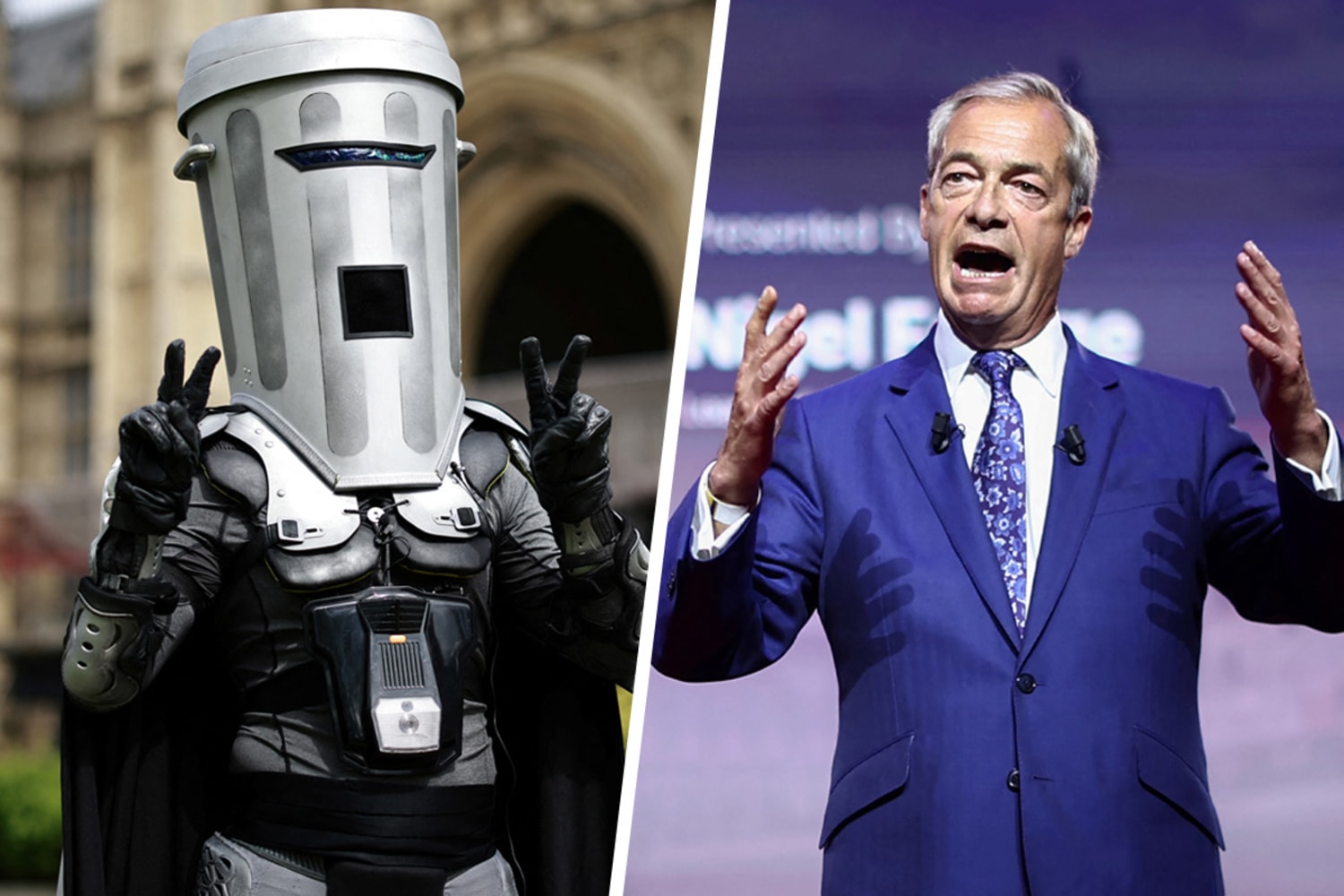
The most dramatic evidence came last week, when Farage won back his parliamentary seat in Clacton with roughly 63% of the vote. It was an extraordinary result, particularly because the major political parties boycotted the by-election and Farage faced a bizarre field of more than 30 candidates, including the satirical Count Binface.
Farage’s victory does not mean Reform UK is suddenly unstoppable.
But it does mean something potentially more important for Burnham: Farage has not gone away.
And that creates a serious problem for the new prime minister.
When Burnham entered Downing Street on July 20, Labour had already begun recovering ground from Reform. Several polls showed Labour catching or overtaking Farage’s party, while Burnham himself was regarded more positively than his predecessor and other major political leaders.
It was exactly the political opening Labour needed.
For months, Reform had dominated the conversation. Farage’s party had performed strongly in local elections, Labour had suffered humiliating defeats in former heartlands, and Starmer appeared increasingly incapable of persuading voters that his government understood their concerns.
Burnham changed the atmosphere almost overnight.
His early policies focused heavily on the cost of living, including a £2 bus fare cap and measures affecting energy bills and pubs. The strategy was obvious: give voters an immediate reason to believe that Labour had changed.
And initially, it worked.
But politics is rarely decided by the first few weeks of a new government.
The real test comes when the honeymoon ends.
And Farage has just demonstrated that he is capable of surviving one of the strangest political episodes in recent British history.
His Clacton campaign was supposed to be a gamble.
Farage had resigned his parliamentary seat amid controversy over an undeclared £5 million gift from cryptocurrency businessman Christopher Harborne and then sought re-election, presenting the contest as a battle between himself and an establishment determined to remove him. The parliamentary investigation has now resumed.
Under normal circumstances, this could have been disastrous.
Instead, Farage won comfortably.
That is the part Burnham cannot afford to ignore.
The Reform leader may have suffered a political setback in the size of his vote compared with some polling expectations, and his decision not to attend the count created another layer of controversy. But he still walked away with an enormous majority in a seat that he had deliberately put back into play.
More importantly, he remains the face of a political movement that has already changed the behaviour of Britain’s traditional parties.
That is Farage’s real power.
He does not necessarily need to win a general election tomorrow.
He does not even need to be ahead in every opinion poll.
He only needs to convince millions of voters that Labour and the Conservatives are afraid of the issues Reform talks about.
That is why Burnham’s apparent attempt to knock Farage out could become a dangerous strategy.
The new prime minister appears to understand that Labour cannot simply ignore Reform. He has therefore moved quickly on issues such as immigration, asylum accommodation and public services.
But there is a danger in trying to defeat Farage on his own territory.
If Burnham becomes obsessed with proving that Labour can be tougher on immigration than Reform, Farage gets exactly what he wants: the political agenda becomes centred on immigration.
And Farage has spent decades making that territory his own.
The same problem exists with crime, welfare and national identity.
Reform’s advantage is that its message is simple. Its critics may consider the solutions unrealistic or controversial, but the party knows how to turn complicated problems into straightforward political slogans.
Labour’s advantage is supposed to be government.
Burnham therefore has to demonstrate that Labour can actually make people’s lives better.
That is much harder than winning an argument on television.
The latest Reform welfare proposals illustrate the challenge. The party has proposed around £50 billion in welfare cuts, including restrictions on benefits for foreign nationals and major changes to disability payments. Labour has attacked the proposals as unrealistic, while critics argue that they would hit vulnerable people.
Burnham has an opportunity here.
Instead of simply attacking Farage, he can force Reform to explain what its policies would actually mean for families, disabled people, workers and communities.
That is a much stronger strategy than trying to out-Farage Farage.
Because Farage’s greatest strength is not necessarily the popularity of every Reform policy.
It is his ability to appear authentic.
Many voters who support Reform do not necessarily agree with every proposal. Some simply believe that Farage says things other politicians are afraid to say.
That perception cannot be defeated by another carefully written government announcement.
Burnham needs something more powerful: results.
If he can reduce household costs, improve public services, reduce the asylum backlog, control illegal migration and make people feel that government is functioning again, Farage’s central argument becomes weaker.
But if Burnham announces ambitious policies and voters see little change, Farage will be waiting.
He already has the message prepared.
He will say that Labour is simply another establishment government making promises it cannot keep.
That is why the Clacton result matters.
It demonstrates that Farage still has a loyal political base even while facing serious controversy and a challenging national environment.
Indeed, the result was particularly striking because it came at a time when Reform’s national momentum appeared to have weakened. Labour had recovered in the polls after Burnham became prime minister, while Farage had spent much of the summer unusually quiet. The Guardian reported that his public profile had fallen dramatically compared with the previous year, with his team acknowledging that Burnham was dominating political attention.
Yet when Farage returned to the electoral battlefield, his supporters turned out.
That should make Labour nervous.
Burnham may have won the opening round.
Farage has just shown that the fight is not over.
There is also a deeper problem for Labour.
Burnham became prime minister without fighting a general election as party leader. Farage has repeatedly attacked him for lacking a personal mandate and has demanded an election. Burnham has rejected the idea of an early contest, arguing that the public voted for the 2024 Labour manifesto and that he intends to honour it.
That decision is understandable.
Calling an election immediately would be an enormous gamble.
But it also gives Farage a political weapon.
Every time Burnham introduces a major new policy, Reform can ask a simple question: Who voted for this?
Burnham can respond that parliamentary democracy does not require a new general election every time a prime minister changes. Constitutionally and politically, that is a perfectly defensible position.
But politics is not only about constitutional rules.
It is also about perception.
Farage wants voters to believe that Burnham is an unelected prime minister who has taken power through an internal Labour succession rather than a direct public mandate.
Burnham therefore needs to be exceptionally careful about appearing complacent.
The worst possible response would be to dismiss Farage as a joke.
The Clacton result proves that would be foolish.
Farage may be controversial. His party may face serious questions over its policies and funding. His personal political style may repel as many voters as it attracts.
But he remains an extremely effective campaigner.
And, crucially, he has become a symbol.
For many Reform supporters, voting for Farage is not simply about Farage. It is a way of protesting against the political establishment.
That makes him difficult to destroy through conventional political attacks.
Burnham’s best hope is therefore not to knock Farage out.
It is to make Farage less necessary.
If people believe that Labour is delivering on immigration, housing, wages, public services and living standards, the emotional appeal of protest politics becomes weaker.
If they continue to feel ignored, Farage will continue to have an audience.
This is the fundamental lesson from the past few months.
Starmer tried to restore Labour’s credibility by presenting himself as a serious, responsible alternative. But seriousness without visible results became political weakness.
Burnham has the advantage of being more charismatic and more closely associated with a successful record in Greater Manchester. Recent polling suggests that voters currently view him more favourably than Farage.
But popularity is temporary.
A prime minister gets a honeymoon.
A protest movement does not.
Reform can wait.
Farage can wait.
If Burnham makes a mistake, Reform will be there to exploit it.
That is why the Clacton result should be treated as a warning rather than a victory for either side.
Farage has not conquered Britain.
But he has survived.
And survival is sometimes enough.
Burnham entered Downing Street hoping to change the political weather. For the moment, he has succeeded. Labour is more competitive, the government appears more energetic and Farage is no longer dominating every headline.
But the Reform leader has just reminded Westminster of something it repeatedly forgets:
You can knock Nigel Farage down. You cannot assume he will stay down.
The next battle will not be decided by one by-election, one poll or one political speech.
It will be decided by whether Burnham can deliver enough change to persuade voters that they no longer need Farage to deliver the message for them.
If he can, Reform may finally begin to fade.
If he cannot, Farage will rise again — and next time, he may be considerably harder to stop.