
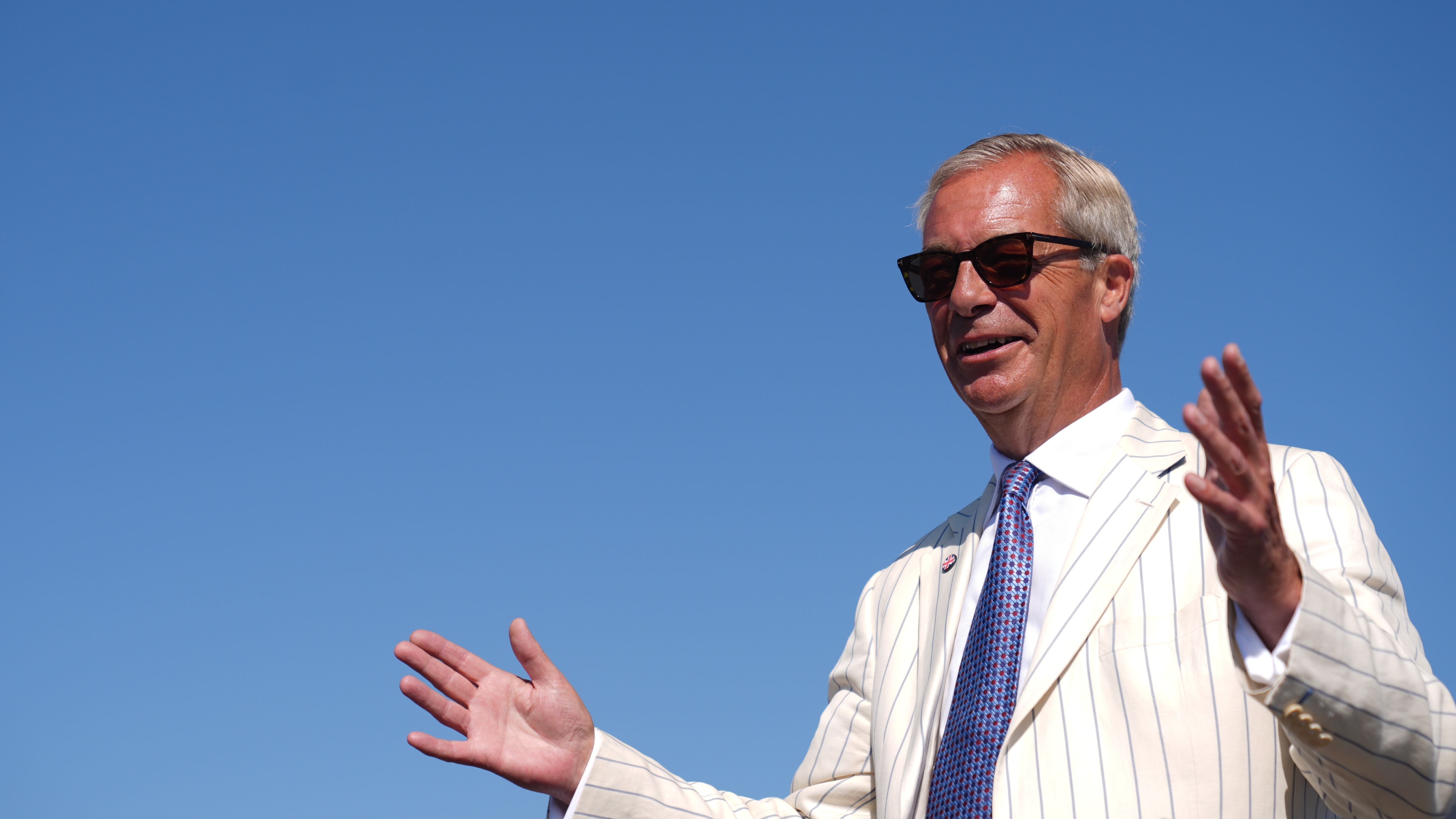
Parliament’s Probe into Nigel Farage’s Finances Resumes Hours After Reform Victory in Clacton

Nigel Farage has won his way back into Parliament.
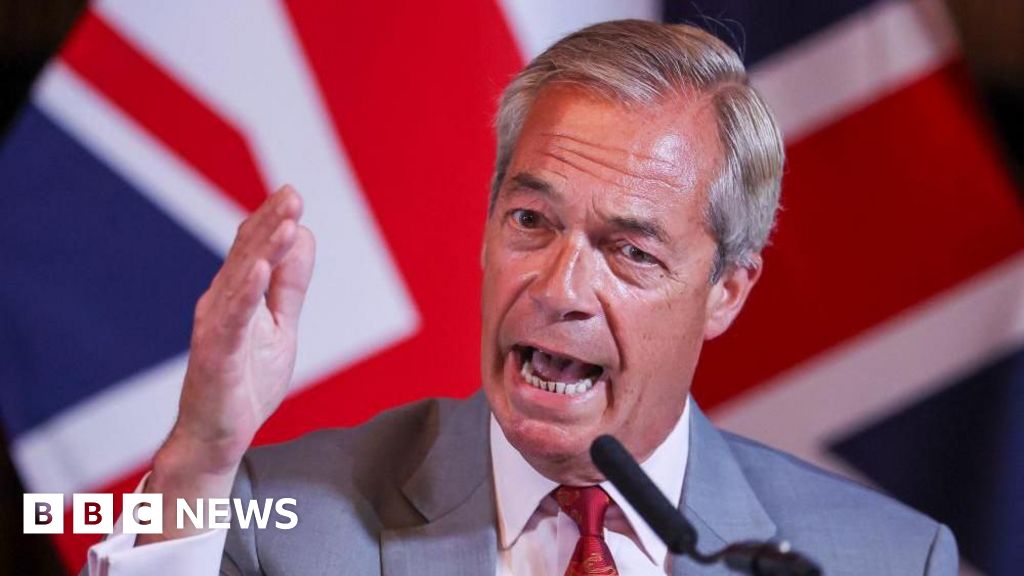
But within hours of celebrating his victory in Clacton, the Reform UK leader found himself facing the very issue that had prompted him to resign his seat in the first place.
A parliamentary investigation into his finances has resumed.
The timing could hardly be more dramatic. Farage secured a commanding victory in Thursday’s Clacton by-election, winning 22,239 votes, or around 63% of the total. Yet almost immediately afterwards, the parliamentary standards watchdog changed the status of its investigation into Farage from “suspended” to “active”.
Farage is therefore back where he wanted to be: in the House of Commons.
But the controversy he hoped to leave behind has followed him straight back through the parliamentary doors.
And this time, there is no resignation available to pause the process.
The £5 Million Question
At the centre of the investigation is a £5 million gift that Farage received from cryptocurrency billionaire Christopher Harborne in 2024.
The question for Parliament is not simply whether Farage received the money. He has acknowledged receiving it.
The crucial issue is whether it should have been declared under parliamentary rules.
Farage has argued that the money was a personal gift and therefore did not need to be registered. He has also previously described the funding in different terms, including suggesting that it related to his Brexit campaigning. The parliamentary investigation will ultimately have to establish whether his interpretation of the rules was correct.
That is an important distinction.
An investigation is not a finding of guilt.
Farage has not been declared to have broken the rules over the £5 million gift. The watchdog is examining the circumstances and deciding whether the relevant parliamentary requirements were followed.
But politically, the damage can occur long before an investigation reaches its conclusion.
For Reform UK, transparency is particularly important because the party has built much of its appeal around attacking the established political system.
Farage presents himself as an outsider.
He attacks Westminster politicians for being disconnected from ordinary people.
He accuses traditional parties of protecting their own interests.
That makes scrutiny of his personal finances particularly sensitive.
The more Reform portrays itself as an alternative to the political establishment, the more damaging any suggestion of financial opacity could become.
A Victory That Did Not End the Story
Farage resigned his Clacton seat in July and triggered the by-election himself.
The move was controversial from the beginning.
The major political parties chose not to contest the election, arguing that Farage had effectively created an expensive political spectacle by resigning his seat while facing scrutiny over his finances. Instead, the ballot paper was dominated by independent, fringe and satirical candidates.
There were 34 candidates in total.
Farage nevertheless won comfortably.
His closest challenger was Count Binface, the satirical candidate played by comedian Jon Harvey, who received 9,455 votes. The result gave Farage a huge majority, but turnout fell significantly compared with the 2024 general election.
For Farage, the result was supposed to provide political vindication.
He could argue that the people of Clacton had deliberately chosen him again.
That is undoubtedly significant.
But an electoral victory does not automatically settle a parliamentary standards investigation.
The two questions are completely separate.
Clacton voters decided who should represent them.
Parliament’s standards system must decide whether Farage complied with the rules governing MPs.
That distinction is likely to become increasingly important in the weeks ahead.
Farage’s Gamble
The extraordinary sequence of events raises an obvious question.
Why did Farage resign his seat if the investigation could simply resume after his re-election?
His argument was that he had been subjected to unfair scrutiny and that returning to voters would allow the people of Clacton to make their own judgement.
That gamble has now paid off electorally.
But it has not removed the underlying problem.
Instead, Farage has returned to Parliament with the investigation waiting for him.
The situation could become even more uncomfortable if investigators conclude that he breached parliamentary rules.
The possible consequences would depend on the nature and seriousness of any finding. They could range from a requirement to correct the record or apologise to more serious sanctions. In certain circumstances, a suspension could ultimately create the possibility of another by-election.
That means Thursday’s victory may not necessarily be the final chapter of the Clacton saga.
It could be another beginning.
Reform’s Bigger Problem
There is a wider political issue here.
Reform UK has spent much of the past year trying to transform itself from a protest movement into a serious governing alternative.
That requires more than winning elections.
It requires demonstrating that the party can operate under the same standards it demands from everyone else.
Farage has repeatedly attacked the political establishment for failing to deliver accountability. Reform’s supporters argue that Westminster has ignored public concerns over immigration, public spending and political integrity.
But political movements that campaign on accountability eventually have to submit themselves to the same standard.
That is why the renewed investigation matters beyond Farage personally.
If the watchdog ultimately clears him, he will be able to argue that the scrutiny was exaggerated and that the rules were never properly understood.
If investigators find that he breached the rules, however, Reform’s opponents will have a powerful political weapon.
They will argue that Farage’s anti-establishment image conceals the same problems of privilege and financial opacity that he accuses other politicians of representing.
For a party built around personal trust in its leader, that could be particularly damaging.
The Timing Is Awkward for Labour
The development also comes at a difficult moment for Andy Burnham’s government.
Labour has been trying to recover political ground from Reform since Burnham became prime minister.
Recent polling had suggested that Labour was beginning to regain momentum, while Reform’s national support had weakened. Farage’s return to Parliament therefore represents an opportunity for Reform to regain attention.
But the renewed investigation creates a dilemma.
Labour cannot simply attack Farage for being under investigation.
That could easily be portrayed by Reform as another example of the political establishment trying to silence its opponents.
Instead, Labour needs to allow the parliamentary process to work.
That is potentially frustrating for politicians who would like to exploit Farage’s difficulties.
But it is also the safest political strategy.
The strongest argument is not that Farage is guilty.
It is that everyone — including the most powerful and popular politicians — should be subject to the same rules.
If the investigation finds no wrongdoing, Farage should be able to move on.
If it finds a breach, the appropriate consequences should follow.
Anything else would undermine the very principle of parliamentary accountability.
Farage’s Own Defence
Farage has consistently denied wrongdoing.
His position is essentially that the £5 million was a personal gift and that he did not believe it fell within the rules requiring declaration.
That argument will now be tested by the standards process.
It is worth remembering that Farage has previously faced parliamentary scrutiny over financial declarations.
In January 2026, an earlier investigation found 17 breaches relating to late registration of interests. However, the Commissioner concluded that the failures were inadvertent and dealt with the matter through the rectification procedure after Farage accepted responsibility and apologised.
That history makes the latest investigation more politically sensitive.
Supporters can argue that Farage has already been subjected to disproportionate scrutiny.
Critics can argue that repeated problems with declarations demonstrate why stronger oversight is necessary.
Neither side can know the final answer until the current investigation is completed.
The Strange Clacton Election
Perhaps the most extraordinary part of the story is that the election itself was supposed to settle Farage’s political future.
Instead, it has produced another layer of uncertainty.
Farage did not attend the official declaration of the result, saying he had been advised of a security threat. Essex police disputed aspects of that claim, saying no incidents occurred and that officers had not advised him to avoid the count.
He subsequently celebrated his victory with supporters elsewhere.
The episode added to the sense that the Clacton election was as much political theatre as conventional democratic competition.
And yet the result itself was real.
Farage won.
His supporters turned out.
He is once again an MP.
That should not be dismissed simply because the election was unusual.
Indeed, it may be the most important lesson of the entire affair.
Farage remains capable of mobilising voters even when the mainstream political parties refuse to challenge him.
What Happens Next?
The immediate future is now largely in the hands of Parliament’s standards watchdog.
The investigation will examine the financial circumstances surrounding Farage and determine whether parliamentary rules were breached.
That process could take time.
Farage, meanwhile, will return to the Commons and attempt to shift the political conversation back towards Reform’s core issues: immigration, the cost of living, public services and opposition to the established parties.
But the financial investigation will remain in the background.
Every speech he makes about political integrity could attract questions about the £5 million.
Every attack on another politician’s finances could invite scrutiny of his own.
And every attempt to portray Reform as the clean alternative to Westminster could be tested against the findings of the investigation.
That is the real danger for Farage.
Not necessarily that the investigation will destroy him.
It may not.
The greater danger is that it prevents him from controlling the political narrative.
He wanted Clacton to demonstrate that the voters had rejected the establishment’s attempt to remove him.
Instead, the result has delivered him back into Parliament at precisely the moment the establishment investigation has restarted.
The irony is almost perfect.
Farage went back to the voters to escape the controversy.
The voters sent him back to Westminster.
And Westminster has handed the controversy straight back to him.
His victory is therefore both a political triumph and an unresolved problem.
He has his seat.
He has his mandate.
He has his party.
But now the parliamentary watchdog is watching again.
And until that investigation is finished, Nigel Farage’s return to Parliament will come with a very large question mark hanging over it.