

Nigel Farage Quits as MP as He Triggers Bombshell By-Electron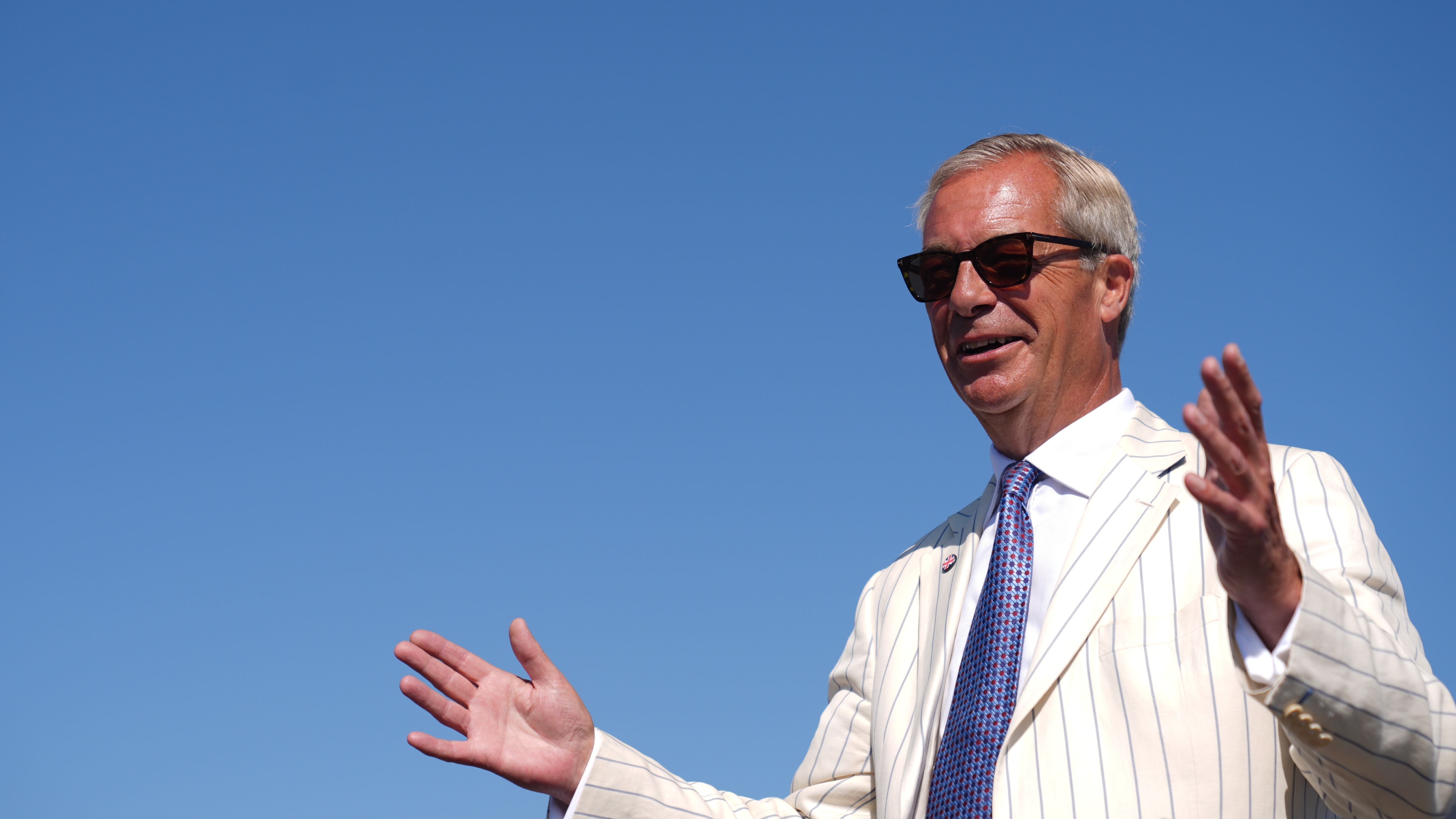
Nigel Farage has detonated a political bombshell by resigning as the Member of Parliament for Clacton and deliberately triggering a by-election that he says will give voters the opportunity to judge him for themselves.

The dramatic decision came as the Reform UK leader faced intensifying scrutiny over his financial affairs, including questions surrounding a £5 million gift from cryptocurrency businessman Christopher Harborne and a separate investigation concerning support allegedly connected to his longtime associate George Cottrell. Farage insisted that he had done nothing wrong and presented his resignation not as an admission of failure, but as a direct challenge to the political establishment.
His message was deliberately confrontational.
Farage argued that the people of Clacton should be the judges of his conduct rather than politicians, officials or the media. He described the resulting contest as a “people versus the establishment” by-election and vowed to fight to win.
It was a characteristically Farage move: turn a damaging political controversy into an electoral confrontation.
Rather than waiting for the parliamentary standards process to determine whether he had breached the rules, Farage chose to place his political future directly before voters. By resigning, he created a fresh election in which he could campaign on his own terms and attempt to demonstrate that the controversy had not destroyed public confidence in him.
The decision was nevertheless a huge gamble.
A by-election is never entirely predictable, and Farage’s opponents immediately questioned the wisdom of forcing voters back to the polls. Several major parties announced that they would not contest the election, arguing that Farage had effectively created a political spectacle to escape scrutiny over his finances.
That decision produced an extraordinary situation.
Instead of a conventional battle between Labour, Conservative and Reform candidates, Clacton became a contest dominated by Farage and a collection of independent, fringe and novelty candidates.
Among them was Count Binface, the satirical candidate who eventually became Farage’s most prominent challenger.
The unusual circumstances made the election unlike almost any normal parliamentary contest. More than 30 candidates appeared on the ballot, with the final list reaching 34 candidates. The result was one of the longest ballot papers in British political history.
Yet the absence of mainstream opposition did not necessarily make Farage’s decision meaningless.
Quite the opposite.
The Reform leader could argue that the established parties were afraid to face him.
His opponents could argue that they were refusing to legitimise what they regarded as a vanity election.
Both interpretations appealed to different sections of the electorate.
For Farage, however, the central objective was clear: demonstrate that voters in Clacton still wanted him as their representative.
The controversy surrounding his finances had created a serious political problem.
Farage had received a £5 million gift from Harborne before the 2024 general election. The parliamentary standards watchdog began examining whether the benefit should have been declared. Farage has maintained that the money was a personal gift and has denied wrongdoing. The investigation was paused when the by-election was called but could resume following his return to Parliament.
There were also questions surrounding George Cottrell, a convicted fraudster who has long been associated with Farage. Reports about financial support and connections involving Cottrell added another layer to the controversy.
For Farage, the political danger was obvious.
His entire career has been built around attacking the political establishment for failing to uphold standards of accountability. He has repeatedly demanded transparency from politicians and institutions.
Now he was the politician being asked to explain his own finances.
His response was to take the argument directly to voters.
That strategy is entirely consistent with the political identity Farage has cultivated for decades.
He has always presented himself as an outsider.
He portrays Westminster as a distant political class that does not understand ordinary voters. He has built his reputation by challenging the Conservative establishment, campaigning for Brexit and eventually turning Reform UK into a serious electoral force.
The Clacton by-election allowed him to return to that familiar narrative.
Instead of allowing the story to be “Farage faces questions over his finances”, he sought to make it “Farage challenges the establishment and asks the people to decide”.
That is a powerful political reframing.
But it also carries a risk.
An election victory cannot necessarily answer every question raised by a parliamentary standards investigation.
Voters can express their confidence in a politician, but that does not determine whether parliamentary rules were followed.
The two issues are separate.
Farage can win an election and still face an investigation. Equally, an investigation does not automatically mean that he has committed wrongdoing.
That distinction is important because political controversies often move faster than formal investigations.
A headline can create the impression of guilt long before any authority reaches a conclusion.
Farage has repeatedly argued that this has happened to him.
He believes that the scrutiny of his finances has been exaggerated and politically motivated. His resignation therefore offered him a way to bypass what he sees as an establishment process and appeal directly to the electorate.
But his decision also created an unexpected problem.
The major parties did not give him the traditional contest he wanted.
Labour and the Conservatives chose not to stand candidates, depriving Farage of the opportunity to defeat a conventional opponent. Instead, he faced a ballot filled with independents and fringe candidates.
The most memorable of these was Count Binface.
The satirical character’s presence ensured that the election would attract international attention and made it difficult for Farage to present the contest entirely as a conventional political battle.
It became part serious election, part political theatre.
Yet the result still mattered.
Farage ultimately won the Clacton by-election with more than 60 per cent of the vote, returning to Parliament. Count Binface performed unexpectedly strongly, securing around 27 per cent and finishing second.
Farage’s victory therefore achieved the immediate objective of his resignation strategy.
He got his seat back.
But the result was more complicated than a straightforward triumph.
Some polling before the election had suggested that Farage could win roughly three-quarters of the vote. His final share was considerably lower. That gap gave critics an opportunity to argue that the by-election had not restored the momentum he hoped to regain.
The decision to resign therefore solved one problem while creating another.
Farage returned to Parliament, but he did not receive the overwhelming political vindication that some had expected.
And because the major parties had boycotted the contest, it is difficult to interpret the result as a conventional measure of national support.
The Clacton electorate remains strongly sympathetic to Farage and Reform UK.
But the result tells us much less about what would happen in a general election in which Labour, Conservatives, Liberal Democrats and other parties compete normally.
That distinction could become crucial to Farage’s long-term ambitions.
Reform UK has sought to position itself as a potential governing party rather than simply a protest movement. Its national polling has at times been extremely strong, although recent figures have shown its support weakening as Labour has recovered under Prime Minister Andy Burnham.
Farage therefore needed the Clacton contest to achieve more than simply returning him to Parliament.
He needed momentum.
He needed headlines showing that Reform remained unstoppable.
He needed to turn the financial controversy into evidence of his resilience.
The result achieved some of those objectives.
But it did not eliminate the underlying questions.
Indeed, the parliamentary investigation into the £5 million gift has now resumed. If the standards process eventually finds that Farage breached parliamentary rules, he could face further political difficulties and potentially another challenge to his position.
That possibility makes the resignation strategy even more extraordinary.
Farage effectively chose to fight an election before the controversy had been fully resolved.
It was a calculated gamble on the belief that voters would trust him more than the institutions investigating him.
That is perhaps the purest expression yet of his political philosophy.
Farage’s politics has always depended on the idea that ordinary voters can be more trusted than political elites.
He believes that when institutions become disconnected from the public, the answer is to return power to voters.
His critics see something very different.
They argue that elections should not be used as a shield against scrutiny and that politicians must accept the same accountability standards as everyone else.
This disagreement goes to the heart of modern populist politics.
Who should have the final word?
Should it be Parliament, independent watchdogs and established institutions?
Or should politicians ultimately answer to the voters who elected them?
Farage’s answer is obvious.
He chose the voters.
The Clacton by-election therefore became much more than a question of who would occupy one parliamentary seat.
It became a referendum on Farage’s political survival.
And although he won, the victory did not end the debate.
If anything, it ensured that the next stage will be even more closely watched.
Farage is back in Parliament.
Reform remains a major political force.
But the financial investigations continue.
His opponents remain determined to challenge him.
And the wider electorate remains unpredictable.
The most remarkable aspect of the episode may therefore be what it says about British politics itself.
A politician facing serious questions about his finances chose not to retreat.
He resigned.
He forced an election.
His opponents refused to contest it.
A satirical candidate became his main challenger.
And Farage eventually returned to Parliament with a large majority.
It is difficult to imagine a more Farage-like political episode.
Whether it was a masterstroke or a political gamble that merely delayed the underlying problem remains open to debate.
But one thing is certain: Nigel Farage has once again demonstrated that when conventional political rules begin to work against him, he is willing to rewrite the script.
The real test now begins.
Can he convert his Clacton victory into renewed national momentum?
Can he persuade voters outside his political stronghold that the financial controversies are politically motivated rather than evidence of poor judgment?
And can Reform UK turn its electoral insurgency into a credible governing movement?
Those questions will matter far more than the by-election itself.
For now, though, Farage has achieved the immediate goal.
He resigned as an MP.
He asked Clacton to judge him.
And Clacton gave him another mandate.
The political establishment may not like the way he did it.
But the voters have spoken.
And Nigel Farage is back in Parliament.