
Nigel Farage Hits Back in Furious Statement Over Funding Row
Nigel Farage has launched an angry defence of his financial affairs as the Reform UK leader faces renewed scrutiny over a series of donations and benefits linked to wealthy supporters.
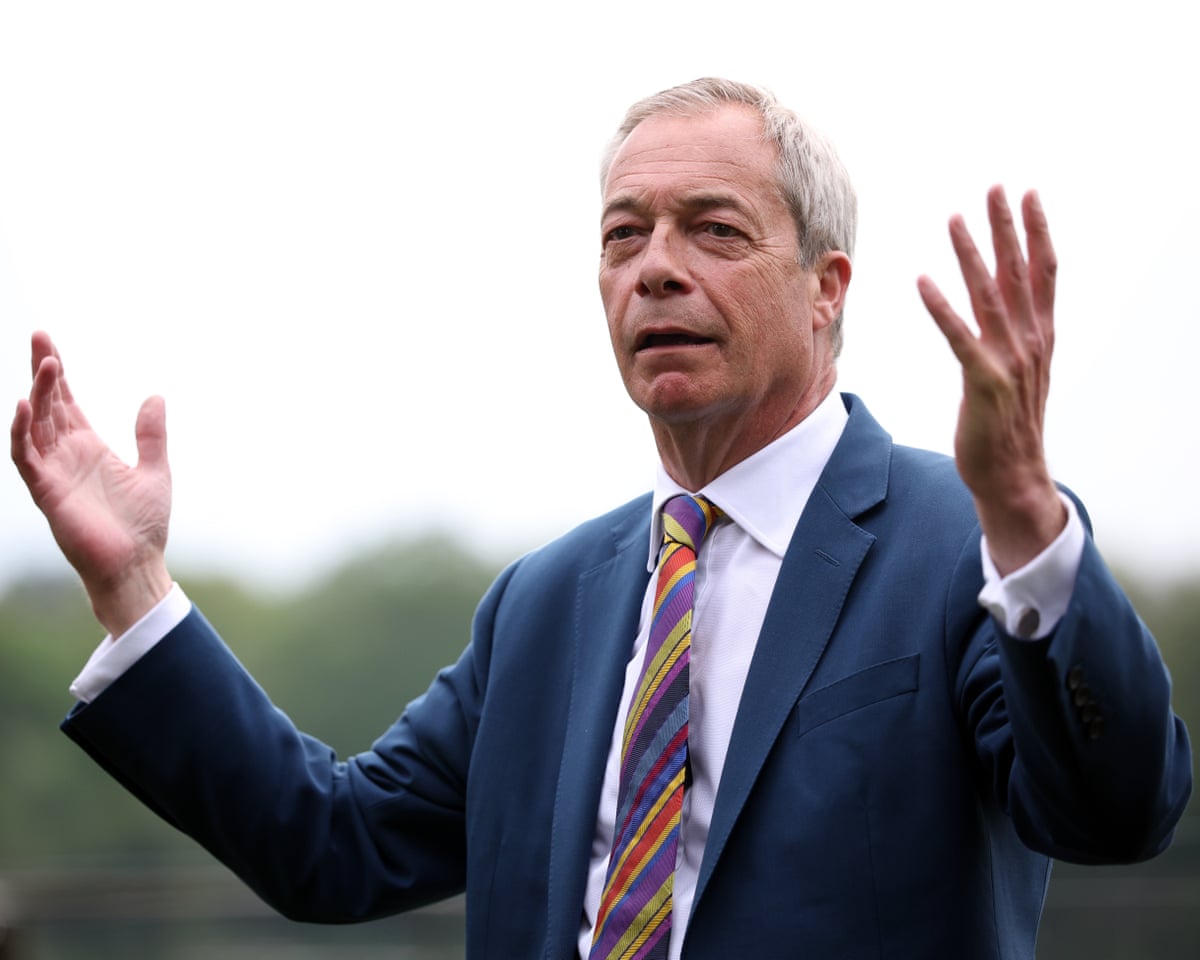
The controversy has become one of the biggest challenges of Farage’s political career. What began with questions over a £5 million gift from cryptocurrency businessman Christopher Harborne has developed into a much broader examination of financial support allegedly provided to Farage and his political operation.
Farage, however, insists that the allegations do not amount to evidence of wrongdoing. He has repeatedly argued that he has broken no law and has accused his critics of attempting to undermine him politically.
That response has become increasingly forceful as the controversy has grown.
The Reform leader’s supporters argue that the intensity of the scrutiny is itself evidence that Britain’s political establishment is determined to damage a party that has emerged as a serious electoral threat. His critics take the opposite view, saying that a politician who demands transparency from others should be prepared to answer detailed questions about his own finances.
The dispute therefore goes far beyond one donation.
It has become a test of Farage’s credibility.
At the centre of the controversy is the £5 million gift Farage received from Harborne in 2024. The payment has already been the subject of scrutiny by Parliament’s standards watchdog. Farage has offered different explanations for the money, at one stage describing it as support intended to improve his security and later saying it was effectively a reward for his Brexit campaigning.
Farage has insisted that the money was a personal gift rather than a political donation.
That distinction is crucial because parliamentary rules govern the declaration of certain benefits received by MPs and prospective MPs. The question now being examined is whether the circumstances surrounding the payment meant it should have been registered.
Importantly, an investigation does not establish guilt.
The standards process exists precisely to determine whether the relevant rules were followed. Until that process reaches a conclusion, it would be wrong to describe the allegations as proven misconduct.
Farage nevertheless faces a serious political problem because the controversy has not remained confined to Harborne.
Fresh allegations have emerged concerning George Cottrell, a longtime associate of the Reform leader who was convicted in the United States of fraud-related offences and served a prison sentence.
According to reports, Cottrell provided various forms of financial support to Farage’s political operation, including assistance relating to staff, security and accommodation.
Reform has defended Farage and Cottrell, insisting that no rules were broken. The party’s position is that the relevant financial support occurred before Farage became an MP and therefore did not necessarily fall under the parliamentary rules governing members.
But the questions have continued.
The issue has now expanded beyond Farage personally to Reform UK’s wider financial structure.
Richard Tice, the party’s deputy leader, is also facing scrutiny over payments made through Britain Means Business, a company he controls. The Metropolitan Police is investigating two £250,000 donations made to Reform before the 2024 general election. The Guardian reported that Fiona Cottrell transferred £1 million to Britain Means Business shortly before the donations were made.
Again, an investigation is not a finding of criminal conduct.
But politically, the accumulation of controversies is difficult for Reform to ignore.
The party has built its appeal around attacking the established political parties for what it describes as failures of accountability. Farage has repeatedly argued that politicians should be transparent about their finances and that the public should know who exercises influence over government.
His critics can therefore make an obvious argument: if transparency is important when examining Labour or the Conservatives, it should also be important when examining Reform.
Farage’s answer is that transparency does not mean accepting every allegation as fact.
And on that point, there is a legitimate distinction.
A politician can be subjected to legitimate scrutiny without every claim made against them being true. Investigative journalism has an important role in examining political money, but allegations must still be tested against evidence.
Likewise, Farage has every right to defend himself vigorously.
His increasingly furious statements reflect the fact that he believes the controversy has moved beyond legitimate questioning and into a political campaign against him.
That argument has resonated strongly with his supporters.
Farage has spent decades constructing his political identity as an outsider battling an entrenched establishment. His entire political career has been based on challenging institutions that he believes have become disconnected from ordinary voters.
The funding row therefore fits naturally into his established political narrative.
He can present himself as a politician being attacked because he threatens the traditional political order.
That is a powerful message.
But it also carries a risk.
If every investigation is dismissed as a “smear”, voters may eventually want more than political rhetoric. They may want detailed answers to the underlying questions.
This is particularly important because Farage is no longer simply a protest politician.
He is now the leader of a party seeking to become a governing force.
Reform UK has made major electoral advances and has demonstrated that it can attract voters who previously supported both Labour and the Conservatives. Farage’s personal popularity has helped transform the party from a political insurgency into a serious parliamentary force.
With that success comes greater responsibility.
A party that wants to govern Britain cannot permanently operate as though it is outside the political system.
It must accept scrutiny.
It must explain its finances.
And it must demonstrate that its own standards are at least as demanding as the standards it applies to its opponents.
That does not mean Reform should remain silent while defending itself.
Indeed, the party has taken an increasingly aggressive approach.
Reform figures have repeatedly described the financial allegations as politically motivated. Internal party guidance reportedly encouraged councillors to characterise the investigations as an establishment “stitch-up”.
Farage himself has reacted angrily to journalists who have questioned him about the controversy.
In one confrontation, he warned Sky News that its bosses could face “serious consequences” after a reporter asked about financial support from Cottrell.
Such confrontations may strengthen Farage’s relationship with his core supporters.
But they can also create another problem.
The more aggressively he attacks the media, the more the dispute can become a story about Farage’s relationship with scrutiny rather than the original financial questions.
That is precisely what his opponents want.
Labour and other parties can argue that the controversy demonstrates why Reform’s claims to represent a new kind of politics should be treated with scepticism.
Yet Labour must also be careful.
If the government appears to be exploiting the funding controversy simply to attack Farage, it risks reinforcing his claim that the political establishment is conspiring against him.
The strongest approach for his opponents is therefore not to declare Farage guilty.
It is to demand answers and allow independent authorities to reach their conclusions.
That distinction matters.
The Metropolitan Police investigation into payments involving Reform UK should be allowed to proceed without political interference. The parliamentary standards investigation should likewise be allowed to determine whether Farage breached the relevant rules.
If the investigations clear him, Farage will have powerful evidence that his critics exaggerated the allegations.
If they identify breaches, he will have to accept the consequences.
Either way, the process is more important than the political shouting surrounding it.
There is another reason this controversy matters.
Farage has just returned to Parliament after triggering a remarkable by-election in Clacton. He resigned his seat and forced voters to decide whether they wanted him to represent them again, describing the contest as a battle between “the people” and the establishment.
He won decisively.
But the victory did not end the financial controversy.
Indeed, Parliament’s standards watchdog reopened its investigation shortly after his by-election victory.
That means Farage has successfully demonstrated that his electoral support remains strong while simultaneously discovering that an election victory cannot automatically end institutional scrutiny.
This is an uncomfortable reality for a politician who has built much of his career around appealing directly to voters.
Voters can give politicians a mandate.
They cannot, however, replace independent regulatory processes.
That is the fundamental tension at the heart of the current dispute.
Farage believes his critics should ultimately be answered by the electorate.
His opponents believe financial rules and parliamentary standards must apply regardless of electoral popularity.
Both principles can exist at the same time.
A politician should be allowed to defend himself against accusations.
And that politician should still be subject to independent scrutiny.
The controversy also raises questions about the future of Reform UK.
If the party wants to win a general election, it will have to persuade millions of voters who are not already committed Farage supporters.
Many of those voters will judge the party not simply on immigration or the economy, but on whether they believe its leaders are trustworthy.
Financial controversies are particularly damaging because they strike directly at that question.
A party can survive criticism of its policies.
It can even survive unpopular political personalities.
But if voters begin to believe that its leadership operates according to different standards from everyone else, the damage can be much harder to repair.
Farage understands that danger.
That is why his response has been so furious.
He knows that the political battle is not simply about one £5 million payment.
It is about whether his opponents can convince undecided voters that the man who built his reputation attacking the political establishment should now be held to account by the same standards he demanded from others.
For the moment, Farage is fighting back.
He insists he has done nothing wrong.
Reform continues to defend its financial arrangements.
Investigations continue.
And the political arguments are becoming increasingly heated.
But ultimately, neither Farage’s anger nor his opponents’ accusations will settle the matter.
Evidence will.
That is why the coming months could be decisive for the Reform leader.
If the investigations fail to establish wrongdoing, Farage can claim vindication and portray the entire episode as another example of an establishment campaign against him.
If regulators or investigators identify serious breaches, however, the political consequences could be much more damaging.
Either way, the funding row is unlikely to disappear soon.
Farage has survived political controversy many times before.
His ability to turn attacks into political momentum is one of his greatest strengths.
But this time the challenge is different.
He is no longer merely fighting for attention.
He is fighting to prove that Reform UK is ready to be trusted with power.
And that is a battle that cannot be won through anger alone.