

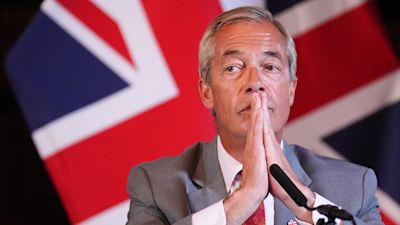
Farage Is Winning Votes From an Unlikely Source — and It Tells a Troubling Truth About the UK
Nigel Farage’s political rise has always been difficult to fit neatly into Britain’s traditional political categories. For years, he was associated with Euroscepticism, immigration and a socially conservative electorate that felt increasingly alienated from Westminster. But the latest evidence about Reform UK’s supporters reveals something more complicated—and potentially more troubling for Britain’s established parties.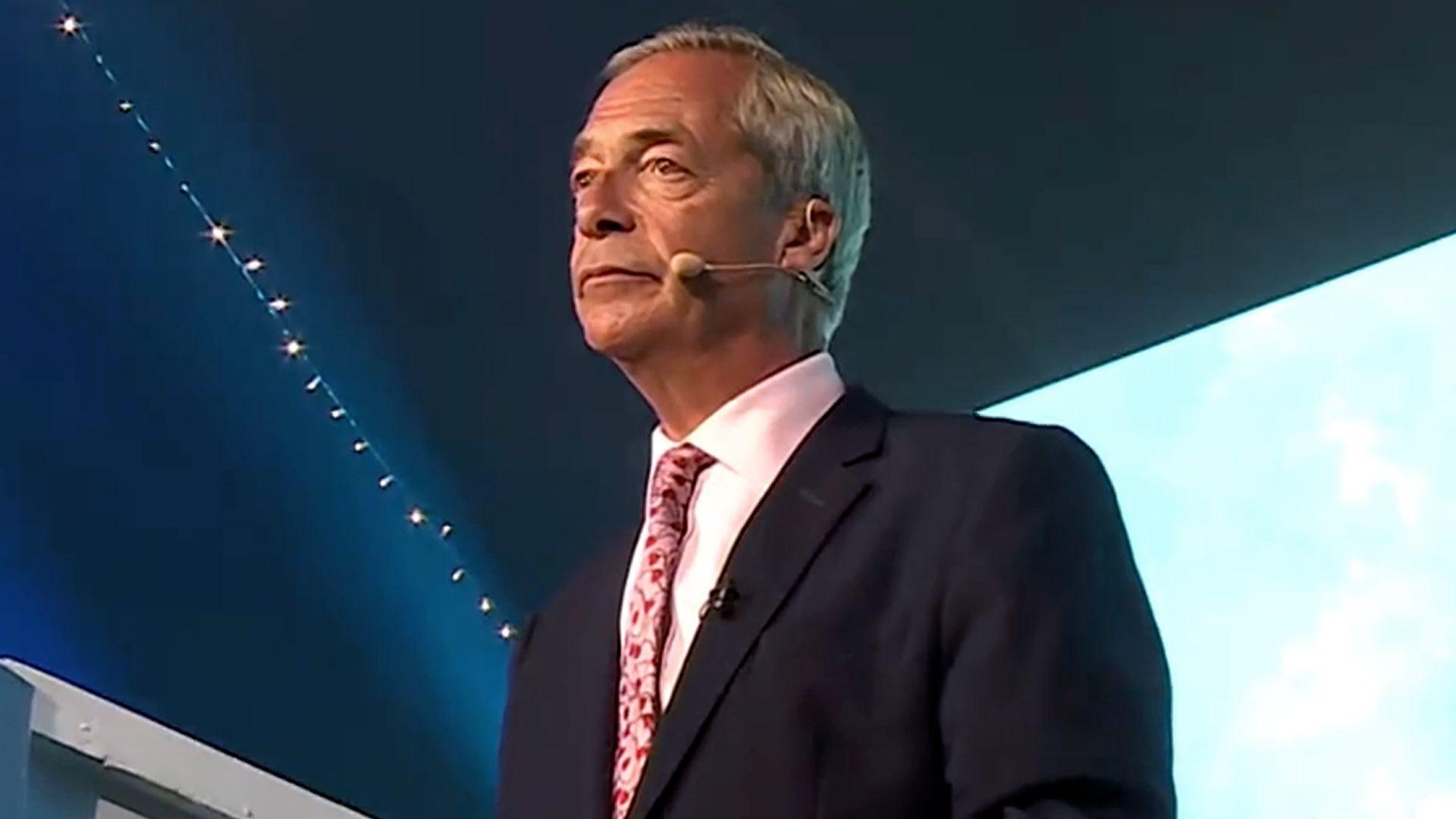
Farage is not simply winning votes from traditional Conservatives.
He is also attracting people who once regarded themselves as Labour voters.
That development matters because it reveals how dramatically Britain’s political loyalties have changed. The old assumption that working-class communities would remain naturally aligned with Labour, while Conservative voters would provide the main pool of support for a party such as Reform, is increasingly difficult to defend.
Reform’s support is becoming a coalition of people united less by traditional party identity than by frustration, distrust and a belief that the political system no longer represents them.
Research into Reform’s electorate has shown just how diverse that coalition can be. A major survey of more than 11,000 Reform supporters identified groups ranging from economically insecure working-age voters to wealthy retirees and younger voters who are attracted to the party for very different reasons.
That is the first important lesson.
Farage’s appeal cannot simply be dismissed as the anger of one particular demographic.
It reaches across age, geography and social class.
The unexpected Labour connection
Perhaps the most politically significant development is Reform’s growing strength in areas that were once considered Labour territory.
During the 2026 local elections, Reform made major breakthroughs in traditional Labour heartlands across the North East, North West, Yorkshire and the West Midlands. Farage himself has argued that many of these gains represented direct movement from Labour to Reform.
That interpretation should not be accepted uncritically. Electoral results are complicated, and local elections are not identical to general elections.
But the broader trend is real enough to demand attention.
The political realignment that began around the Brexit referendum has fundamentally altered Britain’s electoral map. Communities that once voted Labour almost automatically have become much more politically fluid.
The question is no longer simply whether a voter is working class.
The question is what that voter believes Labour represents.
For some, the answer is still workers’ rights, public services and economic redistribution.
For others, Labour has increasingly come to represent metropolitan values, cultural liberalism and an establishment that appears disconnected from their everyday concerns.
Reform has stepped directly into that gap.
The politics of feeling ignored
Perhaps the most revealing finding comes from research by UCL Policy Lab and More in Common.
Their 2026 analysis found that 75% of the public believed the government showed little or no respect for ordinary people. Reform was ahead of Labour on the question of whether politicians respected people who work hard: 43% said Reform did, compared with only 30% for Labour.
That is an extraordinary political warning.
It suggests that the battle is not only about policies.
It is about recognition.
A voter can disagree with a politician’s economic programme and still feel that the politician understands them. Conversely, a government can introduce policies designed to help people and nevertheless fail politically if those people believe they are being ignored or talked down to.
Farage has built much of his political career around this emotional territory.
His message is that ordinary people have been ignored by politicians, civil servants, experts and institutions.
His supporters do not necessarily agree with every Reform policy.
But many appear to believe that Farage understands their anger.
That distinction is crucial.
The “working right”
One of the largest groups identified in research into Reform’s supporters has been described as the “working right”. These voters combine economic insecurity with socially conservative views and hostility towards immigration. They are particularly receptive to Reform’s populist message.
This is where the traditional political divide begins to collapse.
For much of the twentieth century, Britain’s political argument was broadly structured around economics.
Labour was associated with organised labour, redistribution and public services.
The Conservatives were associated with private enterprise, lower taxation and individual responsibility.
But modern voters increasingly combine positions that do not fit comfortably into either tradition.
Someone can support stronger public services while also wanting substantially lower immigration.
Someone can favour generous pensions while opposing welfare payments to people who have not worked.
Someone can distrust big business while also distrusting trade unions.
Someone can want the government to spend more on their community while demanding that government become smaller.
Reform has discovered that these contradictions do not necessarily weaken a political movement.
They can actually hold it together.
Immigration is still central—but it is not everything
It would be wrong to assume that every Reform voter is primarily motivated by immigration.
Research suggests a much more complicated picture.
Immigration remains an important issue, but Reform’s supporters are also motivated by dissatisfaction with politicians, public services, the economy and Britain’s direction as a country.
That is significant because it changes how the party should be understood.
Reform is not simply an anti-immigration party searching for voters.
It is increasingly becoming a vehicle for political dissatisfaction.
Farage offers voters a way to register their rejection of the existing political order.
That helps explain why his support can appear in places where the traditional ideological fit is weak.
A former Labour voter does not have to become economically right-wing to vote Reform.
They may simply conclude that Labour no longer represents them.
The troubling truth
This brings us to the uncomfortable truth about Britain.
The rise of Reform may be telling us less about Farage than about the condition of the political system itself.
People who feel ignored eventually look for someone who promises to listen.
People who feel that politics has become remote look for politicians who speak in simple, direct language.
And people who believe that established parties are interchangeable may become increasingly willing to support an outsider.
This does not mean that every Reform supporter is angry, poor or disengaged.
Indeed, the party’s coalition includes relatively affluent voters as well as people facing serious financial pressures. Research has found significant differences among Reform’s supporters, including younger and more highly educated groups.
The common denominator is therefore not simply social class.
It is dissatisfaction.
Farage’s greatest advantage
Farage’s greatest political asset may therefore be his ability to convert dissatisfaction into identity.
He does not merely tell voters that a policy is wrong.
He tells them that they have been ignored.
That is much more powerful.
It turns a policy disagreement into a question of belonging.
The message becomes: “They don’t listen to people like us—but I do.”
This is classic populist politics, but it is also highly effective when established institutions suffer from a credibility crisis.
And Britain’s political establishment clearly has a credibility problem.
The evidence from UCL and More in Common suggests that respect for politicians is remarkably low.
That gives Farage an opportunity even when voters remain sceptical of him personally.
But there is a weakness in the coalition
The very diversity that makes Reform powerful could also make it fragile.
The party’s supporters do not necessarily agree on the economy, welfare, climate policy or the appropriate size of government.
A wealthy retiree and an economically insecure young worker may both vote Reform, but for very different reasons.
Eventually, governing requires choices.
And choices create winners and losers.
This problem has become particularly visible with Reform’s latest welfare proposals. The party has proposed an overhaul intended to save around £50 billion a year, including major reductions in disability benefits and restrictions on benefit access for many foreign nationals. Critics warn that the changes could push hundreds of thousands of people into poverty, while Reform argues that its reforms would increase employment and reduce welfare spending.
That could become a serious test of Reform’s coalition.
Some voters attracted by its anti-establishment message may welcome spending cuts.
Others who depend on public support may discover that the party’s economic programme conflicts with their own interests.
Winning an election through anger is one thing.
Maintaining a coalition while governing is much harder.
Farage is not universally popular
There is another reason not to assume that Reform’s rise is inevitable.
Farage remains a deeply polarising figure.
YouGov’s July 2026 polling found that 65% of Britons viewed him unfavourably, compared with 25% who viewed him favourably. Only 16% considered him trustworthy, although half regarded him as decisive.
Those figures reveal the paradox at the centre of Farage’s political career.
He can be highly effective without being widely liked.
He can dominate political debate without being personally trusted by a majority of the country.
That is enough to make him dangerous to established parties—but not necessarily enough to make him prime minister.
The Labour problem
For Labour, the challenge is particularly serious.
If Reform were taking only Conservative voters, the solution would be relatively straightforward.
But if Reform can attract Labour’s former supporters, the political map becomes much harder to read.
Labour cannot simply move further left on economics and expect those voters to return.
Nor can it simply adopt Reform’s positions on immigration and culture.
The party needs to answer a deeper question:
Why do some working people no longer feel that Labour speaks for them?
That question cannot be solved by a slogan.
It requires rebuilding trust.
It requires demonstrating respect.
And it requires convincing voters that government understands the pressures they face in everyday life.
The real warning for Britain
The most troubling part of Farage’s success is therefore not that a controversial politician has gained support.
It is that so many voters are prepared to abandon political traditions that once seemed almost permanent.
When people change their minds about a particular policy, politics remains relatively stable.
When people change their minds about who represents them, the entire political system can shift.
That is what Britain is witnessing.
The old Labour voter is no longer necessarily Labour.
The old Conservative voter is no longer necessarily Conservative.
And the idea that political identity should last a lifetime is rapidly disappearing.
Farage understands this better than most politicians.
He has recognised that the modern voter is less interested in political labels and more interested in whether someone appears to understand their frustrations.
That may be the secret behind Reform’s rise.
It may also be the warning.
Because if established parties want to stop Farage, defeating his arguments will not be enough.
They will have to repair the relationship between voters and politics itself.
Until then, Reform can continue to grow by occupying the space created by distrust.
And that is the troubling truth Farage’s success is revealing about Britain:
The biggest threat to the established parties may not be the popularity of Reform. It may be how little faith many voters now have in the political system they are trying to defend.