

Reform UK Pledges to Ban Migrants From Benefits in £21bn Welfare Raid
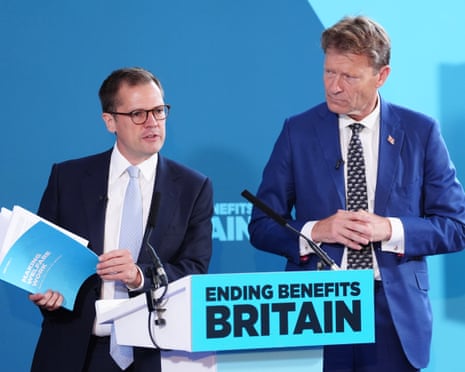
Reform UK has unveiled one of the most hardline welfare proposals in British politics, pledging to prevent almost all foreign nationals from claiming benefits if the party wins power.
The party says the policy could save the Treasury £21 billion a year by its fifth year, as part of a much wider plan to cut around £50 billion from welfare spending. The proposal would cover a sweeping range of payments, including Universal Credit, housing benefit, jobseeker’s allowance, child benefit, free childcare, pension credit and disability benefits.
The announcement, led by Reform Treasury spokesman Robert Jenrick, immediately triggered a fierce political row over immigration, welfare and the legal rights of people who have built their lives in Britain.
Jenrick’s message was blunt: the welfare state should primarily support British citizens.
But behind the headline lies a complicated question about who is actually eligible for benefits, how much money could realistically be saved and whether Reform could legally remove existing rights from European citizens who were granted settled status after Brexit.
Reform’s £21 billion claim
Reform says excluding foreign nationals from the welfare system could deliver £21 billion in annual savings by the fifth year of implementation.
The figure forms part of the party’s broader £50 billion welfare-cutting programme, which also includes major changes to disability benefits and support for long-term unemployed people.
Jenrick has presented the plan as a fundamental question of fairness.
His argument is that taxpayers who contribute to the British system should not be expected to finance welfare payments for people who are not British citizens.
The proposal would represent a dramatic tightening of the rules.
Rather than restricting particular benefits or imposing longer qualifying periods, Reform wants to exclude almost all foreign nationals from access to the welfare state.
There would be only limited exceptions.
That sweeping approach is what makes the policy so politically explosive.
Who would be affected?
The proposals go considerably further than simply targeting recent arrivals.
Reform says its restrictions would apply even to foreign nationals who have lived legally in Britain for years, including some European citizens with settled status.
The list of affected payments is extensive.
It includes Universal Credit, housing benefit, jobseeker’s allowance, child benefit, free childcare and disability benefits.
That means the proposal is not simply an immigration policy.
It is a fundamental change to the principle governing access to Britain’s welfare state.
At present, many migrants already face restrictions on access to public funds. People on temporary visas, for example, generally cannot claim benefits such as Universal Credit because of “no recourse to public funds” conditions. The government has also been considering tighter eligibility rules for migrants.
Reform’s proposal would go much further.
It would introduce nationality itself as a central dividing line.
The Brexit problem
One of the biggest obstacles facing Reform is the status of EU citizens who were granted settled status following Britain’s departure from the European Union.
Those citizens were given legal protections under the UK’s Withdrawal Agreement.
Reform’s proposal would potentially affect people who were explicitly given assurances about their rights after Brexit.
That creates a major legal and diplomatic problem.
Critics argue that implementing the policy would require Britain to renegotiate parts of its Brexit settlement with Brussels. The Financial Times reported that the proposal would affect EU citizens with settled status, while Labour has warned that it could reopen the Brexit negotiations.
The consequences could extend beyond Britain.
Millions of British citizens live elsewhere in Europe, and reciprocal rights form an important part of the post-Brexit relationship.
If Britain attempted to remove welfare protections from European citizens living in the UK, European governments could potentially seek changes affecting British citizens living in their countries.
That is why the proposal could become much more than a domestic welfare dispute.
Is £21 billion realistic?
The biggest question may ultimately be financial.
Reform has attached a striking £21 billion figure to the proposal, but critics have questioned how much could actually be saved.
The difficulty is that not every foreign national currently receives benefits.
Indeed, the government has already pointed out that most migrants with temporary visas cannot access public funds in the first place.
That means Reform cannot simply assume that all welfare spending associated with foreign nationals would disappear.
The relevant question is how many people are currently receiving each benefit, what their legal status is, what rights they possess under existing agreements and how much would actually be removed by the proposed changes.
That calculation is considerably more complicated than the headline figure suggests.
Critics have therefore argued that the £21 billion estimate needs much greater scrutiny.
Reform’s wider welfare revolution
The foreign-national benefits ban is only one part of Reform’s much broader welfare programme.
The party has promised to cut approximately £50 billion from welfare spending.
Around £22 billion of the proposed savings would come from changes to disability benefits, including the abolition of Personal Independence Payment in its current form and the introduction of a new “health security allowance”.
Reform has also proposed requiring some long-term benefit claimants judged fit to work to undertake 20 hours of community work each week.
Failure to participate could result in the loss of benefits.
Jenrick has argued that the welfare system should encourage people who are capable of working to return to employment rather than remaining dependent on state support.
Taken together, the policies amount to one of the most radical attempts in modern British politics to reduce the size of the welfare state.
A political gamble
The political logic is straightforward.
Reform is attempting to appeal to voters who believe Britain spends too much on welfare and that successive governments have failed to control immigration.
The slogan is simple: British taxpayers should come first.
That message could prove powerful among voters who feel that taxes are too high while public services are under pressure.
But there is another side to the calculation.
Many foreign nationals work, pay taxes and contribute to the British economy.
Some have lived in Britain for decades.
Some have British-born children.
Others may have entered the country legally under arrangements that explicitly gave them access to certain rights.
The political argument therefore becomes much more complicated once the headline is translated into individual cases.
Critics accuse Reform of scapegoating
The proposal has already drawn fierce condemnation from campaigners.
Amnesty International UK accused Reform of targeting vulnerable people and argued that settled migrants who receive social security generally do so under the same rules as other taxpayers.
Critics say the policy risks turning migrants into political scapegoats for wider problems within Britain’s welfare system.
Their argument is that the real challenge is to make welfare more effective, reduce fraud, improve employment opportunities and ensure that people who genuinely need support receive it.
Reform’s answer is that none of those objectives should prevent government from prioritising British citizens.
That disagreement is likely to become a major political fault line.
The Conservatives face a dilemma
The proposal also presents a challenge for the Conservative Party.
Reform is increasingly competing for voters on the right, particularly those who want tougher immigration controls.
If the Conservatives reject the policy outright, Reform can accuse them of being too soft.
But if they support the principle, they risk allowing Farage’s party to dictate the political agenda.
The Conservatives therefore face an uncomfortable strategic choice.
Do they attempt to compete with Reform on immigration and welfare?
Or do they distance themselves from proposals they regard as legally questionable or economically unrealistic?
Either approach carries risks.
Labour’s response
Labour has rejected Reform’s approach and argued that the vast majority of migrants do not have unrestricted access to benefits.
The government has also been developing its own proposals to tighten the relationship between immigration status and access to taxpayer-funded support.
Official government policy has already considered giving greater priority to migrants who are making an economic contribution to Britain and potentially extending restrictions on public funds.
That creates an interesting political battle.
Labour can argue that it is already reforming the system while accusing Reform of going too far.
Reform, meanwhile, can claim that only its more radical proposal would fundamentally change the rules.
The competition could push immigration and welfare even higher up the political agenda.
A policy designed to send a message
Perhaps the most important feature of the announcement is its simplicity.
“No British citizenship, no entitlement” is a politically powerful proposition because it is easy to understand.
But governing is rarely as simple as campaigning.
The moment the policy is applied to people with settled status, international treaty rights, long-term employment records or families in Britain, the legal and practical complications multiply.
The £21 billion figure will therefore face intense scrutiny.
So will the party’s ability to implement the policy without triggering years of legal challenges and negotiations with European governments.
Reform’s bigger ambition
For Nigel Farage and Robert Jenrick, however, the welfare plan is about more than saving money.
It is an attempt to define what a Reform government would look like.
The party wants voters to see it as a government willing to make decisions that Labour and the Conservatives have avoided.
That means taking on disability welfare, immigration, unemployment and the rules governing access to public support simultaneously.
The political gamble is enormous.
If voters believe Reform is finally offering the discipline and spending restraint that Britain needs, the policy could strengthen the party’s claim to be a government-in-waiting.
If voters instead conclude that the proposals are too harsh, legally impossible or financially exaggerated, the £50 billion programme could become an electoral liability.
For now, Reform is betting on the first outcome.
Its message is unmistakable: welfare should be restricted, immigration should be controlled and British taxpayers should come first.
The proposed £21 billion saving may dominate the headlines.
But the real battle is over something much bigger — the future definition of the British welfare state and whether nationality should determine who is entitled to receive it.
If Reform ever reaches government, that battle could move from the conference stage to the courtroom, Parliament and the negotiating table with Brussels.
And that is when the true cost — and consequences — of this extraordinary pledge would finally become clear.