
Reform Hails Huge By-Election Victory in Backyard of Plaid Cymru Leader

Reform UK has hailed a dramatic by-election victory in a constituency regarded as a political stronghold for Plaid Cymru, describing the result as another sign that Britain’s political map is undergoing a profound transformation.
The result will be closely watched not only in Westminster but across Wales, where Plaid Cymru has traditionally relied on a strong combination of Welsh nationalism, local identity and established grassroots support.
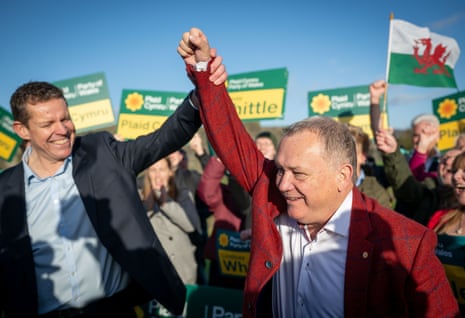
For Reform, however, the victory offered something potentially more valuable than a single parliamentary seat: evidence that its appeal can extend into territory where nationalist politics has long dominated.
The party presented the result as a breakthrough, arguing that voters were increasingly prepared to abandon traditional political loyalties in favour of a movement promising tougher action on immigration, public spending and the political establishment.
A major shock for Plaid Cymru
The significance of the result was amplified by the location.
Winning a seat in an area associated with Plaid Cymru gave Reform a powerful political narrative. Rather than simply defeating another Westminster party, Reform could claim to have broken through in the heartland of a movement whose appeal is deeply rooted in Welsh identity.
That made the result particularly uncomfortable for Plaid Cymru leader Rhun ap Iorwerth.
Plaid has spent decades building its electoral strength in Wales, particularly in communities where questions of Welsh language, culture and greater autonomy have played a major role in local politics.
A Reform victory in such territory suggested that economic and cultural concerns were beginning to compete with traditional nationalist loyalties.
The result therefore raised an uncomfortable question for Plaid Cymru: could the party continue to rely on its established support base if voters increasingly prioritised issues such as immigration, household finances and dissatisfaction with Westminster politics?
Reform’s growing confidence
For Reform UK, the victory was another opportunity to argue that the party is no longer simply a protest movement.
Its leadership has increasingly portrayed Reform as a serious national political force capable of challenging Labour, the Conservatives and, in Wales, nationalist parties such as Plaid Cymru.
The party’s supporters immediately seized on the scale of the victory.
A strong by-election performance allows Reform to demonstrate something that opinion polls cannot always capture: the ability to translate national support into votes on the ground.
By-elections are particularly useful for smaller parties because voters often feel freer to experiment. Without the same pressure to choose between the two largest parties, some electors use the opportunity to register dissatisfaction with the political establishment.
Reform has benefited from precisely that dynamic.
But its opponents would argue that a by-election is not necessarily representative of a general election. Turnout can be lower, local candidates can have an unusually large impact and national political circumstances can distort the result.
Even so, the psychological impact of a major win should not be underestimated.
A warning for the traditional parties
The result also carried implications beyond Plaid Cymru.
Labour and the Conservatives will have taken note of Reform’s ability to attract voters in a Welsh constituency where political loyalties have traditionally been more complicated than a simple Conservative-Labour contest.
For Labour, the concern is particularly significant.
Reform’s rise threatens to divide the anti-Conservative vote while also attracting voters who previously supported Labour because of economic and working-class politics.
The party has increasingly attempted to present itself as the voice of voters who feel ignored by Westminster.
That message can resonate in communities experiencing economic insecurity, frustration with public services and concerns about immigration.
For the Conservatives, Reform represents an even more direct electoral threat. Conservative voters who regard Reform as more uncompromising on immigration, taxation and national sovereignty may continue moving towards Nigel Farage’s party.
The Welsh result therefore reinforces a broader national trend: the traditional party system is becoming increasingly fragmented.
The Plaid Cymru dilemma
For Plaid Cymru, the challenge is more complicated.
The party has historically been able to construct a distinctive political identity around Welsh nationalism. But nationalism alone may not be sufficient to hold voters in an increasingly volatile electorate.
Plaid must compete not only with Labour and the Conservatives but now with Reform, whose political message is fundamentally different.
Reform does not seek greater Welsh autonomy. Instead, it emphasises British national identity, tighter immigration controls and opposition to what it describes as an out-of-touch political establishment.
The fact that such a message has succeeded in a Plaid Cymru stronghold makes the result particularly symbolic.
It suggests that voters cannot be assumed to fit neatly into traditional political categories.
A voter may support Welsh cultural identity while simultaneously being concerned about immigration or sceptical of devolution. Another may favour greater powers for Wales but be angry about the cost of living.
Political identities are becoming less predictable.
The Farage factor
Reform’s success is also inseparable from the continuing influence of Nigel Farage.
The Reform leader has spent years arguing that Britain’s political establishment failed to address voters’ concerns over immigration, Brexit and national sovereignty.
His strategy has gradually shifted from challenging the Conservatives from the outside to positioning Reform as a potential governing party.
Every electoral breakthrough strengthens that argument.
A significant by-election victory allows Reform to claim that its support is not confined to opinion polls or particular English regions.
Wales has its own political traditions and distinct national identity, making a Reform breakthrough there especially useful for the party’s national ambitions.
The result gives Farage another opportunity to argue that Reform is capable of building a genuinely UK-wide electoral coalition.
Why by-elections matter
By-elections have always been capable of producing political earthquakes.
They offer voters a chance to punish a government without necessarily deciding who will run the country. That makes them unusually attractive moments for protest voting.
But the political establishment pays close attention because by-elections can reveal changes in voter behaviour before they become visible in general elections.
A party that suddenly gains support in a previously hostile constituency may have discovered a new electoral coalition.
That is why Reform’s victory will matter beyond the boundaries of the seat itself.
The crucial question is whether the result represents an isolated protest or the beginning of a wider realignment.
If Reform can repeat the performance in other parts of Wales, the implications could be substantial.
A changing political map
The result ultimately tells a broader story about British politics.
The old assumptions about safe seats, traditional loyalties and predictable voting patterns are becoming increasingly unreliable.
Plaid Cymru’s challenge is to retain voters who may share its commitment to Wales but disagree with its priorities.
Labour faces the continuing danger of losing disillusioned working-class voters to Reform.
The Conservatives are under pressure from a party competing directly for voters on the right.
And Reform, having spent years campaigning against the established parties, now has to prove that its electoral breakthroughs can be sustained.
That final point may be the most important.
Winning a dramatic by-election is one thing. Building a durable political organisation capable of competing across the country is another.
For now, however, Reform has every reason to celebrate.
A victory in the political backyard of a Plaid Cymru leader gives the party an unusually powerful symbol of its growing reach.
It demonstrates that no part of Britain’s political landscape can necessarily be taken for granted.
And for Plaid Cymru, the result provides a stark reminder that Wales’ political future may be shaped not only by the traditional debate over independence and devolution, but increasingly by the same populist pressures reshaping politics across the rest of the United Kingdom.
The political earthquake may have begun with one by-election.
But the aftershocks are likely to be felt far beyond the constituency itself.