
Keir Starmer Just Left an Unexploded Bomb Under Andy Burnham’s Desk — It’s a Big Problem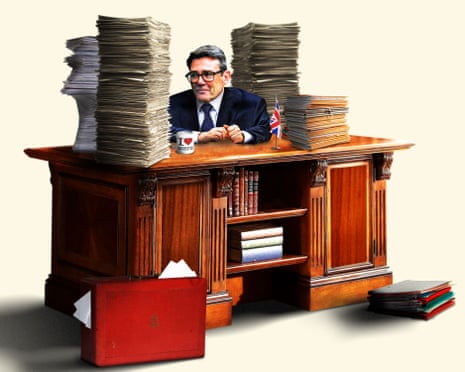
Andy Burnham may have inherited the keys to Number 10 from Keir Starmer, but he has also inherited something far more dangerous: a political agenda full of unresolved problems that cannot simply be swept away by changing the prime minister.
Burnham’s arrival in Downing Street has transformed the mood of British politics. The former Greater Manchester mayor has enjoyed a markedly different reception from his predecessor, bringing a more relaxed, populist style to government and quickly attempting to establish himself as a leader who listens, acts and delivers. Yet beneath the optimism lies a problem that could become increasingly difficult to ignore.
Starmer may have left office, but the consequences of his premiership have not disappeared with him.
When Starmer announced his intention to resign as Labour leader and prime minister on June 22, 2026, he left behind a government facing difficult choices over the economy, immigration, public services, defence, energy and the future of the welfare state. Burnham then became Labour leader and prime minister following a rapid succession of events, taking office on July 20.
The temptation for Burnham is obvious: distance himself from Starmer.
Politically, that makes sense. Burnham’s appeal partly rests on the argument that Labour needed a fundamental change of direction. His style is warmer, more informal and more focused on regional power than Starmer’s. Within days of entering Number 10, Burnham was already promoting a decentralisation agenda and establishing a stronger political presence in Manchester.
But there is a catch.
Burnham cannot completely escape the decisions made during the Starmer years because Britain’s problems did not reset on the day the keys to Downing Street changed hands.
The biggest of these problems may be economic.
Burnham has made a series of promises designed to provide immediate relief to households. His government has pursued measures including changes to energy taxation and bus fares, while also seeking ways to reduce pressure on family finances. These policies have helped create the impression of a government willing to act quickly.
But every promise comes with a price tag.
That is where Starmer’s inheritance becomes politically explosive. Burnham has promised to improve living standards while maintaining fiscal discipline and avoiding some of the tax rises that might otherwise provide additional revenue. His government therefore has to find money in a public sector already under enormous pressure.
The coming budget could expose the contradiction.
The government faces substantial demands from the NHS, local authorities, defence, prisons, infrastructure and social security. At the same time, economic growth remains an overriding concern. Reports have already highlighted a major funding gap in defence, while Burnham’s administration is considering expensive interventions in areas such as utilities and public services.
This is the “bomb” Starmer left behind.
It is not one single scandal or policy. It is the accumulation of difficult commitments and limited resources.
Burnham can announce popular policies. What he cannot do is abolish the arithmetic.
That problem becomes even more serious when immigration enters the picture.
Starmer’s government struggled to reconcile Labour’s traditional instincts with growing public concern about migration and asylum. Burnham has inherited those tensions at exactly the moment when Reform UK, led by Nigel Farage, is attempting to turn immigration into its defining political weapon.
Farage is already demanding a general election, arguing that Burnham lacks a direct nationwide mandate. The Reform leader has every incentive to portray Burnham’s government as a continuation of Labour’s failures under a different face.
That makes the inheritance particularly dangerous.
If Burnham moves too far away from Starmer’s policies, Conservatives and Reform can accuse him of abandoning Labour’s existing commitments. If he maintains them, he risks undermining the very reason Labour members and voters wanted a change of leadership.
This is the central dilemma of his premiership.
Burnham needs to be different from Starmer without appearing irresponsible.
So far, he has benefited from the public’s willingness to give a new prime minister a chance. Labour’s polling position improved sharply after Burnham replaced Starmer, with several surveys showing the party catching or overtaking Reform. Reuters reported that Labour’s support rose significantly after Burnham became leader, while voters also rated him more favourably than several rival politicians.
But honeymoon periods end.
The real test begins when voters stop judging Burnham against Starmer and start judging him against his own promises.
That transition could happen sooner than he expects.
Consider the prison system. Burnham’s government has already faced pressure over early-release arrangements and the possibility of controversial offenders being released. The issue has become politically toxic because it combines public safety, overcrowded prisons and the rights of victims. Burnham has been forced to review aspects of the policy while trying to avoid appearing weak on crime.
Again, the problem predates Burnham.
But voters are unlikely to care.
If something goes wrong under Burnham, it will be Burnham who gets the blame.
The same is true of energy.
Burnham’s government is under pressure to balance climate commitments against the immediate need for jobs, affordable energy and economic growth. His willingness to consider new oil and gas projects has already triggered criticism from environmental campaigners and some Labour supporters.
That creates another trap inherited from the previous government.
Labour promised ambitious climate action, but Britain also needs affordable energy and industrial investment. Burnham’s more pragmatic approach may appeal to workers and communities worried about employment, particularly in traditional industrial regions. Yet it risks alienating voters who expected Labour to accelerate the transition to net zero.
The political problem is therefore bigger than any single policy.
Starmer’s government left Burnham with competing promises that point in different directions. Burnham’s instinct is to resolve those contradictions through pragmatism. But pragmatism only works when there is enough money and political space to compromise.
Sooner or later, he will have to choose.
And then the comparison with Starmer will become unavoidable.
Starmer’s defenders can argue that the former prime minister attempted to impose discipline, repair Britain’s finances and pursue long-term structural reforms rather than chase immediate popularity. Critics, meanwhile, accused him of being too cautious, too pessimistic and too disconnected from ordinary voters.
Burnham has chosen the opposite political style.
He is more visible. He speaks directly to voters. He uses social media effectively. He has made regional empowerment central to his government. He wants people to feel that politics has changed.
But that approach creates its own vulnerability.
A government that promises rapid change is judged rapidly.
If Burnham cannot deliver, the political contrast with Starmer may begin to work against him. Instead of being seen as the energetic alternative to a failed predecessor, he could eventually be portrayed as the man who inherited a difficult situation and promised too much.
That is why the “unexploded bomb” metaphor matters.
Starmer did not leave Burnham with a simple political legacy that could be accepted or rejected. He left him with structural problems that will survive changes of leadership.
The economy will not wait.
The NHS will not wait.
The prisons will not wait.
Migration will not wait.
Defence spending will not wait.
Nor will the electorate.
For now, Burnham has something Starmer badly lacked: political momentum. His early popularity has given Labour breathing space and weakened the immediate threat from Reform. But momentum is not the same thing as a mandate, and popularity is not the same thing as successful government.
Farage knows this.
That is why his demand for an election is so politically significant. Reform wants to force Burnham into a national test before the new government has had time to establish itself. Burnham, understandably, has little incentive to accept the challenge while his ratings are relatively strong and Labour is recovering in the polls. Recent reporting suggests that an early election remains a subject of speculation, but there are also obvious risks for the government and its MPs.
Burnham’s smartest strategy may therefore be to resist the pressure and concentrate on delivery.
But that brings him back to the bomb beneath his desk.
The longer he remains in Downing Street, the more responsibility for Britain’s problems becomes his.
Eventually, nobody will care what Starmer inherited.
They will care what Burnham did with it.
That is the danger facing Britain’s new prime minister. Changing the occupant of Number 10 can change the political mood almost overnight. It cannot change the underlying realities of government.
Starmer has gone.
Burnham has arrived.
But the bill has arrived with him.