
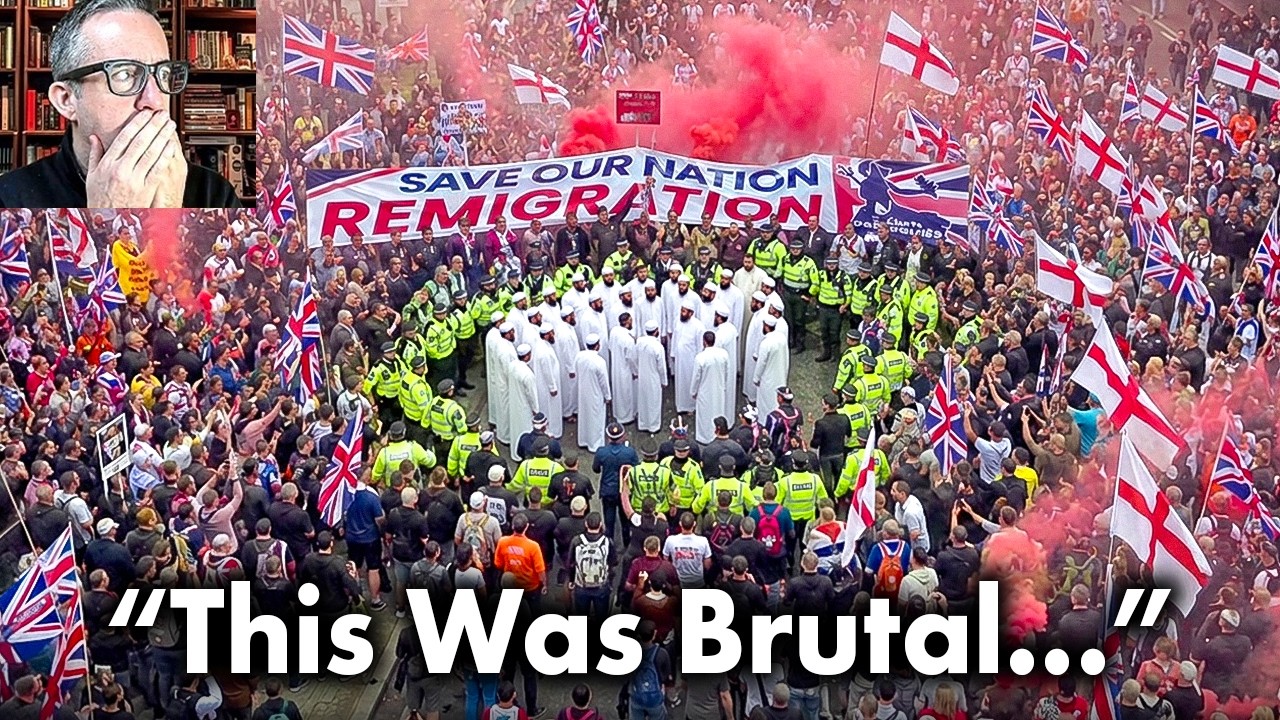
Demonstrations in several parts of Britain have highlighted growing public frustration over immigration, demographic change and the government’s approach to managing migrant arrivals. Footage discussed in the source material shows groups of protesters gathering in towns and cities, with some participants chanting slogans associated with political movements calling for tougher immigration policies and changes to the country’s migration system. The demonstrations have been described by supporters as expressions of concern about the future of local communities, while critics have warned that confrontational rhetoric risks increasing tensions between different groups. The video commentary argues that the scale of public dissatisfaction should not simply be dismissed, although it also acknowledges that demonstrations and flag-waving alone are unlikely to force immediate political change.
One of the central arguments presented in the commentary concerns demographic change. The speaker refers to the 2011 census, which for the first time included an option allowing people to identify specifically as English by nationality. According to the commentary, more than 30 million people selected an English-only nationality category. The speaker then argues that significant demographic changes have occurred in parts of Britain since that census, particularly in major urban areas. London is presented as one example, alongside cities such as Bristol and communities in northern England. The commentary claims that some long-term residents feel their neighbourhoods have changed so dramatically that they no longer recognise them. These assertions reflect the speaker’s interpretation of demographic trends rather than an independently established explanation for why particular communities have changed.
The issue of small communities receiving migrants is another major focus. The video refers to reports of hundreds of migrants being accommodated in different parts of the country and describes concerns expressed by residents who believe their local populations could be significantly affected. One example mentioned is a small village near Oxford, where the speaker claims residents feared that the arrival of around 1,200 migrants could dramatically alter the balance of the community. The commentary even refers to suggestions that residents had discussed declaring independence from the United Kingdom, although no supporting evidence for such a proposal is provided in the transcript. Elsewhere, the speaker discusses demonstrations in locations including Bristol and Crowborough, describing them as evidence of wider frustration with the government’s migration policies.
Small-boat crossings in the English Channel are also used to illustrate the scale of the controversy. The commentator highlights footage showing a baby being passed onto a migrant boat and describes the circumstances as extremely dangerous. The speaker argues that parents who expose children to such risks should face consequences, while also asserting that many migrants are primarily motivated by economic considerations. Those statements are presented as the commentator’s views rather than established facts about every person arriving in Britain. The transcript also refers to a boat reportedly carrying roughly 200 people, although the exact number is uncertain in the speaker’s account.
The demonstrations have also become connected to the growing political influence of parties and movements campaigning on immigration. The source refers to slogans associated with groups such as Reform UK and Restore Britain and describes protesters demanding an end to what they call mass immigration and demographic change. According to the commentary, these activists believe that Britain’s migration system has transformed communities without sufficient public consent. However, the speaker also offers a warning to those taking part in protests, arguing that anger must not turn into disorder. The commentator suggests that allowing opponents to provoke protesters into confrontations could ultimately strengthen rather than weaken the political establishment they oppose.
The video further argues that political participation will be crucial if voters want immigration policy to change. The speaker criticises the tendency of political parties to focus heavily on percentages of the vote while overlooking people who do not participate in elections. In the commentator’s view, low turnout allows established political structures to continue operating without sufficient pressure from dissatisfied voters. The message is therefore not simply that people should protest, but that they should also participate in elections and make their political preferences clear through democratic institutions.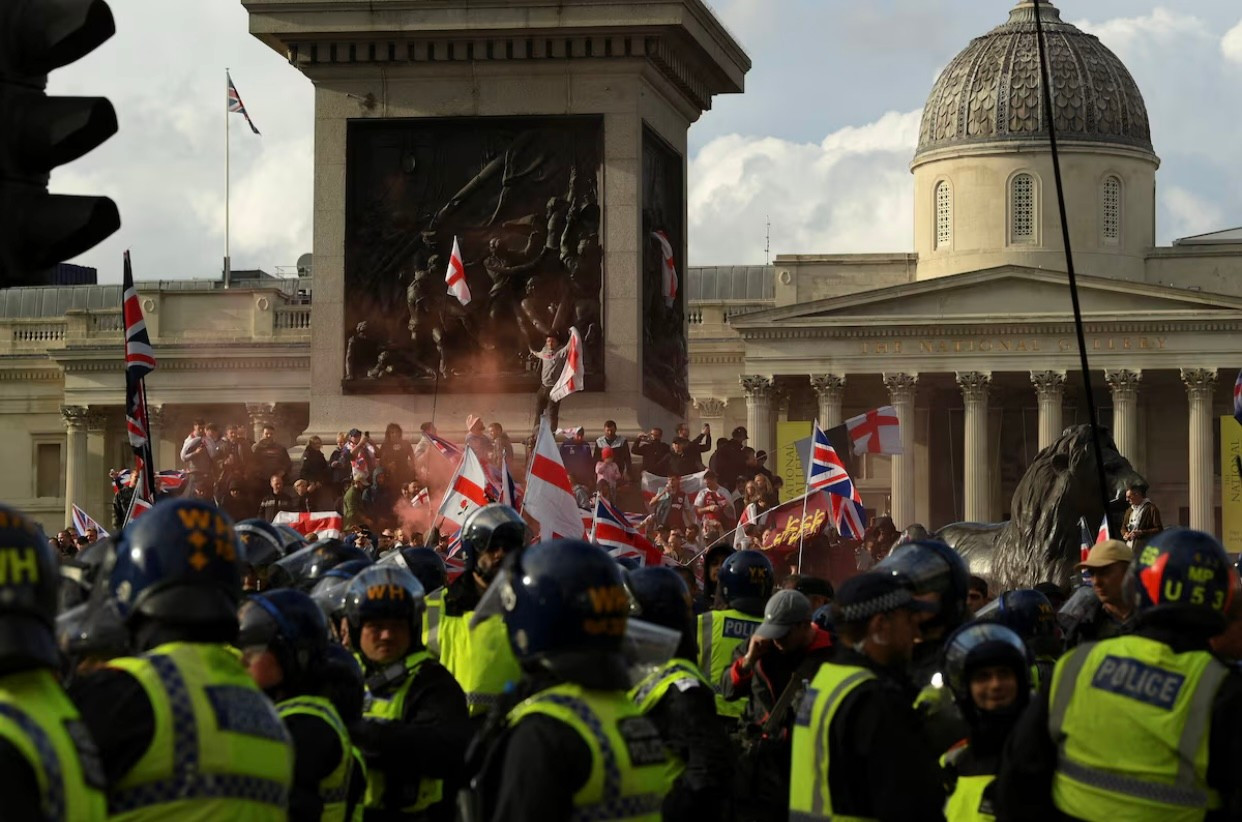
At the same time, the growing protests illustrate a difficult political dilemma for the British government. Immigration has become one of the most divisive issues in the country, with public opinion divided between those demanding stricter controls and those who emphasise humanitarian responsibilities toward migrants and refugees. Local communities can also have very different experiences depending on the number of people being accommodated, the availability of housing and public services, and the circumstances surrounding individual arrivals. As a result, national arguments about immigration frequently become highly localised disputes about hotels, housing, schools, healthcare and policing.
The commentary adopts a strongly critical position toward immigration and demographic change, but it also contains an important acknowledgement that political anger must be handled carefully. The speaker argues that protesters should avoid allowing themselves to become deliberately provoked, warning that violence or serious disorder could undermine their political objectives. This distinction is significant because demonstrations over immigration can attract a mixture of political activists, local residents and individuals with very different motivations. Peaceful protest is one thing; intimidation, violence or attacks against individuals are another.
Ultimately, the material presents Britain as a country experiencing a growing confrontation over immigration, national identity and the direction of demographic change. Supporters of tougher policies argue that communities have experienced rapid changes without adequate political consultation, while opponents of anti-immigration demonstrations warn against portraying migrants collectively as responsible for wider social problems. The protests discussed in the video are therefore part of a much larger political debate that is likely to remain significant in British politics
.
For the commentator, however, the key question is what happens next. Demonstrations may demonstrate the strength of feeling in particular communities, but lasting policy changes normally require sustained political organisation, electoral participation and pressure on elected representatives. Whether Britain’s growing immigration debate produces significant changes in government policy will ultimately depend not only on the number of people taking to the streets, but also on how voters translate their concerns into democratic choices.