


Reform UK in Huge Poll Boost After Nigel Farage’s By-Election Victory
Nigel Farage’s latest political victory has given Reform UK a renewed sense of momentum, with the party once again attracting intense attention as Britain’s political landscape continues to shift. Farage’s successful return to Parliament through the Clacton by-election has strengthened his position as the most recognisable figure in Reform UK and provided the party with an opportunity to rebuild its national campaign after a difficult period in the polls.
The Clacton contest was highly unusual. Farage secured 22,239 votes, equivalent to roughly 63% of the total, comfortably retaining the seat he had won at the 2024 general election. His nearest challenger was the satirical candidate Count Binface, who received 9,455 votes, or almost 27%. The election was also notable because the major established political parties chose not to contest it.
Although the result itself was expected, its political significance should not be underestimated. Farage had deliberately triggered the by-election after resigning his parliamentary seat, arguing that he wanted to secure a fresh mandate from voters. His victory allowed him to return to Westminster and demonstrate that, at least in Clacton, his personal political appeal remains extremely strong.
Farage’s Return to Parliament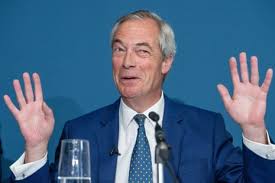
Nigel Farage has spent decades at the centre of British political debate. He became one of the most prominent figures behind the campaign for Britain’s departure from the European Union and subsequently transformed his political influence through the rise of Reform UK.
His return to Parliament in Clacton was therefore more than a routine by-election victory. Farage had created a political gamble by resigning his seat and forcing another election while facing scrutiny over his financial affairs. The parliamentary standards investigation into an undeclared £5 million gift from cryptocurrency entrepreneur Christopher Harborne has resumed following the election. Farage has denied wrongdoing.
The by-election was consequently presented by Farage as an opportunity to demonstrate that voters continued to support him despite the controversy surrounding him. His large majority allowed him to claim that the electorate had rejected what he described as attempts by the establishment to undermine him.
However, the circumstances of the election mean that the result must be interpreted carefully. The Conservative Party, Labour, Liberal Democrats, Greens and other major parties did not put forward candidates. The contest consequently became very different from a normal parliamentary election.
Nevertheless, winning more than 22,000 votes remains a significant achievement. Farage even increased his absolute vote total compared with the 2024 general election, despite turnout falling substantially.
From National Setback to Renewed Momentum
The by-election victory comes at an important moment for Reform UK. Only a few weeks earlier, the party appeared to be losing some of its extraordinary momentum.
For much of the previous year, Reform had led or remained highly competitive in national opinion polls. However, the arrival of Andy Burnham as prime minister produced a significant improvement in Labour’s fortunes. Several polls in late July showed Labour catching or overtaking Reform.
A Survation poll, for example, put Labour on 26% and Reform on 24%. More In Common placed Labour on 28% compared with 24% for Reform, while YouGov recorded the two parties level at 22%. Reuters reported that Reform had previously led nearly every opinion poll for more than a year, making Labour’s sudden recovery particularly striking.
This created questions about whether Farage’s political momentum had finally begun to fade.
Burnham’s early popularity presented Reform with a particularly serious challenge. His government focused heavily on the cost of living, including measures involving energy bills, bus fares and taxes affecting pubs and bars. The prime minister also appeared to have improved Labour’s image among voters who had become frustrated with the previous government.
For Reform, therefore, Farage’s Clacton victory arrived at an extremely useful moment. It gave the party a headline victory and reminded supporters that Farage remains capable of mobilising voters.
The Importance of Opinion Polls
The phrase “huge poll boost” needs to be treated carefully because individual opinion polls can fluctuate considerably. A by-election victory does not automatically translate into increased national support.
The Clacton election was contested under unusual circumstances, with the major parties absent and 34 candidates appearing on the ballot. Count Binface, a parody candidate, finished second with an unexpectedly strong result. Turnout was only around 44%, compared with almost 59% at the 2024 general election.
These factors make it difficult to use the Clacton result as a straightforward measurement of national opinion.
Nevertheless, the political symbolism is important. Farage can now tell supporters that he has returned to Parliament with a substantial mandate from his constituency. That provides him with a stronger platform from which to campaign nationally and challenge the government.
It also gives Reform UK an opportunity to shift the political conversation away from its recent difficulties and back towards issues that have traditionally helped the party, particularly immigration, national sovereignty and dissatisfaction with established political parties.
Immigration Remains Central to Reform’s Appeal
One of the most important reasons for Reform UK’s growth has been its ability to attract voters who believe that successive governments have failed to control immigration.
Farage has consistently placed immigration near the centre of his political message. Reform has advocated significantly tougher measures on illegal migration and has used dissatisfaction with the asylum system as evidence that the traditional parties have lost control of Britain’s borders.
This approach has helped the party attract voters who previously supported the Conservatives but became frustrated with their record in government. It has also allowed Farage to portray Reform as an alternative to both Labour and the Conservatives.
However, this strategy carries risks. Strong positions on immigration can energise Reform’s core supporters while simultaneously making it more difficult for the party to appeal to moderate voters. Critics argue that some of Reform’s proposals are too extreme, while supporters believe that tougher policies are necessary.
The party’s challenge is therefore to transform protest votes into a broad electoral coalition.
Internal Pressure and Financial Controversies
Despite Farage’s victory, Reform UK is not free from controversy.
The renewed parliamentary investigation into the £5 million gift linked to Farage remains a serious issue. His decision to trigger the Clacton election had been criticised by opponents who argued that the by-election was designed partly to distract attention from the investigation. The inquiry’s resumption means that the controversy is unlikely to disappear simply because Farage has won the election.
The party has also experienced internal tensions. Recent reports have highlighted disagreements within Reform over Farage’s leadership style and political strategy. Deputy leader Richard Tice has defended the suspension of senior activist Tim Montgomerie after criticism of Farage, arguing that internal disagreements should be handled privately.
Such disputes matter because Reform is attempting to move from being a protest movement into a credible national political organisation.
A party capable of winning government needs more than a popular leader. It requires a strong organisational structure, experienced candidates, coherent policies and the ability to maintain discipline when under pressure.
The Challenge from Andy Burnham
Perhaps the greatest challenge facing Farage is not the Conservatives or another smaller right-wing party, but the revitalised Labour Party under Andy Burnham.
Burnham’s arrival at Downing Street dramatically changed the political atmosphere. Labour’s polling position improved quickly, while Burnham’s personal ratings appeared stronger than those of his predecessor.
The latest political contest could therefore become a direct battle between two very different visions of Britain.
Farage represents an insurgent, populist approach built around immigration control, national sovereignty and opposition to the political establishment. Burnham, meanwhile, is attempting to present Labour as a government capable of addressing everyday economic concerns while restoring confidence in mainstream politics.
If Burnham succeeds in maintaining Labour’s improved polling position, Reform may find it much harder to repeat the extraordinary levels of support it enjoyed earlier in the political cycle.
A New Opportunity for Reform UK
For now, however, Farage’s Clacton victory gives Reform UK something it desperately needed: momentum.
Political parties depend heavily on narratives. A party that is constantly losing attention can quickly appear irrelevant, while a party associated with victories can generate enthusiasm among supporters and attract media coverage.
Farage’s return to Parliament provides Reform with exactly that kind of narrative.
He can now argue that he has faced his critics directly, returned to Westminster and received overwhelming support from voters in his constituency. Even though the circumstances of the by-election were unusual, the scale of his victory gives him a powerful political platform.
The next challenge is to convert that personal success into national support.
Conclusion
Nigel Farage’s victory in the Clacton by-election has provided Reform UK with an important political boost at a time when the party had been facing growing challenges. Farage won 22,239 votes, or about 63% of the vote, while the unusual contest was dominated by independent and fringe candidates after the major parties declined to participate.
The result does not automatically prove that Reform UK has regained its previous national polling lead. Recent surveys showed Labour benefiting substantially from Andy Burnham’s arrival as prime minister, with some polls placing Labour ahead of Reform.
Nevertheless, Farage’s victory is politically valuable. It restores his parliamentary position, gives him a fresh mandate and provides Reform with an opportunity to rebuild its national campaign.
The coming months will determine whether this is merely a temporary bounce or the beginning of another major surge for Reform UK. Farage still faces financial scrutiny, internal disagreements and a strengthened Labour government. Yet his ability to survive political setbacks has been one of his defining characteristics.
If Reform can turn the enthusiasm surrounding the Clacton victory into broader national support, Farage could once again become one of the most powerful forces in British politics. If it cannot, the victory may ultimately prove to be a personal triumph in one constituency rather than the beginning of a nationwide political revival.