
Nigel Farage and the “Coordinated Pile-On” Over His Finances
Nigel Farage has accused his political opponents and critics of organising a “coordinated pile-on” over questions about his finances. The Reform UK leader argues that the scrutiny surrounding his financial support is part of a wider attempt to damage him personally and prevent his party from becoming a serious political force. However, the controversy has continued to grow because several separate questions have been raised about donations, gifts and financial relationships involving Farage and people connected to Reform UK. The central issue is therefore not simply whether Farage is being politically attacked, but whether the investigations and questions about his finances are justified by legitimate concerns about transparency.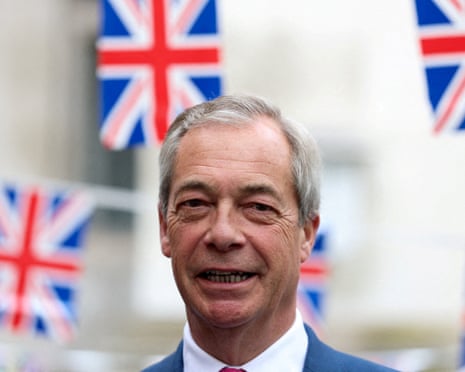
Farage has long presented himself as an outsider challenging Britain’s political establishment. His political career has been closely associated with Brexit, opposition to the European Union, immigration control and criticism of traditional political parties. Reform UK has continued this approach, presenting itself as an alternative to Labour and the Conservatives. Because of this political identity, Farage has argued that establishment figures are particularly determined to stop his movement from succeeding. In July 2026, he said that he had been “demonised” and “dehumanised” as questions about his financial backing intensified.
The controversy became particularly serious after reports revealed that Farage had received a £5 million gift from cryptocurrency billionaire Christopher Harborne. The gift was made before the 2024 general election, when Farage was considering his political future. Parliamentary standards inquiries were subsequently opened into whether Farage had properly declared the financial support and other benefits. Farage has denied wrongdoing and has argued that the intense scrutiny is politically motivated.
From Farage’s perspective, the timing is significant. Reform UK has been gaining political attention, and Farage has become one of the most recognisable figures on the British right. If questions about his personal finances dominate the news, his party may struggle to focus attention on its political agenda. Immigration, public spending, taxation, crime and national sovereignty are central to Reform’s appeal, but these issues can disappear from public discussion when the party’s leader is constantly being asked about money.
There is therefore a reasonable political argument behind Farage’s claim. Political opponents have an obvious incentive to highlight controversies involving Reform. Labour and other parties are competing with Reform for voters, particularly those who are dissatisfied with traditional politics. A damaging financial story can therefore have direct electoral consequences. It is understandable that Farage sees some of the criticism through a political lens.
However, political motivation does not automatically make an investigation illegitimate. A politician can be the target of partisan criticism while also facing legitimate questions. The two things can happen simultaneously. If Farage’s opponents are exaggerating the allegations, he has every right to challenge them. But if independent institutions are examining whether financial rules were followed, dismissing all scrutiny as a coordinated attack does not answer the underlying questions.
This distinction is particularly important because the investigations are not limited to one newspaper article. Parliament’s standards watchdog has examined Farage’s financial affairs, while police have also investigated payments connected to Reform UK. The Metropolitan Police has been examining two £250,000 donations made to Reform through Britain Means Business, a company controlled by Reform deputy leader Richard Tice. These investigations indicate that concerns about Reform’s finances extend beyond Farage’s personal finances.
The wider financial network surrounding Reform has attracted additional scrutiny. Reports have examined the relationship between Farage, George Cottrell, the Cottrell family and various donations to Reform-related organisations. George Cottrell, who has a previous conviction for wire fraud, has been politically associated with Farage. Investigations have also examined transfers of money from Cottrell to his mother before she made substantial donations to Reform.
It is important to emphasise that allegations and investigations do not prove criminal wrongdoing. Police investigations exist precisely to determine whether laws have been broken. Similarly, a parliamentary standards inquiry does not automatically mean that an MP has committed an offence. Farage and other Reform politicians are entitled to due process and should not be declared guilty before the relevant authorities reach conclusions.
Nevertheless, politicians have a special responsibility to maintain public confidence. Political donations and gifts are different from ordinary private financial transactions because they can potentially influence political power. Voters therefore have a legitimate interest in understanding who financially supports politicians and political parties. Transparency allows citizens to judge whether political decisions could be influenced by wealthy individuals or undisclosed relationships.
This is where Farage faces his greatest challenge. His political message depends heavily on distrust of established institutions. Reform supporters are often told that traditional politicians are secretive, unaccountable and disconnected from ordinary people. If Reform wants to replace those politicians, it must demonstrate that its own standards of transparency are at least as strong as those it demands from others.
Farage’s response that the criticism is a “pile-on” may resonate with his supporters because it fits his broader political narrative. He has spent decades presenting himself as a politician who is attacked precisely because he challenges the establishment. Many of his supporters therefore believe that criticism of him is evidence that powerful interests fear Reform’s success.
But this argument carries a risk. If every investigation is described as a political conspiracy, legitimate questions may become harder to answer. Voters who are not committed Reform supporters may reasonably ask why Farage cannot simply provide clear explanations and allow independent investigators to reach their conclusions. Transparency is often a stronger defence than political confrontation.
The controversy also raises questions about the role of journalism. Investigative newspapers have a legitimate responsibility to examine the finances of politicians, particularly when significant sums of money are involved. Farage has strongly criticised some reporting about his finances, and his supporters have questioned the motives of journalists investigating Reform. Yet political leaders cannot reasonably expect favourable coverage simply because they dislike a story. A free press is an essential part of democratic accountability.
At the same time, journalists must maintain high standards. Financial allegations are serious and should be supported by evidence. Reports should clearly distinguish confirmed facts from claims made by unnamed sources or political opponents. If journalists make mistakes, they should correct them. Responsible journalism and political accountability are therefore connected: politicians deserve fair treatment, while voters deserve accurate information.
The political consequences for Reform UK could be considerable. Farage remains a powerful political communicator, but the controversy risks weakening the party’s claim to represent a new and cleaner form of politics. Recent reporting has described an increasingly complicated network of gifts, donations, loans and political relationships surrounding the party. Even if every transaction ultimately proves lawful, the complexity itself can create an impression of opacity.
Farage’s recent decision to resign and then seek re-election in Clacton also demonstrates how closely his personal political career is connected to the controversy. He presented the by-election as a way of securing a fresh democratic mandate, but the parliamentary scrutiny of his finances resumed after his victory. The election therefore did not remove the underlying questions.
The most constructive response would be for Farage to cooperate fully with the relevant investigations. If he believes that the allegations are politically motivated, he can make that argument while still providing documents, explanations and evidence. If the investigations eventually clear him, he would then have a stronger basis for claiming that the controversy was politically exaggerated. If problems are identified, acknowledging them would be preferable to allowing the issue to grow through repeated denials.
The same principle should apply to Reform UK as a whole. The party should not be judged more harshly than other political organisations, but neither should it receive special protection because it presents itself as an outsider movement. Labour, Conservatives, Liberal Democrats, Greens and Reform should all face the same standards concerning political donations and financial transparency.
Ultimately, the phrase “coordinated pile-on” captures the emotional and political dimension of the controversy, but it does not resolve the factual questions. Farage may genuinely believe that political opponents and sections of the media are attempting to damage him. His supporters may also have good reasons to be suspicious of hostile coverage. Nevertheless, independent scrutiny is necessary whenever significant political money is involved.
In conclusion, Nigel Farage’s claim that questions about his finances are part of a “coordinated pile-on” reflects his long-standing conflict with Britain’s political establishment. His argument may appeal strongly to Reform supporters who believe that the party is being deliberately targeted. However, the existence of political criticism does not mean that every investigation is unjustified. Parliamentary inquiries, police investigations and journalistic investigations have raised separate questions about Farage’s financial support and the wider financial relationships surrounding Reform UK.
The fairest approach is therefore neither to accept every allegation as fact nor to dismiss every question as a conspiracy. Farage should be given due process, while voters should be given clear information. If the financial arrangements were lawful and properly declared, transparency will ultimately strengthen his position. If mistakes or breaches occurred, they should be dealt with according to the rules. Reform UK has built its political identity around accountability and challenging the establishment. The party’s credibility will ultimately depend on whether it is willing to apply those principles to itself.