
WW3 Fears Rise as Russian-Linked Airspace Incursions Put Europe on Edge
Europe is facing renewed fears of a wider conflict after a series of drone and airspace incidents involving NATO countries raised concerns that Russia’s war in Ukraine is increasingly spilling beyond the battlefield.
The latest developments have placed Romania and Latvia at the center of growing security concerns. NATO allies have already condemned recent violations of Polish and Romanian airspace, while Latvia has dealt with another drone incursion. Yet despite the alarming headlines, there is an important distinction between a dangerous airspace violation and the beginning of World War Three.
The incidents are serious, but they do not automatically mean that NATO and Russia are heading toward direct war.
Romania Faces Repeated Incursions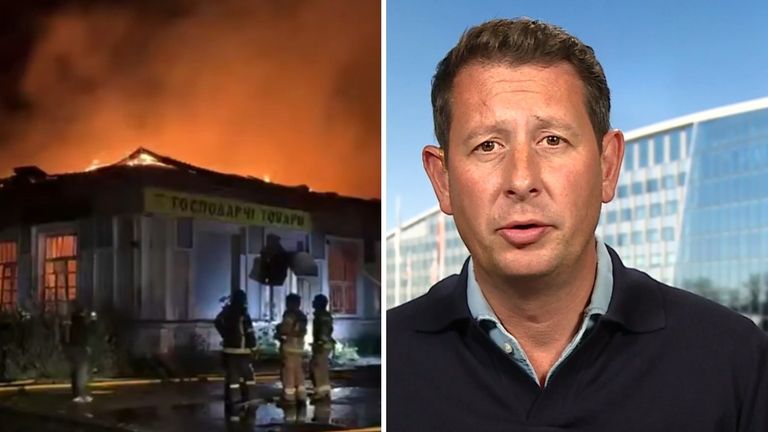
Romania has become one of the most exposed NATO members because of its location next to Ukraine and the Black Sea.
In recent weeks, Romanian airspace has been repeatedly affected by drones linked to the wider Russia-Ukraine conflict. NATO allies discussed the incidents and expressed solidarity with Romania and Poland, with the alliance saying Russia bears responsibility for recent violations.
The danger increased again this week.
On August 20, Romanian authorities destroyed a marine drone near the Neptun Deep gas platform in the Black Sea. The drone was reportedly carrying explosives and was close enough to the major energy installation to pose a serious threat to workers and critical infrastructure.
Romania deployed F-16 fighter aircraft to neutralize the threat. Romanian officials said Ukraine had confirmed that the vessel was not Ukrainian, while President Nicușor Dan blamed Russia. The Kremlin had not publicly commented on the incident at the time of reporting.
The location is particularly sensitive.
Neptun Deep is expected to become a major source of natural gas for Romania and Europe. Any deliberate attack on such infrastructure could therefore have consequences far beyond the immediate military incident.
Latvia Is Also on Alert
Romania is not the only NATO country dealing with unexplained or foreign drones.
On August 14, a drone entered Latvian airspace and was intercepted by NATO aircraft operating under the Baltic Air Policing mission. Latvian authorities initially said the drone appeared to have entered the country’s airspace as a result of Russian electronic warfare.
However, a later investigation produced a surprising development.
Latvia said on August 20 that the drone was actually of Ukrainian origin. It had entered Latvia from Belarus, and Latvian authorities suspected that Russian electronic warfare may have interfered with its navigation.
That revelation is important because it demonstrates how complicated the current security environment has become.
Not every drone entering NATO territory is necessarily a deliberate Russian attack.
Some may be Ukrainian weapons that have been diverted, disrupted or otherwise knocked off course during attacks on Russia.
Why the Incidents Are Causing WW3 Fears
The fear surrounding these events comes from one simple fact: Romania and Latvia are members of NATO.
Under NATO’s collective-defense principle, an armed attack against one member can trigger a response from the alliance as a whole.
That does not mean that every accidental drone crossing automatically activates Article 5. NATO has considerable room to assess what happened, determine responsibility and decide how to respond.
Nevertheless, repeated incursions create the possibility of miscalculation.
A drone could accidentally strike a populated area. A fighter aircraft could misidentify a target. A missile could cross a border. A deliberate attack could be mistaken for an accident—or an accident could be interpreted as deliberate aggression.
That is why military officials across Europe are increasingly concerned.
Germany’s top military leader, General Carsten Breuer, has warned that Russia is using drones and other unconventional tactics to test NATO defenses. He said NATO countries, particularly those on the eastern flank, face hybrid attacks and other hostile activities on a continuing basis.
The concern is not necessarily that Russia has decided to launch a conventional war against NATO.
It is that repeated pressure could gradually push Europe toward a dangerous confrontation.
Russia’s Drone Campaign Is Expanding
The broader context is the intensification of the war in Ukraine.
Russia has continued launching large-scale missile and drone attacks against Ukrainian cities, while Ukraine has expanded its ability to strike targets deep inside Russia.
On August 16, Russia launched a major attack against Ukraine, while Ukraine simultaneously conducted a large drone assault against targets inside Russia. The escalation illustrates how both sides are increasingly capable of reaching farther from their traditional battle zones.
The Institute for the Study of War has also reported that Russia is expanding launch sites for long-range strike drones near Ukraine and Belarus, potentially increasing the threat to Ukraine and neighboring NATO states.
This creates an increasingly dangerous geographic reality.
The closer the fighting moves toward NATO territory, the greater the possibility that weapons will cross borders.
The Black Sea Is Becoming a Critical Flashpoint
The Black Sea may now be one of Europe’s most dangerous regions.
It is surrounded by NATO members, Ukraine and Russia, while also containing major shipping routes and energy infrastructure.
The Neptun Deep incident demonstrates the risks.
A drone carrying explosives approaching an offshore gas platform is not simply a military problem. It is simultaneously an energy-security problem, an economic problem and a potential environmental crisis.
European Commission President Ursula von der Leyen described the broader developments as part of an escalating campaign of threats against Europe.
For NATO, protecting infrastructure has therefore become almost as important as protecting military bases.
Pipelines, ports, power stations, telecommunications systems and offshore energy facilities can all become potential targets in a modern conflict.
NATO Is Trying to Avoid Escalation
Despite the frightening headlines, NATO’s response so far has largely focused on deterrence and defense rather than retaliation against Russia.
Fighter jets have been scrambled to intercept suspicious aircraft and drones. Air-defense systems are being strengthened. Intelligence sharing has increased, while member states are discussing ways to improve protection against low-cost unmanned aircraft.
This approach reflects a central NATO dilemma.
The alliance needs to demonstrate that violations of its territory will not be ignored.
But it must also avoid turning every incident into a direct military confrontation with Russia.
That balance is extremely difficult.
A massive military response to an accidental drone crossing could create unnecessary escalation. Doing nothing, however, could encourage further testing of NATO’s defenses.
Could This Really Trigger World War Three?
The short answer is that the risk exists, but the current evidence does not indicate that World War Three has begun or that a direct NATO-Russia war is inevitable.
The recent incidents are better understood as signs of growing instability around the Ukraine conflict.
The greatest danger may be miscalculation.
Russia may want to test NATO without deliberately starting a war. Ukraine may launch drones toward Russian targets without intending them to enter NATO airspace. Electronic warfare can interfere with navigation. Drones can travel long distances and cross borders before defenders fully understand where they came from.
The result is a volatile environment in which accidents can have enormous political consequences.
That is precisely why NATO countries are taking the incidents seriously.
Europe Is Entering a New Security Era
The traditional idea of European security has changed dramatically since Russia’s invasion of Ukraine.
For decades, many Europeans believed that a large conventional war on the continent was highly unlikely. Today, governments are increasing defense spending, expanding military readiness and strengthening eastern borders.
Countries such as Poland, Romania and the Baltic states are particularly alert because of their geographical proximity to Russia, Belarus and Ukraine.
The repeated appearance of drones over or near NATO territory is another reminder that modern warfare does not respect traditional front lines.
A drone launched hundreds of kilometers away can cross several borders in a matter of minutes.
That reality makes air defense and early-warning systems increasingly important.
A Dangerous Moment—but Not Yet World War Three
The latest incidents should not be dismissed.
Russian-linked airspace violations, Ukrainian drones entering NATO territory, suspected electronic warfare and attacks near critical infrastructure all demonstrate how easily the Ukraine conflict can create consequences beyond Ukraine’s borders.
At the same time, sensational headlines suggesting that World War Three is already imminent risk obscuring the more complicated reality.
The drone that entered Latvia was ultimately identified as Ukrainian, not Russian. In Romania, authorities have attributed recent incidents to Russia, but each event still requires careful investigation.
What matters now is whether these incidents remain isolated—or become part of a sustained pattern of deliberate attacks against NATO territory.
For Europe, the message is clear.
The war in Ukraine is no longer a crisis that can be viewed solely through the lens of events inside Ukraine. Its weapons, cyber operations, electronic warfare and military consequences are increasingly reaching neighboring countries.
The danger is real.
But the most immediate threat is not necessarily an intentional Russian decision to start World War Three.
It is the possibility that one mistake, one miscalculation or one deliberately provocative act could push already tense relations into a confrontation that neither side originally intended.
That is why every drone crossing the border is now being watched so closely—and why Europe’s military leaders are determined to ensure that the next incident does not become something much worse.