

Andy Burnham and Ed Miliband ‘Plot £13bn Foreign Aid Splurge – Tax Rises Likely’
Andy Burnham and his Foreign Secretary, Ed Miliband, are facing growing political pressure over reports that the Government is considering a major increase in Britain’s foreign aid budget — potentially worth around £13 billion a year.
The reported plan would represent a dramatic reversal of the reductions made to the UK’s international development spending in recent years. It has already triggered a fierce debate over whether Britain can afford to restore its long-standing target of spending 0.7 per cent of gross national income on overseas aid while taxpayers at home continue to face pressure from high public spending, rising costs and demands for better public services.
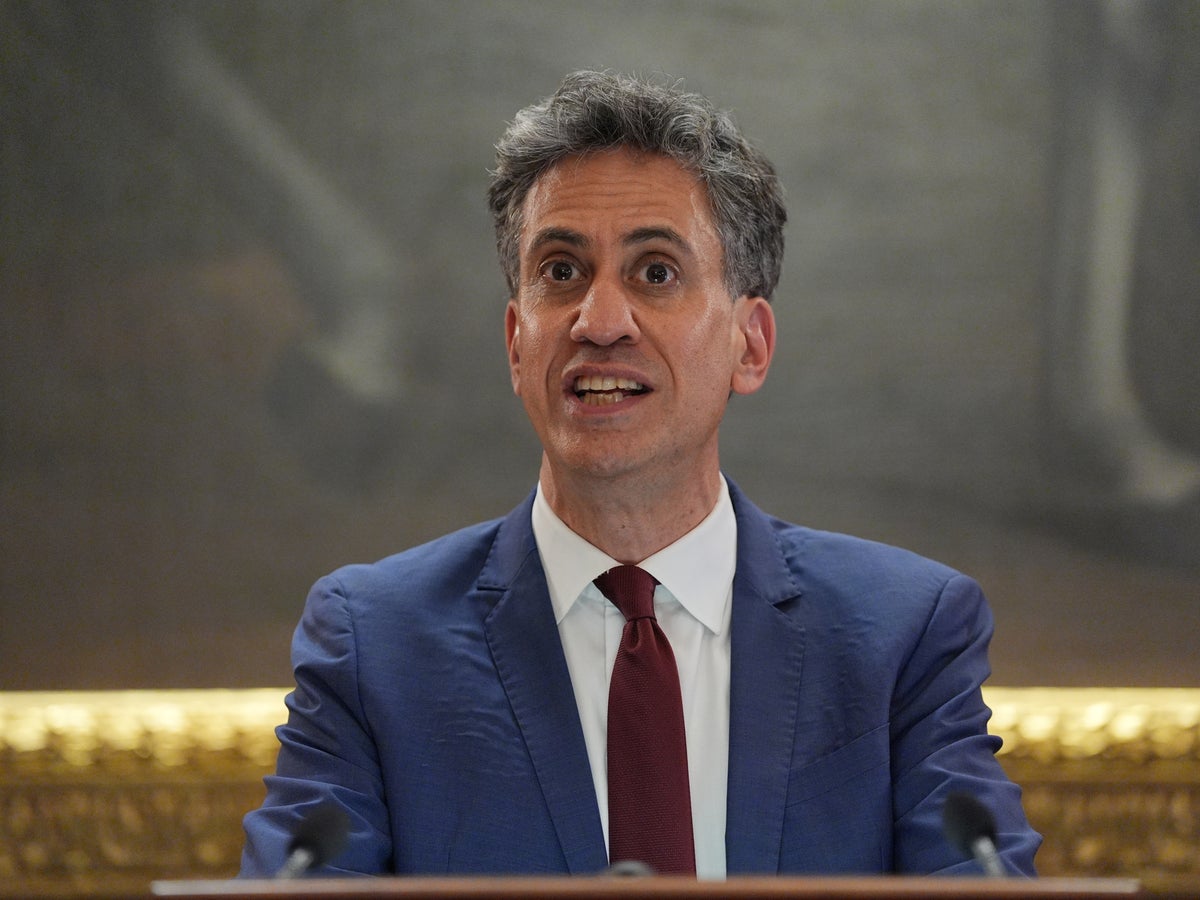
According to reports published this week, Labour MPs have been urging Burnham to increase foreign aid, while Miliband has been pushing for international development to regain a more prominent place in British foreign policy.
The figure of £13 billion is eye-catching, but it needs to be treated carefully. It refers to the potential additional annual spending required to restore the aid budget to 0.7 per cent of national income. It does not mean that Burnham has announced an immediate £13 billion spending package, nor that taxpayers have already been presented with a £13 billion bill.
Nevertheless, the political implications could be enormous.

For Burnham, the issue creates a difficult balancing act between his domestic agenda and his Government’s international ambitions. He has built his political reputation around improving public services, tackling regional inequality and increasing living standards. His supporters expect his Government to invest heavily in Britain.
At the same time, Miliband has made clear that he wants Britain to play a more active role on the international stage. Foreign aid is an important part of that vision.
The argument in favour of restoring the 0.7 per cent target is straightforward. Supporters believe Britain has both a moral responsibility and a strategic interest in helping poorer countries. Aid can provide humanitarian assistance, support health and education programmes, respond to natural disasters and conflicts, and help developing countries deal with climate change.
There is also a diplomatic argument.
Britain’s international influence does not depend entirely on military strength or economic power. Development assistance can strengthen relationships with governments and communities around the world. Supporters of increased aid argue that abandoning Britain’s previous commitments has weakened its influence and reduced its ability to shape international policy.
Miliband is particularly sympathetic to this approach. He has made international development and climate policy important elements of his foreign-policy agenda, and the reported discussions over restoring aid indicate that he wants the UK to reclaim a more prominent role in global development.
But the domestic political argument is considerably more complicated.
Britain is already dealing with enormous financial pressures. Public debt is extremely high, debt-interest payments consume a significant amount of government revenue, and ministers face competing demands for money from the NHS, local government, defence, housing, welfare and infrastructure.
Against that background, announcing billions of pounds in additional overseas spending could be politically explosive.
The obvious question would be: where will the money come from?
There are only a few broad possibilities.
The Government could cut other areas of spending. It could raise taxes. It could borrow more. Or it could hope that stronger economic growth generates sufficient additional revenue to finance the commitment.
Each option carries risks.
Cuts to domestic programmes would undermine Burnham’s promise to rebuild public services. Additional borrowing could make the Government’s fiscal position more difficult and potentially increase debt-servicing costs. And depending on economic growth to pay for a permanent increase in spending would leave the policy vulnerable to an economic downturn.
That leaves taxation as one of the most politically obvious possibilities.
This is why the phrase “tax rises likely” has attracted so much attention. The reported aid proposal does not automatically mean that taxes must rise, but a major permanent increase in spending would inevitably intensify pressure on the Treasury to identify a reliable source of funding.
That could become especially sensitive ahead of future Budgets.
British taxpayers are already highly conscious of the cost of living and the overall tax burden. A Government that promised to improve living standards could face a difficult political reaction if voters conclude that additional taxes are being used to finance overseas programmes while domestic problems remain unresolved.
Opposition parties would have an easy line of attack.
They could argue that Britain should concentrate its resources on problems at home: waiting lists, housing shortages, struggling councils, infrastructure and household finances. They could portray increased foreign aid as evidence that the Government’s priorities are out of touch with ordinary voters.
Reform UK, in particular, could use the controversy to strengthen its argument that the political establishment spends too much money abroad while neglecting British citizens.
But the debate should not be reduced to a simple choice between Britain and the rest of the world.
International crises can have direct consequences for Britain. Poverty, instability, conflict, climate change and weak public-health systems can contribute to migration pressures and geopolitical instability. Development assistance can therefore be presented not merely as charity, but as an investment in international stability.
That is likely to be Miliband’s strongest argument.
He can point to Britain’s global responsibilities and argue that a wealthy country should retain the capacity to respond when humanitarian emergencies occur. He can also make the case that aid spending strengthens British diplomatic influence at a time when geopolitical competition is becoming increasingly intense.
The difficulty is convincing the public that the spending represents good value for money.
Foreign aid has always been politically controversial. Supporters see it as an essential tool of international cooperation, while critics question whether money sent overseas is always spent effectively or reaches the people who need it most.
A return to 0.7 per cent would therefore require more than a financial commitment. It would require a clear explanation of what the additional money would achieve.
If Burnham and Miliband eventually proceed with the policy, they will need to demonstrate that the spending has measurable outcomes. They will have to explain where the money is going, how programmes are monitored and what Britain gains from the investment.
Otherwise, the political backlash could become severe.
There is also an important distinction between the aid target and the wider foreign-policy strategy.
The 0.7 per cent figure is linked to national income, meaning that the amount spent changes as the economy changes. A larger economy would generate a larger cash commitment at the same percentage. A weaker economy would reduce the amount.
That means the final cost of restoring the target cannot simply be treated as a fixed £13 billion forever.
It also means that Burnham’s economic strategy matters.
If his Government succeeds in generating stronger productivity and sustainable economic growth, the additional cost of meeting the aid target could become easier to absorb. If growth remains weak, the same commitment could place much greater pressure on public finances.
This is why the foreign-aid debate is ultimately connected to Burnham’s wider economic programme.
The Prime Minister wants to invest in infrastructure, strengthen regional economies and improve public services. He argues that government spending can help unlock economic growth and reduce the inequalities that have persisted across Britain for decades.
That philosophy can potentially support a larger aid budget — but only if the economy grows strongly enough to provide the revenue required.
Otherwise, the Government could find itself caught between competing promises.
Spend more on public services.
Spend more on defence.
Spend more on infrastructure.
Spend more on housing.
And now potentially spend billions more on international development.
Every commitment sounds reasonable when considered individually. The problem emerges when they are added together.
That is the central political challenge facing Burnham.
A government does not have unlimited resources. Even a policy with a strong moral case must compete against every other demand placed upon the Treasury.
The Prime Minister therefore needs to answer a difficult question: what is the priority when the Government cannot afford everything?
If he chooses to restore the 0.7 per cent target, he will need to make the case that international development deserves a higher priority than alternative uses of the money. If he delays the restoration, he risks angering Labour MPs and international-development campaigners who want a clear commitment.
Miliband faces a similar dilemma.
As Foreign Secretary, he can argue passionately for Britain’s global responsibilities. But the Treasury will ultimately determine what can actually be afforded. A foreign-policy ambition without a credible financial plan will remain just that — an ambition.
The controversy also exposes a broader divide within Labour politics.
Some Labour politicians see increased overseas aid as a natural extension of the party’s internationalist tradition. Others are increasingly concerned that Labour must demonstrate a strong focus on domestic economic problems if it wants to retain support among working-class voters.
Burnham has traditionally attempted to bridge these two positions. His political identity combines Labour’s commitment to public services with a strong emphasis on regional empowerment and social justice.
The aid debate will test whether he can maintain that balance at national level.
For now, the reported £13 billion figure should not be presented as a confirmed tax bill or a final Government spending decision. The reports describe a possible direction of travel and political pressure rather than a completed policy.
But that does not make the story insignificant.
It signals a potentially major argument over what kind of country Burnham wants Britain to become.
Is Britain prepared to spend more internationally even when domestic finances are tight? Should overseas aid be treated as a moral obligation, a diplomatic investment, or an optional expense? And if the Government chooses to increase spending, should taxpayers ultimately be expected to pay for it?
Those questions cannot be avoided forever.
Burnham may ultimately decide that restoring the aid budget is essential to his Government’s international vision. Miliband may argue that Britain cannot claim global influence while reducing its contribution to international development.
Their critics will respond that Britain’s first responsibility is to the people who live and pay taxes here.
The coming Budget battles could therefore become much more than an argument about foreign aid. They could reveal the fundamental priorities of the Burnham Government.
If the Prime Minister can demonstrate that stronger economic growth and careful spending can accommodate the commitment without damaging Britain’s finances, the policy could become an important part of his international legacy.
If, however, the Government is forced into unpopular tax rises or cuts elsewhere to finance it, the £13 billion figure could become a symbol of political overreach.
For Burnham and Miliband, the challenge is no longer simply whether Britain should help the developing world.
It is whether they can persuade a financially pressured British public that the country can afford to do substantially more — and whether they can prove that the money will deliver results.
That is a much harder political argument to win.