

Andy Burnham Announces ‘Absolutely Massive’ Change to Buses in UK City
Andy Burnham has announced a major change to the way bus services are managed in the West Midlands, describing the move as “absolutely massive”. The new agreement between the UK government and the West Midlands Combined Authority will bring the region’s bus network under greater public control and is designed to protect thousands of jobs as well as maintain vital services for millions of passengers. The announcement represents an important shift in the way public transport is organised and could become a significant example of Burnham’s wider political vision for public services.
The change follows serious uncertainty surrounding bus services in the West Midlands after Mobico Group, the parent company of National Express, indicated that it would leave the local bus market. National Express has been an important operator in the region for decades, so its withdrawal created concerns about what would happen to routes, workers and passengers. Rather than allowing the situation to develop without intervention, the government has agreed to work with the West Midlands Combined Authority to keep the network operating while a longer-term system is developed.
Under the new arrangement, the West Midlands Combined Authority will have greater control over the local bus network. The government has provided £11.5 million in new funding to support the transition and keep services running. The immediate objective is to protect bus provision and thousands of jobs that could have been threatened by the departure of a major operator. For passengers, the announcement is intended to provide stability at a time when the future of some services could otherwise have been uncertain.
Burnham called the move “absolutely massive” because it represents a significant expansion of public influence over an essential service. His argument is that buses are not simply commercial products; they are an important part of the infrastructure that allows people to reach work, education, healthcare, shops and other essential destinations. If routes are determined entirely by commercial considerations, less profitable areas can sometimes face reduced services. Greater public control, supporters argue, can allow transport decisions to be based more strongly on the needs of communities.
The West Midlands is also moving towards a longer-term franchising system. Under franchising, the public authority determines important aspects of the network, including routes, fares and timetables, while private companies can continue to operate buses under contracts. This is different from complete nationalisation. The buses do not necessarily have to be owned and operated directly by the government. Instead, the local authority has greater power to decide how the network should work and can pay private companies to provide the services.
This model is already familiar in other parts of England. London has operated its bus network through a franchising-style system for many years, while Greater Manchester introduced bus franchising under Burnham when he was mayor. The Greater Manchester experience has clearly influenced Burnham’s thinking about transport policy. As Prime Minister, he now appears determined to encourage similar approaches in other parts of the country.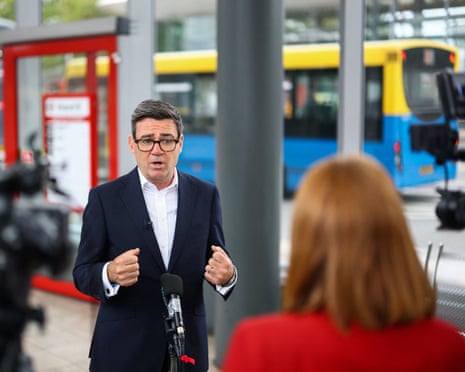
The West Midlands announcement is therefore significant beyond the region itself. It provides an opportunity to test whether a stronger role for local government can produce more reliable, affordable and better-coordinated bus services. Burnham has argued that local leaders are often better placed to understand the transport needs of their communities than central government or large private companies based elsewhere.
For ordinary passengers, however, the most important question will be whether the change actually improves their daily journeys. A new administrative structure is not automatically a guarantee of better buses. Passengers will judge the policy by whether buses arrive on time, whether routes are available when they need them, whether services connect different communities effectively and whether fares remain affordable.
The government has already shown that bus affordability is a major part of Burnham’s transport agenda. In July, the Prime Minister announced that single bus fares in England would be capped at £2 from January 2027, with the measure intended to reduce the cost of everyday travel. The government said millions of passengers could save money as a result of the new national cap.
This means Burnham’s approach to buses has two connected elements: reducing the price passengers pay and increasing public influence over how services are organised. His political message is that buses should be affordable and designed around the needs of the public. The West Midlands announcement adds another important part to that strategy by giving local government a stronger role in the network.
There are also economic arguments behind the decision. Bus services are essential to local economies because they allow workers to travel to employment and customers to reach town centres and businesses. Reliable public transport can also reduce dependence on cars, potentially helping with congestion and environmental problems. When services disappear, people without access to private vehicles can become isolated, while businesses may struggle to attract workers.
Protecting jobs is another central part of the agreement. Burnham has stressed that thousands of jobs were at risk because of the uncertainty created by the withdrawal of a major operator. The new arrangement is intended to prevent disruption for employees as well as passengers. In this sense, the government sees the intervention as both a transport policy and an employment measure.
Nevertheless, the policy has attracted criticism. Richard Holden, the Conservative shadow transport secretary, questioned whether the arrangement could ultimately impose substantial costs on taxpayers. He argued that the government should have considered encouraging another private operator to take over rather than transferring significant liabilities to local taxpayers with government backing. This criticism highlights an important debate about how much financial responsibility governments should accept when supporting public transport.
The financial question will be particularly important in the years ahead. Bus networks can be expensive to maintain, especially when services are provided in areas where passenger numbers are relatively low. Public control may allow authorities to protect socially necessary routes that would otherwise be commercially unattractive, but taxpayers may have to contribute more money to support those services.
Supporters would respond that this is precisely why public involvement is necessary. They argue that not every valuable public service can be judged purely by whether it makes a commercial profit. A bus route may be extremely important to a rural or disadvantaged community even if it does not generate large financial returns. From this perspective, government funding is not simply a cost; it is an investment in social mobility, economic participation and equality.
The West Midlands experiment will therefore be closely watched. If the new system produces more reliable services, protects jobs and gives passengers better value, it could strengthen the case for similar reforms elsewhere in England. If costs rise without significant improvements, critics will have a stronger argument that public control is not necessarily the solution to the problems facing Britain’s bus networks.
For Andy Burnham personally, the announcement also reinforces an important feature of his political identity. During his time as Mayor of Greater Manchester, he made transport reform one of his major priorities. He supported bus franchising and promoted cheaper fares, arguing that public transport should be treated as an essential public service. Now that he is Prime Minister, he has the opportunity to apply those ideas on a much larger national scale.
His wider political vision appears to favour greater local decision-making and public oversight of essential infrastructure. In recent comments, Burnham has spoken about the importance of public control and regional empowerment in areas including transport, housing, energy and other services. His approach is not necessarily based on government directly owning everything. Instead, he appears to favour systems in which public authorities have sufficient power to set priorities and ensure that essential services serve communities effectively.
The bus announcement in the West Midlands could therefore be seen as more than a response to a short-term crisis. It may be an early indication of how Burnham intends to govern Britain. His strategy combines practical intervention with greater regional control, while allowing private companies to remain involved in delivering services.
Ultimately, the success of this “absolutely massive” change will depend on what passengers experience. If people find that buses are more reliable, affordable and convenient, the policy could become a powerful example of how public authorities can reshape essential services. If the reforms lead to higher costs or bureaucratic problems without noticeable improvements, opposition will inevitably grow.
For now, however, Burnham has made his position clear. He believes buses should be organised around the needs of passengers and communities rather than solely around commercial interests. The £11.5 million government support, the move towards public control and the planned franchising model all point towards a major transformation of bus services in the West Midlands.
The announcement could ultimately prove to be an important moment for public transport in Britain. It combines an immediate effort to protect jobs and services with a longer-term ambition to give local authorities more control. Whether the experiment succeeds will depend on funding, management and the quality of the services delivered. But if Burnham’s vision works, the West Midlands could become an influential model for the future of buses across the UK.