

Nigel Farage and the Unusual Clacton By-Election
The Clacton by-election became one of the most unusual political contests in recent British history. Instead of being a traditional battle between the major political parties, the election developed into a highly publicised confrontation between Reform UK leader Nigel Farage and Count Binface, a satirical candidate famous for wearing a rubbish bin on his head. When voting closed, attention focused not only on who would win, but also on what the result would mean for Farage and Reform UK. The election was particularly significant because Farage himself had triggered the by-election after already representing Clacton in Parliament. His decision raised questions about political strategy, public money and the role of personality in modern British politics.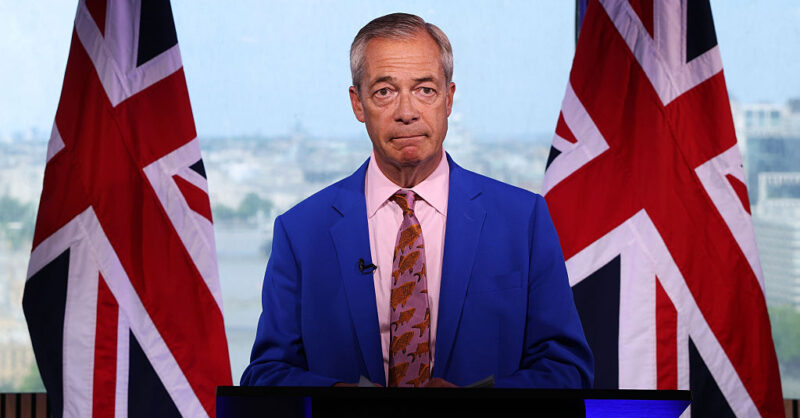
Nigel Farage is one of the most recognisable and controversial politicians in Britain. He has spent decades campaigning on issues including Brexit, immigration and national sovereignty. Although he had repeatedly failed to win a seat in the House of Commons in earlier elections, he finally entered Parliament as the Reform UK MP for Clacton in the 2024 general election. In 2026, however, he chose to trigger another election in the constituency. The decision gave voters another opportunity to decide whether they wanted him to continue representing them.
The election was unusual because the major political parties chose not to contest it. This meant that Farage’s main challenger became Count Binface, the humorous political character created by comedian Jonathan Harvey. Count Binface had previously appeared in other elections, but his campaign in Clacton attracted extraordinary attention. Instead of presenting himself as a conventional politician, he used satire to criticise Farage and the political system. His campaign turned the election into something resembling a mixture of politics and entertainment.

This situation was embarrassing for Farage in one sense. A politician who had hoped to use the by-election to demonstrate his strength instead found himself competing against a candidate wearing a rubbish bin. However, the fact that Count Binface attracted so much attention also revealed something important about British politics. Many voters are increasingly frustrated with traditional political parties and may use elections to express dissatisfaction, protest or humour. In this context, a satirical candidate can become more than a joke: he can represent a wider rejection of conventional politics.
When the votes were counted, Farage won the election with 22,239 votes, while Count Binface received 9,455. Farage therefore secured approximately 63 per cent of the vote, compared with about 27 per cent for his unusual opponent. Although Farage won comfortably, the result was not quite as overwhelming as some opinion polls had predicted. Turnout was around 44 per cent, suggesting that a significant proportion of voters did not participate in the election.
The strong performance of Count Binface was arguably one of the biggest stories of the election. Receiving more than 9,000 votes in a parliamentary contest is remarkable for a satirical candidate. His result showed that voters were willing to support an unconventional political message even when the election appeared to have an obvious winner. Some people may have voted for him as a protest against Farage, while others may simply have wanted to make a humorous political statement.
Farage’s campaign was also controversial because he did not attend the declaration of the result. He claimed that security concerns prevented him from attending and said he did not want to be “demeaned and humiliated” at the event. However, his absence attracted criticism because politicians normally attend the declaration of election results, especially when they have won. His decision created the strange spectacle of a winning candidate being absent while his opponent, Count Binface, attended the count and celebrated his unexpectedly strong performance.
This raises an important question about political leadership. A politician who asks people to vote for him should arguably be prepared to face the public regardless of whether the atmosphere is comfortable. Elections are not only about winning; they are also about accepting criticism and respecting democratic procedures. Farage’s absence allowed opponents to accuse him of avoiding an embarrassing situation. Supporters, however, could argue that personal security should always take priority and that a politician should not be expected to put himself at unnecessary risk simply to attend a ceremony.
The controversy became even more significant because Farage’s electoral victory was followed by renewed attention to an investigation concerning a £5 million gift he received. The parliamentary standards investigation had been suspended when he was no longer an MP, but his return to Parliament meant that the investigation resumed. This created an uncomfortable situation for Reform UK. Farage had attempted to use the by-election to strengthen his political position, but questions about his finances quickly returned to the headlines.
The financial controversy is important because Farage has built his political reputation around attacking the established political system. He frequently presents himself as an outsider who speaks for ordinary people against Westminster elites. Therefore, questions about a multimillion-pound gift naturally attract significant attention. It is important, however, to distinguish between an investigation and a finding of wrongdoing. The existence of an investigation does not itself prove that Farage has broken any rules. The appropriate authorities must examine the evidence and determine whether the relevant parliamentary requirements were followed.
The Clacton election therefore cannot simply be understood as a victory for Farage. It was also a test of the political strategy of Reform UK. Farage clearly wanted the election to demonstrate that his party had strong support and that he personally remained the central figure of Britain’s populist right. His victory provided evidence that he continues to have a substantial electoral base. At the same time, the unusual nature of the contest makes it difficult to interpret the result as evidence of nationwide support for Reform UK.
The absence of Labour, the Conservatives and the Liberal Democrats was particularly important. In a normal general election, voters have a much wider choice between competing political programmes. In Clacton, the major parties effectively left the field open to Farage and a collection of smaller or satirical candidates. As a result, the election was less a conventional competition between political parties and more a referendum on Farage’s presence in the constituency.
Nevertheless, Farage’s ability to win more than 22,000 votes demonstrates his continued political importance. His supporters see him as a politician who speaks directly about issues they believe other parties avoid. Immigration, national sovereignty, taxation and dissatisfaction with Westminster remain powerful themes. His political style is also highly personal. Rather than presenting himself simply as the leader of a political organisation, Farage has become the central symbol of Reform UK.
This dependence on one personality could also become a weakness. If a party becomes too closely associated with a single leader, controversies surrounding that individual can damage the entire organisation. The renewed parliamentary investigation, criticism over his absence from the count and disputes within Reform UK all have the potential to distract from the party’s policies. Recent criticism from figures inside Reform UK has demonstrated that not everyone in the party is comfortable with Farage’s approach.
There is also a broader issue concerning the quality of political debate. The Clacton contest received enormous media attention partly because of the humorous conflict between Farage and Count Binface. While political satire can be valuable in a democracy, there is a danger that politics becomes entertainment rather than serious discussion. Britain faces major problems involving economic growth, public services, housing, healthcare and living standards. Voters need political leaders who can address these issues rather than simply produce headlines.
At the same time, Count Binface’s success should not be dismissed entirely as a joke. Satirical politics can reveal genuine frustration with the political establishment. When people vote for unconventional candidates, they may be expressing dissatisfaction with mainstream politics. The popularity of such candidates should therefore encourage established parties to consider why voters feel disconnected from conventional political institutions.
In my opinion, Nigel Farage’s victory in Clacton was politically significant, but it should not be exaggerated. He won decisively, and the result confirms that he remains a powerful political figure. However, the election also exposed weaknesses in his strategy. Triggering a by-election after already winning the seat created questions about whether the contest was necessary, while his absence from the count generated criticism. The immediate return of financial scrutiny further complicated the victory.
The election also demonstrates that modern British politics is becoming increasingly shaped by personality, media spectacle and political protest. Farage is exceptionally skilled at attracting attention, but attention is not the same as effective leadership. Winning an election is only the beginning of a politician’s responsibility. An MP must represent constituents, participate in Parliament, explain policies and accept scrutiny.
In conclusion, the Clacton by-election was much more than a simple contest between Nigel Farage and Count Binface. It was a reflection of the changing nature of British politics. Farage won with 22,239 votes, while Count Binface achieved an unexpectedly strong second place with 9,455 votes. The result strengthened Farage’s position as the leader of Reform UK, but it also left important questions about his political strategy and financial affairs.
Ultimately, the most important lesson from Clacton may be that democracy is not simply about winning votes. It is also about accountability, participation and public trust. Farage has secured another mandate from the people of Clacton, but that mandate should come with an obligation to face difficult questions rather than avoid them. Whether Reform UK can transform its electoral popularity into effective political leadership will be a much more important test than any confrontation with a candidate wearing a bin.