

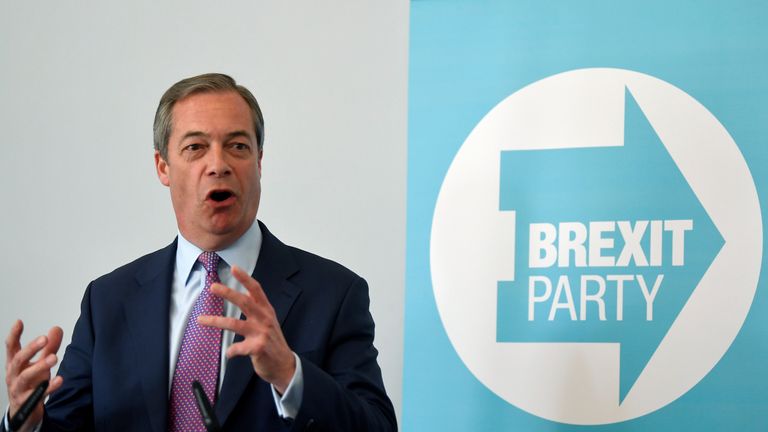
Ten Reform UK Policies That Critics Say Could Hit British Households
Reform UK has rapidly developed from a political movement associated mainly with Brexit and opposition to immigration into a party presenting itself as a potential alternative government. Led by Nigel Farage, the party has attracted voters who are dissatisfied with Labour and the Conservatives and who want major changes to Britain’s economy, immigration system, public services and relationship with international institutions. However, Reform’s policies have also attracted strong criticism. Opponents argue that some of the party’s proposals could increase costs for ordinary households, create uncertainty for businesses or weaken important protections.
The debate is important because political promises can sound attractive when considered individually. Lower taxes, fewer regulations and cheaper energy may appeal to many voters. However, government policies often produce complicated consequences. A policy designed to reduce one cost may increase another, while a reduction in government revenue may eventually affect public services. The following ten areas illustrate why Reform UK’s programme deserves careful examination.
1. A potential trade war
One of the biggest concerns raised by critics is Reform UK’s approach to international trade. Farage has repeatedly emphasised Britain’s independence from the European Union and argued that the UK should be prepared to defend its national interests more aggressively. While national sovereignty is an important political objective, a confrontational approach to trade could create problems for British businesses and consumers.
Britain depends heavily on international trade. Companies import raw materials, components, food and finished products from abroad, while British businesses also rely on overseas customers. If tariffs or other trade barriers increase, businesses may face higher costs. They may respond by increasing prices, reducing investment or employing fewer workers.
A trade dispute could therefore affect ordinary consumers even if they have little direct interest in international politics. Imported food, manufactured goods and other products could become more expensive. Small businesses could be particularly vulnerable because they often lack the financial resources of large corporations to absorb higher costs.
2. Changes to online safety rules
Reform UK has also criticised aspects of Britain’s online safety regulations. The party has argued that excessive regulation could restrict freedom of speech and give government too much power over online content. Protecting free expression is clearly important in a democratic society, but critics warn that weakening online safety rules could create new risks.
Online platforms are already used to spread misinformation, harassment, fraud and extremist material. Stronger regulation can provide greater protection for children and vulnerable users. If regulations are removed without effective alternatives, critics fear that social-media companies could have fewer incentives to protect users.
There is therefore a difficult balance between freedom and safety. Reform argues that adults should have greater freedom to express controversial opinions online. Critics respond that freedom of speech does not require platforms to allow every form of harmful behaviour. The challenge for any government is to protect legitimate expression while preventing genuine abuse.
3. Opposition to net zero policies
Reform UK has been strongly critical of Britain’s net zero strategy. Farage and his party have argued that climate policies place excessive costs on households and businesses. They have questioned measures designed to reduce carbon emissions and have called for a different approach to energy policy.
There is a legitimate economic argument here. Transitioning away from fossil fuels requires major investment, and some green technologies can initially be expensive. Households may face higher costs when replacing heating systems or purchasing low-emission vehicles. Businesses may also need to spend money adapting to environmental regulations.
However, abandoning or substantially weakening climate policies could create other costs. Extreme weather, energy insecurity and dependence on imported fossil fuels can also impose economic burdens. Renewable energy investment may reduce exposure to volatile international fuel prices over time. Critics therefore argue that Reform’s approach risks focusing too heavily on the immediate cost of climate policies while overlooking the long-term costs of climate change.
4. Large-scale immigration restrictions
Immigration is one of Reform UK’s defining political issues. The party wants substantially tighter controls and has argued that Britain needs to reduce migration. Supporters believe high levels of immigration place pressure on housing, public services and infrastructure and make it more difficult for communities to integrate newcomers.
However, Britain’s economy also depends on migrant workers in several sectors. Health and social care, hospitality, agriculture and construction have all relied to varying degrees on workers from overseas. A sharp reduction in immigration could therefore create labour shortages.
Businesses might respond by increasing wages to attract British workers, which could be positive for employees. But they could also raise prices or reduce services if they cannot recruit enough staff. In sectors such as social care, higher labour costs could place additional pressure on already stretched public finances.
5. Changes to workers’ rights
Reform UK has presented itself as a party that wants to reduce burdens on employers. This includes proposals to change aspects of employment regulation. Supporters argue that businesses need flexibility if they are to create jobs and grow.
Critics fear that weakening employment protections could leave workers more vulnerable. Regulations concerning sick pay, dismissal, working conditions and workplace rights exist partly to prevent employers from exploiting employees.
The central question is how much flexibility businesses need. Excessive regulation can make hiring more difficult, particularly for small companies. But insufficient protection can create insecurity and encourage a race to the bottom in wages and working conditions. A successful economic policy needs to consider both employers and employees.
6. Major tax reductions
Tax cuts are among Reform UK’s most attractive promises for many voters. Farage has argued that Britain taxes people and businesses too heavily and that reducing the tax burden could stimulate economic growth.
There is an economic argument that lower taxes can encourage investment, entrepreneurship and employment. People may have greater incentives to work or start businesses if they keep more of their income.
However, tax reductions also reduce government revenue. Unless economic growth generates enough additional revenue, the government may have to borrow more or reduce spending. This creates a difficult choice because Britain needs substantial funding for healthcare, education, transport, defence and other public services.
The credibility of any tax-cutting programme therefore depends on its detailed financial calculations. Promising lower taxes is easy; demonstrating that they can be funded sustainably is much harder.
7. Cuts to government spending
Reform has also proposed significant reductions in government spending as part of its attempt to create room for tax cuts. Supporters argue that the British state is inefficient and that large amounts of public money are wasted.
There is certainly a case for improving efficiency. Governments should regularly examine whether programmes are delivering value for money. However, spending cuts can have consequences if they affect essential services.
For ordinary households, public spending is not simply an abstract figure. It pays for hospitals, schools, social care, roads, policing and local services. A reduction in spending may therefore become visible through longer waiting times, fewer services or higher charges.
The challenge is to distinguish genuine waste from spending that provides essential support. If Reform were to enter government, it would need to demonstrate exactly where savings could be made without damaging important services.
8. Changes to the NHS
Reform UK has criticised the performance of the National Health Service and has discussed increasing the role of private providers and changing how healthcare is funded and delivered. The party argues that Britain needs a more efficient system capable of reducing waiting lists and improving patient outcomes.
There are arguments in favour of reform. The NHS faces major pressures involving staffing, waiting times, ageing populations and rising demand. Simply maintaining the existing system may not be enough.
Nevertheless, significant changes could create uncertainty. If private healthcare companies become more involved, critics may fear that the principle of universal access could gradually be weakened. Any restructuring would also involve considerable administrative costs and would need to ensure that patients do not lose access to essential treatment.
9. Tougher energy policies
Reform has argued that Britain should make much greater use of domestic energy resources and reduce reliance on policies that increase energy costs. This could include greater support for oil and gas production and a slower transition away from fossil fuels.
The attraction is obvious. Britain needs affordable and reliable energy. High energy prices directly affect households while also increasing costs for businesses.
However, critics argue that increasing reliance on fossil fuels could conflict with climate commitments and expose Britain to future fluctuations in global energy prices. Domestic production does not automatically mean that consumers will receive dramatically cheaper energy because oil and gas prices are influenced by international markets.
The energy debate therefore involves a difficult balance between affordability, energy security and environmental responsibility.
10. A more confrontational approach to government and institutions
Perhaps the most significant concern is not one individual policy but Reform UK’s overall political approach. Farage has built his career by challenging established institutions and presenting himself as an outsider. This has helped Reform attract voters who feel ignored by traditional parties.
However, governing requires compromise. A government must negotiate with Parliament, businesses, trade unions, local authorities, international partners and other institutions. Policies cannot always be implemented exactly as originally promised.
A highly confrontational approach may be effective during an election campaign, but it can become more difficult when a party is responsible for managing the country. Reform would therefore need to demonstrate that it can transform its political energy into practical government.
In conclusion, Reform UK’s policies offer a mixture of ideas that appeal strongly to voters who want significant political change. Lower taxes, less bureaucracy, tighter immigration controls, cheaper energy and greater national independence can all sound attractive, particularly to people frustrated with the existing political system.
However, every policy involves trade-offs. Lower taxes can mean less government revenue. Lower immigration can create labour shortages. Reduced regulation can weaken protections. A confrontational trade policy can increase prices. Slower climate action can create long-term environmental and economic risks. Cuts to public spending can affect services that millions of people rely on.
This does not mean that every Reform policy would necessarily produce the negative consequences predicted by its opponents. Economic forecasts are uncertain, and governments frequently discover that policies produce both benefits and unintended effects. Reform’s supporters can reasonably argue that the existing political establishment has also made serious mistakes and that Britain needs a different direction.
Nevertheless, the criticism demonstrates why voters should examine political promises carefully. A party seeking to govern must explain not only what it wants to change but also how those changes will be paid for, implemented and managed.
For Nigel Farage and Reform UK, the central challenge is therefore credibility. It is no longer enough to present themselves as the party that opposes Labour and the Conservatives. If Reform wants to become Britain’s governing party, it must demonstrate that its policies can improve people’s lives without creating even greater problems elsewhere.
Ultimately, the debate over Reform UK’s programme is a debate about Britain’s future direction. The party promises a smaller, less regulated and more nationally independent state. Its opponents fear that such a transformation could leave ordinary people paying the price. Voters will ultimately have to decide whether Reform’s proposed changes represent a necessary break with the past or a risky experiment whose costs could outweigh its benefits.