

A major trade confrontation between Canada and the United States has escalated dramatically after Prime Minister Mark Carney announced retaliatory tariffs against American goods in response to Donald Trump’s latest tariff measures. The move marks one of the sharpest deteriorations in relations between the two long-standing allies and has raised fears of a prolonged trade war that could affect businesses, workers and consumers on both sides of the border.
The latest escalation follows the collapse of trade negotiations between Ottawa and Washington. Carney announced on August 21 that Canada was suspending talks after what he described as last-minute American demands that were unfair and economically damaging to Canada. He said the United States was preparing to impose 50 percent tariffs on roughly C$28 billion of Canadian goods and confirmed that Canada would respond “dollar for dollar.”
Canada’s retaliatory measures are scheduled to begin on September 8. The package announced by Ottawa covers approximately US$20 billion of American imports, with tariffs ranging from 15 percent to 50 percent across hundreds of products. Targeted goods include steel, aluminium, furniture, clothing, cheese, electronics and machinery. Canada has also announced a C$7.5 billion support package designed to help businesses and workers affected by the dispute.
The confrontation represents a major change in the relationship between two countries whose economies have traditionally been deeply integrated. The United States and Canada exchange hundreds of billions of dollars in goods and services every year, with supply chains crossing the border repeatedly in industries such as automobiles, energy, agriculture and manufacturing.
That economic interdependence means tariffs could have consequences beyond the companies directly targeted. Higher import costs can eventually be passed on to businesses and consumers, while companies dependent on cross-border supplies may face difficult decisions about prices, production and investment.
Trump has defended his tariff strategy by accusing Canada of unfairly restricting American commerce. His administration has argued that American businesses face barriers in areas including agriculture, automobiles and alcohol. Trump has also announced a further 50 percent tariff on Canadian automobiles, automobile parts, trucks and steel scheduled to take effect on January 1, 2027.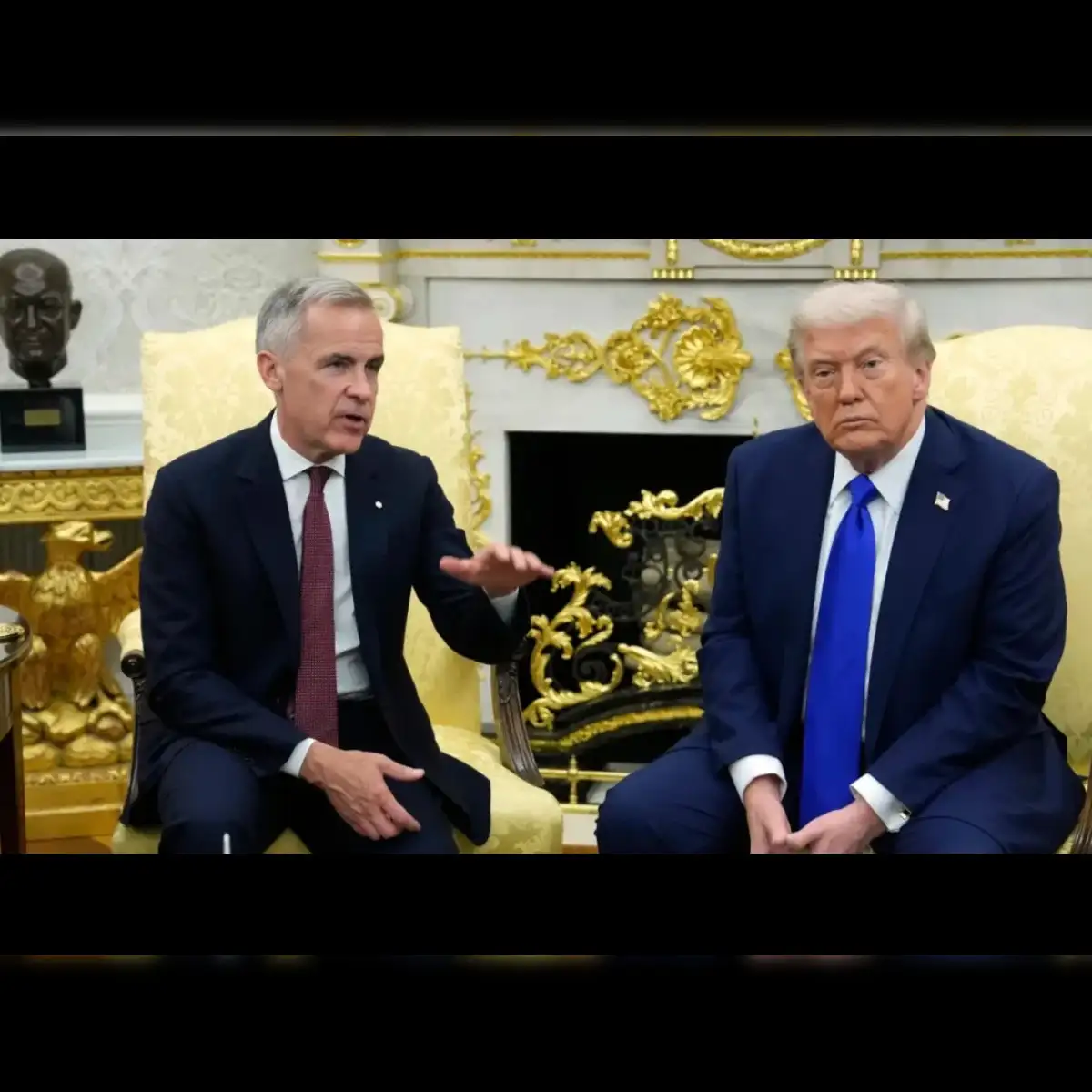
Carney has taken a notably firm position in response. Rather than accepting what he regards as an unacceptable agreement, the Canadian prime minister has argued that Ottawa must protect the country’s economic interests and sovereignty. He has also stressed that Canada is seeking to diversify its international trade relationships rather than remain excessively dependent on the American market.
This approach could become an important part of Carney’s political strategy. The Canadian government has emphasised investment at home, the removal of internal trade barriers and the development of new export markets. Carney has argued that Canada must adapt to a changing international environment in which the United States is becoming less predictable as a trading partner.
The dispute has also generated unusually strong political unity within Canada. Federal and provincial leaders have discussed coordinated measures to protect Canadian businesses and workers. Ontario Premier Doug Ford, for example, has raised the possibility of using electricity and critical-mineral exports as further leverage against the United States, although Ottawa has so far avoided targeting strategically important energy and resource sectors in its latest tariff package.
For Trump, the confrontation carries its own risks. American manufacturers and retailers that rely on Canadian products could face higher costs. Businesses in states that export heavily to Canada could also become vulnerable to retaliatory measures. Canadian officials have acknowledged that their tariff list was designed not only to protect Canadian industries but also to create political pressure in the United States ahead of the November midterm elections.
The future of the United States-Mexico-Canada trade framework is another major concern. The two economies have spent decades developing integrated supply chains under successive trade agreements. A prolonged tariff confrontation could weaken that framework and encourage businesses to reconsider where they manufacture and source products.
Despite the aggressive rhetoric, however, the possibility of renewed negotiations has not disappeared. Both countries have powerful economic incentives to avoid a permanent breakdown. The sheer scale of cross-border trade means that a prolonged conflict could become costly for both governments.
For now, though, relations have reached an unusually tense stage. Carney has made clear that Canada will not accept what he considers a bad deal simply to preserve unrestricted access to the American market. Trump, meanwhile, has shown little indication that he intends to retreat from his tariff strategy.
The coming months will therefore be crucial. If both governments remain committed to escalating tariffs, businesses and consumers could face increasing economic pressure. If negotiations eventually resume, the tariffs may become bargaining tools rather than permanent barriers.
What began as a dispute over trade policy has now become a broader test of the relationship between two neighbouring countries. Mark Carney’s decision to retaliate demonstrates that Canada is prepared to confront Washington rather than simply absorb American tariff demands. Whether that strategy ultimately forces Trump back to the negotiating table or instead produces a prolonged trade war remains uncertain.
One thing is clear: the era in which Canada could assume that its economic relationship with the United States would remain stable and predictable has become far less certain. Carney’s tariff response is not merely an economic measure—it is a declaration that Canada intends to defend its interests aggressively in a rapidly changing global trading environment.