

Falkland Islands Poised for Massive Oil Windfall as Multi-Billion-Pound Drilling Venture Gathers Pace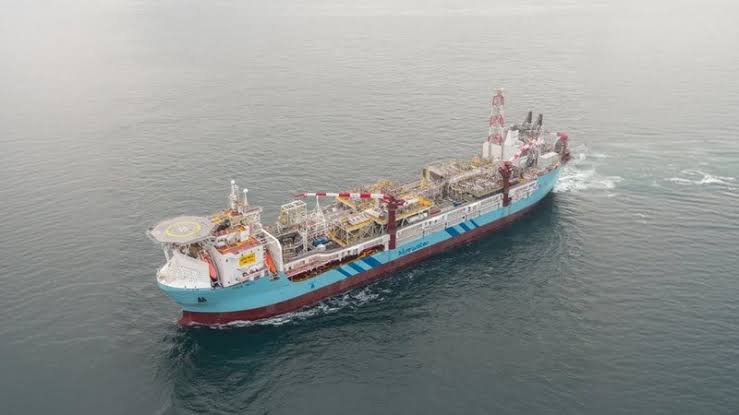
The Falkland Islands could be on the verge of a major economic transformation as a multi-billion-pound offshore oil development moves closer to becoming a reality.
The ambitious expansion of the Sea Lion oil field, located to the north of the islands in the South Atlantic, has gathered significant momentum after operator Navitas Petroleum announced plans for an additional floating production vessel capable of dramatically increasing future output.
The development could turn the Falkland Islands into a significant oil-producing territory while creating a potentially substantial new stream of government revenue through royalties and taxation.
Sea Lion has long been regarded as one of the most important undeveloped oil discoveries in the region. The field was discovered by Rockhopper Exploration in 2010 and has since undergone extensive appraisal and development work.
Navitas Petroleum now holds a 65 per cent interest in the project and acts as operator, while Rockhopper retains the remaining 35 per cent.
The first stage of development is already sanctioned, with first oil targeted for 2028. The initial development is expected to use the Aoka Mizu floating production, storage and offloading vessel, with production planned at roughly 50,000 to 55,000 barrels per day at peak rates.
But the latest plans could make the project considerably larger.
Navitas is pursuing the acquisition and redevelopment of a second floating production vessel, known as OSX1. The additional vessel could provide production capacity of around 125,000 barrels of oil per day and allow development of another major part of the Sea Lion field.
The central area alone is estimated to contain hundreds of millions of barrels of potentially recoverable oil.
The wider Sea Lion development has therefore evolved from a single-field project into a much more substantial long-term production opportunity.
Navitas has estimated that the additional central-area development could require investment of about $3 billion. The second FPSO itself is expected to require substantial upgrading and modification before it can be deployed, taking the overall cost of the vessel to approximately $1.15 billion.
For the Falkland Islands, the implications could be enormous.
The islands currently have a small economy heavily influenced by fishing, agriculture, tourism and government activity. Oil production on the scale envisaged at Sea Lion would introduce a completely new source of economic activity.
Under the existing fiscal arrangements, the Falkland Islands Government is expected to receive a royalty on oil revenues as well as corporation tax on profits. With production potentially reaching well over 100,000 barrels per day across multiple development phases, the resulting income could become a major component of the islands’ future finances.
The precise value of that windfall will depend on oil prices, production rates, operating costs, taxation, development expenditure and the ultimate amount of oil recovered.
Nevertheless, the scale of the opportunity is difficult to ignore.
The Sea Lion field is believed to contain a substantial oil resource, while independent assessments have continued to support the project’s long-term potential. In April 2026, Rockhopper reported that an updated independent evaluation had reclassified resources associated with the first two northern development phases into reserves, strengthening the commercial foundation of the project.
That progress has been accompanied by tangible activity on the ground.
Development work in the Falkland Islands has begun, including preparations around the dock and shore base. Infrastructure and accommodation work is expected to support the arrival of drilling and production operations, while long-lead equipment for the first phase is already being manufactured.
The project therefore represents more than a speculative exploration programme.
It is moving into the construction and development phase.
The first oil target of 2028 is particularly significant. If achieved, Sea Lion would deliver the Falkland Islands’ first oil production and establish an entirely new industry in the territory.
The impact could extend far beyond government revenue.
A major offshore oil industry would require engineers, marine specialists, logistics companies, construction workers, supply-chain businesses and other service providers. Some of those opportunities could benefit local residents, while others would involve companies and workers from Britain and international energy markets.
The Falkland Islands Government has already been preparing for the broader implications of offshore hydrocarbon development, including regulatory, taxation, infrastructure and environmental considerations.
Yet the project is not without controversy.
Argentina continues to claim sovereignty over the Falkland Islands, which it calls the Islas Malvinas. Buenos Aires has repeatedly opposed unilateral exploitation of natural resources around the islands.
That creates a geopolitical dimension to Sea Lion that distinguishes it from many other offshore oil developments.
The sovereignty dispute has existed for decades and was the central issue behind the 1982 Falklands War. Although the United Kingdom administers the islands and the Falkland Islanders overwhelmingly support remaining British, Argentina has never abandoned its claim.
The prospect of large-scale oil production inevitably adds another layer to that dispute.
Argentina has previously criticised offshore hydrocarbon activity around the islands and has indicated that it regards unilateral development of natural resources as illegitimate.
For the companies involved, however, the commercial case continues to advance.
Navitas has repeatedly presented Sea Lion as a major development opportunity with the potential for production lasting for decades. The company has adopted a staged strategy, allowing the northern development to proceed first while investigating additional production areas.
This approach is intended to reduce the risks associated with developing the entire resource simultaneously.
The first phase will involve a series of subsea wells connected to the Aoka Mizu FPSO. A second phase would add further wells, while the proposed OSX1 vessel could eventually unlock another part of the field.
If all these stages proceed successfully, the Falkland Islands could move from having no oil production to becoming a notable offshore producer within only a few years.
However, there are still substantial hurdles to overcome.
Large offshore oil projects are enormously complicated. Costs can increase, schedules can slip and oil prices can change dramatically between the beginning of a project and the point at which production starts.
Financing is another important consideration.
Rockhopper recently indicated that it would need to raise additional capital to support its participation in the proposed second FPSO arrangement. The company has already secured financing arrangements for the initial phase, but expansion requires further investment.
That means the full potential of Sea Lion should not be treated as guaranteed revenue for the Falkland Islands.
The $3 billion figure associated with the expanded development represents planned investment, not money that will automatically flow into the local economy. Similarly, estimates of future government income depend heavily on how much oil is ultimately produced and the price at which it is sold.
Nevertheless, the direction of travel is significant.
The initial Sea Lion development has passed a major milestone with final investment decisions already taken. The Falkland Islands Government has approved the relevant development and production programme for the northern area, while preparations for physical development are underway.
The proposed second FPSO now offers the prospect of accelerating subsequent phases rather than waiting many years for the first development to mature.
That could dramatically increase the pace at which the islands begin to benefit from their offshore resources.
For a territory with a population of only a few thousand people, even relatively modest oil revenues could have a profound effect.
A successful oil industry could provide additional funds for infrastructure, public services, education, healthcare and economic diversification. It could also strengthen the islands’ financial independence and reduce their reliance on existing economic sectors.
But that opportunity comes with a responsibility to manage the revenues carefully.
Oil is a finite resource. Production will eventually decline, and global energy markets are undergoing major changes as governments pursue lower-carbon technologies.
The Falkland Islands therefore face a question that extends beyond whether Sea Lion can produce oil.
They will also have to decide how any resulting wealth should be managed for future generations.
If production reaches the levels currently envisaged, the territory could have an opportunity to establish long-term investment mechanisms rather than simply spending revenues as they arrive.
For now, however, the immediate focus is on getting the project into production.
The 2028 first-oil target represents a crucial milestone. If the Aoka Mizu begins production as planned, it would mark a historic moment for the Falkland Islands and demonstrate that the long-discussed offshore oil opportunity can finally become commercially viable.
The proposed expansion would then take the story to another level.
A second FPSO with potential capacity of approximately 125,000 barrels per day could transform Sea Lion into a much larger production hub, with billions of dollars of additional investment required to develop the resource.
That is why the latest drilling and development plans are attracting such attention.
For decades, the Falkland Islands’ offshore oil potential existed largely as an unrealised promise. Today, the project is moving through engineering, financing, infrastructure and development stages that could ultimately turn that promise into a functioning industry.
There remain financial, technical, environmental and geopolitical uncertainties. Nothing about a project of this scale is guaranteed.
But if Sea Lion progresses according to current plans, the Falkland Islands could soon find themselves sitting on a powerful new economic engine.
The first barrels in 2028 would be only the beginning.
With further drilling, a second production vessel and billions of dollars of planned investment, the islands could be heading towards an oil windfall on a scale that would reshape their economy for decades to come.
:::{“fallbackMarkdown”:””,”reference”:{“matched_text”:” “,”prefix”:null,”start_idx”:10977,”end_idx”:10977,”safe_urls”:[],”refs”:[],”alt”:””,”prompt_text”:null,”type”:”sources_footnote”,”sources”:[],”has_images”:false},”showLoginRequiredCard”:false}