

Andy Burnham on the Brink of a Snap Election – And One Nightmare Scenario Should Worry Us All
Andy Burnham is once again at the centre of a political storm, with speculation mounting that Britain could be heading towards a snap general election. The prospect has immediately raised questions about whether the prime minister is preparing to take advantage of favourable political conditions, but there is a much bigger issue lurking beneath the surface.
An early election would not simply be a test of Burnham’s popularity. It could fundamentally reshape Britain’s political landscape, particularly if voters use the opportunity to punish the traditional parties and give greater support to Reform UK and other smaller movements. That is the nightmare scenario that should concern anyone who cares about political stability.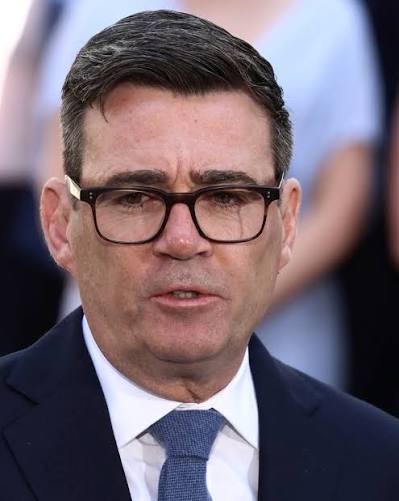
Burnham’s rise to Downing Street has already transformed the political conversation. He entered national government with a reputation built during his years in Manchester, where he developed a distinctive political identity centred on devolution, public services and regional investment. Supporters see him as a politician capable of reconnecting Labour with voters who have become disillusioned with Westminster. Critics, however, worry that his popularity could encourage an unnecessarily risky election gamble.
The attraction of an early election is obvious. Governments rarely get a better opportunity than when their leader enjoys a period of personal popularity. Waiting can be dangerous. Economic difficulties can worsen, scandals can emerge and opponents can recover. A prime minister who believes the political weather is favourable may therefore be tempted to ask voters for a fresh mandate before circumstances change.
But elections are not controlled experiments. Once a campaign begins, events can move faster than any political strategist expects.
That is why a snap election could be far more dangerous than it initially appears.
Britain’s traditional two-party system has been under enormous pressure for years. Voters are increasingly willing to move between parties, support independents or choose candidates who promise to disrupt the political establishment. Reform UK has benefited enormously from this dissatisfaction, particularly among voters who believe that the Conservatives and Labour have failed to address concerns about immigration, living standards, national identity and the performance of public services.
A sudden election could therefore unleash a protest vote on a much larger scale.
Imagine a scenario in which Labour remains the largest party but loses a substantial number of seats. Reform UK makes dramatic gains. The Conservatives struggle to recover. The Liberal Democrats expand their influence, while the SNP and other regional parties remain important in Scotland and Wales.
The result could be a Parliament in which no political party has a comfortable grip on power.
That would be the real nightmare.
A fragmented Parliament would make governing significantly more difficult. Every major budget, reform programme and piece of legislation could require negotiations with other parties. Political uncertainty could become permanent. Investors could become nervous, businesses could delay decisions and voters could become even more frustrated with Westminster.
Worse still, a highly fragmented Parliament could intensify political polarisation rather than reduce it.
Reform supporters could argue that the political establishment was deliberately preventing change. Labour supporters could blame the electoral system for producing an unrepresentative result. Conservatives could face an existential debate about whether to move further towards Reform or attempt to reclaim the centre ground. Smaller parties would demand concessions in exchange for their votes.
Instead of settling Britain’s political arguments, an election could make them considerably more bitter.
There is another reason the prospect deserves careful attention: the British electoral system can produce enormous differences between votes and seats. Under first-past-the-post, a party can win millions of votes nationally without becoming the largest force in Parliament, while another party can secure a large majority without winning anything close to a majority of the popular vote.
If Reform UK continues to increase its support but that support is spread relatively evenly across constituencies, it could win many votes but fewer seats than its supporters expect. Conversely, if its support becomes geographically concentrated, it could suddenly convert polling numbers into a substantial parliamentary presence.
That uncertainty makes predictions extremely difficult.
For Burnham, the calculation is therefore complicated. A snap election could strengthen his mandate and allow him to claim that voters had personally endorsed his programme. It could also destroy the political advantage he currently possesses.
The danger is that political leaders can become prisoners of their own polling.
A favourable poll creates pressure to act because politicians know that today’s advantage may not exist tomorrow. But an election campaign introduces hundreds of unpredictable variables. A single television interview can become a national controversy. A policy announcement can alienate an important group of voters. An international crisis can completely change the political agenda.
Most importantly, voters themselves may behave differently once they know that their decision will determine the government.
Many people who express support for a party in a poll may ultimately vote tactically. Others may decide to punish the government. Some may vote for a smaller party because they believe it can genuinely win in their constituency. The final result can therefore look very different from the polling picture that encouraged an election in the first place.
Burnham would also face the enormous challenge of the economy.
An election campaign cannot permanently hide economic pressures. Questions about taxation, government spending, public-sector pay, housing, energy costs and the National Health Service would dominate the debate. If voters believe that the government is asking them for a mandate before making painful decisions, accusations of political opportunism would inevitably follow.
The prime minister would need to convince the country that an early election was motivated by national interest rather than personal advantage.
That would be difficult.
Yet the biggest question goes beyond Burnham himself. Britain has entered an era in which political stability can no longer be taken for granted. The old assumption that Labour and Conservative governments would alternate comfortably for decades has weakened considerably.
The rise of populist movements is not simply a British phenomenon. Across Europe and beyond, voters have demonstrated a growing appetite for parties that challenge established institutions and conventional political language. Britain is not immune from that trend.
If a snap election produced a major breakthrough for Reform UK, the consequences could extend far beyond the number of seats won. It could change the strategic behaviour of every other party.
Labour might move towards tougher positions on immigration and national identity. The Conservatives could face renewed pressure to cooperate with or imitate Reform. Liberal Democrats could attempt to position themselves as the principal moderate alternative. Scotland could become even more politically distinct from England.
The result could be a political system increasingly defined by permanent competition rather than broad consensus.
That should worry everyone, regardless of which party they support.
Democracy depends on disagreement, but it also depends on institutions being capable of turning disagreement into effective government. Elections are essential, yet elections alone cannot solve political dysfunction. If every election becomes a referendum on anger, identity or resentment, governments may struggle to build the long-term consensus needed to tackle difficult problems.
This is why Burnham should think very carefully before calling voters back to the polls.
If he genuinely believes Britain needs a fresh mandate, he should be prepared to explain exactly what that mandate is for. Is it to reform public services? To change the relationship between Westminster and the regions? To address the housing crisis? To rebuild economic confidence? Or simply to take advantage of a favourable political moment?
The distinction matters.
Britain does not need an election merely because one might produce a better result for the government. It needs political leadership capable of explaining why difficult decisions are necessary and why those decisions deserve public support.
A snap election could give Burnham a stronger mandate. It could also give Britain a Parliament that is dramatically harder to govern.
That is the gamble.
The most frightening outcome is not necessarily a Reform victory, a Labour victory or a Conservative collapse. It is a result in which no one really wins, yet everyone claims that the voters have demanded radical change.
Such a Parliament could spend years arguing about who has the right to govern while the country’s underlying problems become more difficult to solve.
Burnham therefore faces a choice that goes well beyond his own political future. He can gamble on the political moment, or he can allow his government time to demonstrate that it can deliver.
For now, the temptation of an early election may be powerful. But Britain’s recent political history offers a simple warning: once an election is called, the politicians no longer control the outcome.
The voters do.
And in today’s volatile political climate, nobody can confidently predict what they might decide.