
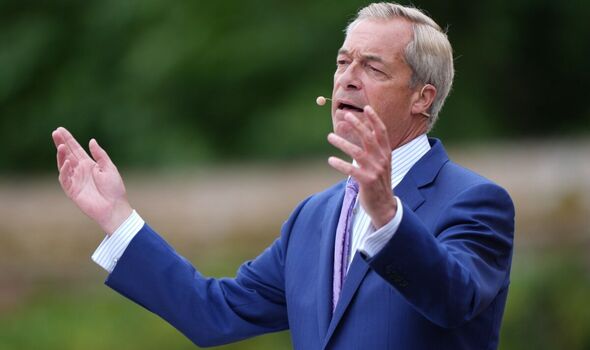
Nigel Farage Steps Up Demands for “General Election Now” with a New Petition
Nigel Farage has once again intensified his campaign for an immediate general election, arguing that the British public should be given the opportunity to decide who should govern the country. His demand has become increasingly prominent following Andy Burnham’s arrival at Downing Street without having previously led Labour into a nationwide general election. Farage argues that Burnham has no democratic mandate for the major changes he wants to introduce and that voters should not simply accept a change of Prime Minister without being allowed to cast their own ballots. The campaign has now moved beyond political speeches, with petitions and public mobilisation being used to increase pressure on the government. However, while the demand for an immediate election may have political appeal, the question remains whether calling one now would genuinely serve the interests of British democracy.
At the heart of Farage’s argument is the concept of democratic legitimacy. In a parliamentary democracy, the Prime Minister is not directly elected by the entire country. Instead, the leader of the party capable of commanding a majority in the House of Commons becomes Prime Minister. This means that a change of party leader does not automatically require a general election. Nevertheless, Farage argues that there is a significant difference between a routine change of leadership and the arrival of a new Prime Minister who promises major political changes.
Burnham has presented himself as a leader who wants to transform British politics and introduce a new political direction. From Farage’s perspective, it is therefore unreasonable for such a significant change to take place without voters being consulted. He believes that the public should decide whether they support Burnham’s programme rather than allowing politicians within Westminster to determine the country’s leadership without a national vote.
This argument has attracted attention because many voters are increasingly concerned about political accountability. Over recent years, Britain has experienced several changes in political leadership, and public frustration with Westminster has become an important feature of political debate. Some voters feel that politicians can make promises during elections and then change direction once they gain power. Others believe that political parties can replace their leaders without asking ordinary citizens whether they approve of the new leader. Farage’s campaign attempts to transform this dissatisfaction into a demand for a general election.
The use of a petition is particularly significant. A petition allows supporters to demonstrate that the demand for an election extends beyond a single politician or political party. If large numbers of people sign, Farage can argue that the issue deserves greater national attention. It also provides supporters with an easy way to participate in the campaign without waiting for a formal election.
However, a petition does not have the same constitutional authority as a general election. People may sign a petition for many different reasons, and signing one does not necessarily mean that they support Farage or Reform UK. Some may simply believe that the public should have a chance to vote, while others may be motivated by dissatisfaction with the government. Therefore, the number of signatures should not automatically be interpreted as evidence that Reform UK would win an election.
The strongest counterargument to Farage’s position is that Andy Burnham became Prime Minister through the existing parliamentary system. If Labour holds a majority of seats in Parliament, its leader can normally become Prime Minister when the previous leader leaves office. From this perspective, Burnham does not necessarily require a new election simply because he has become party leader and Prime Minister.
Supporters of Burnham could therefore argue that calling an immediate election would be unnecessary and potentially irresponsible. Elections are disruptive and expensive, and governments need time to implement their programmes. A new Prime Minister may reasonably want to spend several years governing before asking voters to make another decision. If the government already has a parliamentary majority, there is a constitutional basis for allowing it to continue.
There is also a strategic dimension to Farage’s campaign. Reform UK has a strong interest in forcing a general election as soon as possible if its leaders believe that public support is favourable. Farage has repeatedly argued that the established parties have failed to address Britain’s problems and that Reform represents a genuine alternative. An early election would therefore give his party an opportunity to convert public dissatisfaction into parliamentary seats.
This does not make his argument invalid, but it does mean that voters should consider the political motivation behind the campaign. Every political party wants an election when it believes that an election will improve its position. Farage’s demand should therefore be assessed on democratic and constitutional grounds rather than simply on whether it benefits Reform UK.
One of the most important issues likely to dominate an election would be the economy. Britain faces pressure from high public spending commitments, infrastructure needs, healthcare costs, defence requirements, and the long-term challenge of social care. Burnham has promised significant changes to public services and has presented himself as a Prime Minister focused on easing pressure on ordinary households. Farage, meanwhile, has argued for a different approach based on lower taxation, reduced bureaucracy, tighter immigration controls, and a stronger emphasis on national sovereignty.
The electorate would therefore face a genuine political choice. An election could provide an opportunity to compare these competing visions. Burnham could ask voters to support greater government involvement and investment in public services, while Farage could argue that Britain needs a smaller, more efficient state and greater economic freedom. Other parties would offer their own alternatives.
Immigration would almost certainly become another major issue. Farage has made immigration one of the central themes of his political career, and Reform UK has advocated significantly tighter controls. Supporters believe that high immigration has placed pressure on housing, public services, infrastructure, and local communities. They also argue that the government has failed to control illegal migration effectively.
Opponents, however, point out that immigration also contributes to the British economy. Many sectors rely on overseas workers, particularly healthcare, social care, hospitality, construction, and other essential services. Any government seeking to reduce immigration must therefore explain how it would deal with labour shortages and the needs of an ageing population. An election campaign could provide voters with an opportunity to examine these competing arguments in detail.
The debate over an immediate election is also closely connected to public trust. Farage’s political message is based heavily on the idea that Westminster politicians have become disconnected from ordinary people. His call for a general election allows him to present himself as a defender of the electorate’s right to choose its government directly.
This message can be powerful because democratic politics depends on public confidence. When people believe that political decisions are being made without sufficient public consent, distrust can grow. However, restoring trust requires more than holding elections. Political leaders must also keep promises, explain difficult decisions honestly, and accept responsibility when policies fail.
An immediate election could also create risks for Farage himself. Although Reform UK may have strong support in some opinion polls and constituencies, translating national popularity into parliamentary seats is difficult under Britain’s first-past-the-post electoral system. A party can receive millions of votes but win relatively few seats if its support is spread unevenly across the country. Farage would therefore need to demonstrate that Reform has the organisation, candidates, and local support necessary to compete successfully across hundreds of constituencies.
For Burnham, the safest option may be to continue governing rather than respond to Farage’s demand. If his government can improve public services, reduce economic pressure, and deliver visible reforms, his political position could become stronger. Calling an election immediately could expose him to unnecessary risk. On the other hand, if his policies become unpopular, delaying an election could allow opposition parties to gain momentum.
Ultimately, the question is not simply whether Farage wants an election. The more important question is whether the British public believes that an election is necessary. Democracy requires elections at appropriate intervals, but it also requires governments to be able to govern between elections. Constantly demanding a new vote whenever a Prime Minister changes would potentially create instability and make effective government more difficult.
At the same time, there is a reasonable argument that major political changes should eventually be tested at the ballot box. If Burnham intends to make fundamental changes to Britain’s tax system, public services, immigration policy, or constitutional arrangements, voters should ultimately have the opportunity to judge those policies. A government cannot expect unlimited political legitimacy simply because it inherited a parliamentary majority.
In conclusion, Nigel Farage’s renewed demand for a “general election now” represents both a political challenge to Andy Burnham and a broader argument about democratic accountability. Farage believes that Burnham should not be allowed to introduce major changes without first seeking a mandate from the British people. His use of a petition demonstrates an attempt to turn this argument into a wider public campaign.
However, an immediate election is not automatically the only democratic solution. Under Britain’s parliamentary system, a change of Prime Minister does not necessarily require a general election, particularly when the governing party retains a parliamentary majority. The real test should be whether the government continues to command the confidence of Parliament and whether voters believe its policies deserve support.
Farage’s campaign nevertheless highlights an important truth: politicians cannot afford to ignore public dissatisfaction. Whether or not an election takes place immediately, the government must recognise that voters increasingly expect greater accountability and a stronger voice in decisions affecting their lives. If Burnham succeeds in delivering improvements, he may strengthen his legitimacy without an immediate election. If he fails, Farage and Reform UK will be able to argue that their call for a fresh public mandate was justified.
In the end, the decision will not be determined by petitions or political headlines alone. It will depend on the constitutional rules, the government’s parliamentary position, and ultimately the judgement of the British electorate. The demand for a general election may be a powerful political weapon for Farage, but its true significance will depend on whether he can convince voters that an election is not merely desirable for Reform UK, but necessary for the future of British democracy.