
Reform UK Announces Candidate for Crunch Greater Manchester Mayoral Election
Reform UK has thrown down the gauntlet in Greater Manchester, selecting Sian Astley as its candidate for a crucial mayoral election that could become a major test of the party’s growing ambitions — and a highly personal political battle over the legacy of Andy Burnham.
Astley’s selection marks a significant moment for Reform.
Greater Manchester has long been regarded as one of Labour’s strongest political territories, while Burnham himself spent years building a formidable political base as the region’s mayor before moving on to national politics.
Now that Burnham has left the mayoral office to enter national government, Reform believes the political landscape has changed.
The party is preparing to test whether the political machine associated with Burnham can survive without Burnham at its centre.
And Astley is promising to make transparency, accountability and scrutiny central to her campaign.
Her message is deliberately confrontational.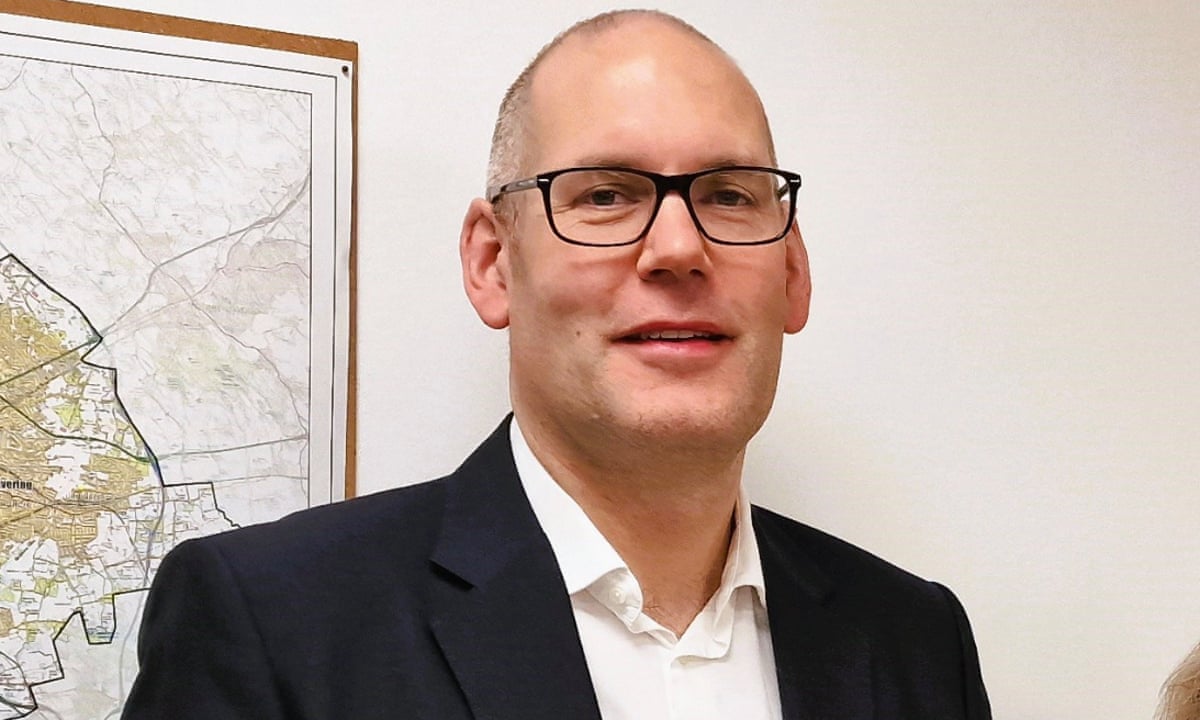
Greater Manchester, she argues, deserves a political alternative.
That makes the election about much more than simply choosing a new mayor.
It could become a referendum on Labour’s long political dominance across the region.
Reform Picks a Candidate With a Local Political Base
Astley is not an outsider parachuted into the region.
She lives in Manchester, runs a design and property business and has already established herself as a Reform UK councillor.
She was elected in Baguley, Wythenshawe, at the May elections, a result that gave Reform an important foothold in an area historically associated with Labour.
That local experience is likely to become a major part of her campaign.
Rather than presenting herself simply as a national Reform figure carrying Nigel Farage’s message into Greater Manchester, Astley can argue that she understands the region from the ground up.
Her campaign is built around the idea that residents have been governed for too long without sufficient scrutiny.
That is a message designed to resonate beyond traditional Reform voters.
It is an attempt to turn frustration with local government into a broader argument about political accountability.
And that could make the contest particularly uncomfortable for Labour.
The Burnham Legacy Becomes the Battlefield
Andy Burnham’s shadow will inevitably dominate the election.
For years, Greater Manchester was effectively synonymous with Burnham’s political leadership.
He became one of the most recognisable regional politicians in Britain, using the mayoralty to establish a distinctive political identity centred on devolution, regional investment and opposition to excessive centralisation.
His supporters argue that Greater Manchester became a model for what empowered regional government could achieve.
His critics, however, have a very different interpretation.
For them, the region became an example of Labour’s long-running political dominance.
Astley is attempting to turn that argument into the central theme of the election.
She has said she wants to examine contracts awarded during Burnham’s time as mayor and increase scrutiny of decisions made by Greater Manchester’s institutions.
Those are politically explosive promises.
They put Burnham’s record directly on the ballot paper even though he is no longer the candidate.
A Promise to “Open the Books”
One of Astley’s strongest campaign messages is her promise to increase transparency.
She has argued that voters should have greater visibility over how public money is spent, how contracts are awarded and why major decisions are made.
That approach could prove politically effective.
The language is simple.
Open the books.
Ask questions.
Follow the money.
Demand answers.
For a party such as Reform UK, which has built much of its appeal around challenging established political structures, this is exactly the kind of message that fits its broader identity.
But it also creates a major responsibility.
If elected, Astley would have to translate those promises into a credible system of scrutiny rather than allowing them to remain campaign slogans.
She would need to establish clear processes, distinguish legitimate investigation from political point-scoring and demonstrate that any concerns raised are supported by evidence.
That distinction will matter enormously.
Reform Wants to Break Labour’s Grip
The political significance of the election extends far beyond one mayoral contest.
Reform UK is attempting to prove that it can move beyond protest politics and win power in places traditionally dominated by Labour.
Greater Manchester is therefore an obvious target.
The region has a powerful symbolic value.
If Reform could make a serious breakthrough there, the party could claim that its appeal is no longer confined to particular parts of England or to voters primarily motivated by national issues.
It would be evidence that Reform can compete for control of local government in major urban areas.
That would send a powerful message to Westminster.
And Nigel Farage would almost certainly seize upon it.
The Farage Strategy
Farage has spent years arguing that Britain’s political establishment is disconnected from ordinary voters.
Reform’s challenge now is to prove that argument at the local level.
A mayoral election provides an ideal testing ground.
It allows the party to campaign on issues people encounter directly.
Transport.
Housing.
Clean streets.
Planning.
Local economic development.
Public spending.
Policing.
Regeneration.
These are not abstract Westminster debates.
They are issues that affect people’s daily lives.
That makes the Greater Manchester election especially important for Reform.
If Astley can build a campaign around practical local concerns, she can potentially broaden the party’s appeal beyond its traditional national political agenda.
But if the campaign becomes dominated by national culture-war issues, Labour will have an opportunity to portray Reform as a protest movement rather than a credible local government alternative.
The Challenge Facing Labour
Labour now faces an uncomfortable situation.
The party remains deeply established across Greater Manchester, but Burnham’s departure changes the political equation.
A powerful incumbent is no longer personally defending the record.
Instead, Labour must persuade voters that the institutions Burnham built can continue to deliver without him.
That is a very different challenge.
Burnham had a personal brand.
He could point directly to his own record and ask voters to judge him.
The next Labour candidate will have to inherit that record.
That includes its successes.
But it also means inheriting every controversy and criticism associated with the previous administration.
Reform will attempt to make sure that voters remember the latter.
A Referendum on Long-Term Labour Rule?
Astley has already framed the election as a broader judgment on Labour’s long presence in Greater Manchester.
That is a clever political strategy.
Instead of asking voters to compare two individuals, Reform can ask them to compare two political eras.
Do they want continuity?
Or do they want disruption?
Do they believe the existing model has worked?
Or do they believe the region needs a fresh approach?
Those questions are much easier for a challenger to campaign on.
An opposition candidate does not need to persuade voters that every Labour policy has failed.
They only need to create enough doubt about whether the existing political order deserves another term.
That is the opening Reform is trying to exploit.
The Issues Could Become Highly Personal
Because Burnham’s reputation is so closely connected to Greater Manchester, criticism of the previous administration could quickly become politically personal.
Astley’s promise to scrutinise decisions made during Burnham’s mayoralty will inevitably attract attention.
She has also raised questions about specific contracts and public spending decisions.
These claims will need careful scrutiny and evidence.
But politically, the announcement itself is significant.
It tells voters that a Reform-led administration would not simply continue with business as usual.
It would investigate.
It would question.
It would challenge.
And it would potentially reopen debates that Labour would rather leave behind.
That is precisely why the election could become so heated.
Greater Manchester Has Changed
The political environment in Greater Manchester is no longer exactly what it was when Burnham first became mayor.
Reform has made gains.
National politics has become more fragmented.
Traditional party loyalties have weakened.
Voters are increasingly willing to consider candidates outside the parties they have supported for generations.
That does not mean Reform is guaranteed to win.
Far from it.
Greater Manchester remains a difficult political environment for the party.
But the fact that Reform believes it can compete seriously is itself significant.
The party is no longer simply campaigning where victory appears easy.
It is targeting established political strongholds.
The Importance of Local Issues
For Astley, the most important challenge will be keeping the campaign focused on local concerns.
Greater Manchester voters will want answers about the things they experience every day.
They will want to know whether transport works.
Whether housing is affordable.
Whether high streets are thriving.
Whether neighbourhoods are being regenerated.
Whether public money is being spent effectively.
And whether local government listens to residents.
These questions could give Reform an opportunity to present itself as a party of practical change.
But they could also expose weaknesses.
Running a major metropolitan authority is extraordinarily complicated.
Promises made during an election campaign can collide with budgets, legal restrictions, national government decisions and competing local priorities.
Astley will therefore have to show that she can move from criticism to governing.
Labour Will Fight Back
Labour is unlikely to allow Reform to define the election entirely on its own terms.
The party can point to the region’s transformation over recent years and defend the model of devolution that Burnham helped champion.
It can argue that Greater Manchester’s strength comes precisely from the ability of its councils and mayoral institutions to work together.
It can also portray Reform’s campaign as an attempt to dismantle a system rather than improve it.
That argument could resonate with voters who fear political instability.
The Labour campaign will therefore almost certainly focus on experience, continuity and delivery.
The choice will be framed as one between an established governing model and a relatively new political force seeking to shake things up.
The Risk for Reform
Reform has a major opportunity.
But it also faces a major risk.
The party’s national popularity does not automatically translate into local electoral success.
Mayoral elections require candidates to build personal credibility.
Voters want to know what a candidate would actually do with the powers of office.
They want more than anger.
They want competence.
They want practical solutions.
They want someone who can work with councils, businesses, community organisations and central government.
Astley therefore has to prove that she is more than the Reform candidate.
She has to convince voters that she could actually run Greater Manchester.
That will be the ultimate test.
Why This Election Matters to Nigel Farage
For Nigel Farage, the result could be enormously important.
A strong Reform performance would demonstrate that the party can challenge Labour in urban England.
A victory would be even more significant.
It would give Reform control of one of the most politically important regional institutions in the country.
That would transform the party’s argument about itself.
Reform would no longer simply be the party promising to change Britain.
It would be able to point to a major metropolitan authority and say: we are governing.
That would change the political conversation.
Suddenly, Reform’s record in office could be judged.
And that is where the party would face its biggest test.
The Battle Is Only Beginning
The announcement of Sian Astley is therefore more than a routine candidate selection.
It is Reform UK formally declaring that Greater Manchester is now part of its political battlefield.
It is an attempt to challenge Labour where Labour has historically been strongest.
It is an attempt to turn dissatisfaction into electoral power.
And it is an attempt to force the region to reconsider what it wants from its next mayor.
For Labour, the challenge is to defend a political legacy without relying on the personal popularity of Andy Burnham.
For Reform, the challenge is to prove that it can offer more than opposition.
For Astley personally, the challenge is even greater.
She has promised scrutiny.
She has promised transparency.
She has promised to challenge the old political order.
Now voters will ask the obvious question.
What comes next?
Conclusion
The Greater Manchester mayoral election could become one of the most revealing political contests of the year.
Andy Burnham may have left the mayoralty, but his political legacy will remain at the centre of the debate.
Reform UK has chosen Sian Astley to challenge Labour’s grip, and she is making transparency and scrutiny central to her campaign.
Her message is clear: Greater Manchester deserves a choice.
Whether voters agree remains to be seen.
But one thing is already certain.
This will not be an ordinary mayoral election.
It will be a battle over Labour’s legacy, Reform UK’s ambitions and the future direction of one of Britain’s most politically important regions.
For Nigel Farage, it is a chance to prove that Reform can break into Labour territory.
For Labour, it is a chance to prove that its regional model can survive without Burnham at the helm.
And for the people of Greater Manchester, the choice could ultimately come down to one question:
Do they want continuity — or are they ready for a political shake-up?
The campaign has begun.
And this time, Andy Burnham will not be on the ballot paper.