

Cost of the Asylum System Plummets by Nearly £1 Billion Under Labour
Britain’s asylum system has long been one of the most expensive and politically controversial parts of the country’s immigration policy.
For years, taxpayers watched the bill climb as thousands of asylum seekers were placed in hotels, applications accumulated in a growing backlog and the government struggled to process cases quickly enough.
Now, however, the direction of travel has changed.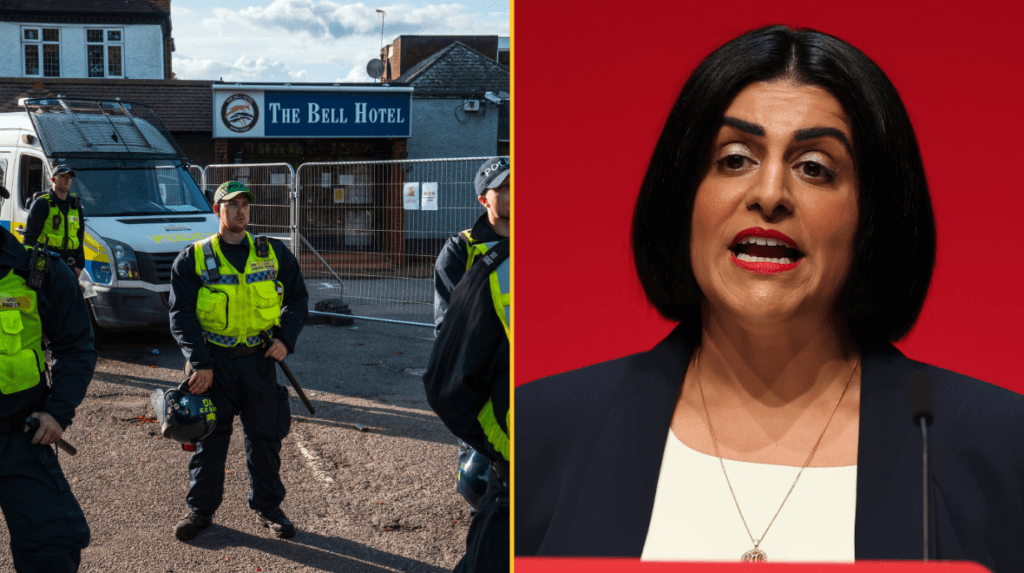
The cost of the asylum system has fallen by nearly £1 billion under Labour, providing the government with one of its strongest pieces of evidence that its approach to immigration is beginning to deliver practical results.
The improvement is particularly significant because asylum policy has become one of the most important political battlegrounds in Britain.
Reform UK has built much of its political identity around the argument that successive governments have lost control of immigration. The Conservatives have also attempted to portray Labour as incapable of managing the asylum system.
But the latest figures give Labour an opportunity to make a very different argument.
The government can now say that the system is becoming cheaper, the hotel population is falling, the backlog is shrinking and more people are being removed from Britain when they have no legal right to remain.
That does not mean the asylum crisis is over.
It does mean that one of the clearest symbols of government failure is beginning to look very different.
The financial impact of the change is substantial.
Government spending on asylum has fallen after years of extraordinary growth. A major reason is the reduction in the use of hotels, which became one of the most expensive components of the accommodation system.
Hotels were never designed to function as long-term asylum accommodation.
They were used because the government needed somewhere to place people quickly while their claims were being processed.
As the number of asylum seekers increased, however, temporary accommodation became increasingly permanent.
Hundreds of hotels were eventually being used.
That created enormous costs.
It also generated political controversy in communities where hotels were being used to accommodate asylum seekers.
Local residents complained about pressure on services and the impact on their communities.
Politicians used the issue as evidence that the government had lost control.
The financial argument was equally powerful.
Hotel accommodation is substantially more expensive than ordinary dispersal accommodation.
Reducing hotel use therefore provides an immediate opportunity to reduce spending.
And the government has been taking advantage of that opportunity.
The number of asylum seekers in hotels has fallen by around half over the past year.
That reduction has been accompanied by the closure of additional hotels and the transfer of asylum seekers into cheaper forms of accommodation.
This is an important development.
The government is no longer simply paying enormous sums to keep people in hotels while they wait for decisions.
Instead, it is attempting to process cases more quickly and move people through the system.
That creates savings in two ways.
The first is through cheaper accommodation.
The second is through reducing the amount of time people remain dependent on government support.
Every asylum claim that is processed more quickly means fewer days of accommodation and support.
Every person whose claim is rejected and who is subsequently removed means that the government no longer has to provide ongoing accommodation.
Every person granted protection who moves into independent housing and employment also leaves the support system.
This means efficiency can have a major financial effect.
The latest reduction in spending should therefore not be viewed as an isolated budgetary change.
It reflects a broader attempt to make the asylum system function differently.
For Labour, that is politically valuable.
Immigration has been one of the government’s most difficult issues.
The party inherited a system that was already under enormous pressure, but voters do not necessarily distinguish between inherited problems and current problems.
If asylum accommodation is expensive, the government in power is blamed.
If hotels are full, ministers are blamed.
If asylum decisions are delayed, ministers are blamed.
That makes improvements particularly important.
The government needs to demonstrate that it can not only describe the problem but actually change the numbers.
The fall in asylum spending gives Labour an answer.
It can now point to a measurable reduction in costs.
That is especially useful at a time when the government faces pressure over public spending.
Every billion pounds matters when ministers are trying to balance competing demands from the NHS, schools, defence, housing and social care.
A reduction in asylum spending can therefore be presented as more than an immigration policy success.
It can be presented as a fiscal success.
The government can argue that better administration is saving taxpayers money.
That is a message likely to resonate with voters who may have little interest in the technical details of immigration policy but care deeply about whether government departments are wasting money.
However, Labour should avoid claiming victory too quickly.
The asylum system remains expensive.
Billions are still being spent.
Thousands of people remain in government-supported accommodation.
The hotel population, although dramatically lower, has not disappeared.
And replacing hotels with alternative accommodation does not eliminate every cost.
The government has increasingly used cheaper sites, including former military facilities, to reduce accommodation expenses.
That may save money, but it has also generated controversy.
Local communities have questioned whether some sites are appropriate.
Concerns have been raised about isolation, infrastructure, local services and the suitability of certain facilities.
In other words, reducing the financial cost can create political and social costs.
The government therefore faces a delicate balancing act.
It needs to reduce spending without simply transferring the burden from taxpayers to local communities.
It needs to process claims quickly without sacrificing the quality of decisions.
And it needs to increase removals while ensuring that legal obligations are respected.
These challenges are not easy.
But the direction of travel is nevertheless encouraging for Labour.
The asylum backlog has also fallen significantly.
That is perhaps even more important than the hotel figures.
A large backlog creates pressure throughout the system.
People wait longer for decisions.
Accommodation is required for longer.
Costs increase.
Uncertainty increases.
And the government becomes increasingly vulnerable to criticism.
Reducing the backlog can therefore produce a virtuous cycle.
Faster decisions mean fewer people waiting.
Fewer people waiting means lower accommodation costs.
Lower accommodation costs mean less pressure on the budget.
And a more efficient system makes it easier to process new applications.
That is exactly what Labour wants to demonstrate.
The political implications for Reform UK are considerable.
Reform has spent years arguing that Britain’s asylum system is fundamentally broken.
The party has used the cost of accommodation, the number of hotel placements and the backlog as evidence that the political establishment cannot control immigration.
But if those indicators start moving downward, Reform has to change its argument.
It can still say that the numbers remain too high.
It can demand faster removals.
It can argue that illegal crossings remain unacceptable.
It can call for much tougher restrictions.
But it becomes increasingly difficult to claim that nothing is changing.
This matters because Reform’s appeal depends partly on the idea that only a radical political alternative can force the government to act.
If Labour begins delivering the same broad objective through a different set of policies, Reform’s political advantage becomes smaller.
The party’s response will almost certainly be that Labour is not going far enough.
That is a legitimate political argument.
But it is a harder argument to sell than the claim that the government is doing nothing.
There is another reason the financial figures matter.
Immigration is often discussed in terms of morality, national identity and border control.
But voters also care about money.
They want to know how much the asylum system costs.
They want to know whether government departments are spending efficiently.
And they want to know whether people entering the system are being processed quickly.
A fall of nearly £1 billion therefore changes the political conversation.
It gives Labour the ability to say that immigration control is not simply about reducing numbers.
It is also about reducing waste.
That could become a powerful message.
The government can present itself as both tougher and more financially responsible.
That combination may be particularly damaging to Reform.
If Labour can reduce illegal migration, process asylum cases faster, close hotels and lower costs at the same time, it begins occupying political territory that Reform has traditionally claimed for itself.
Of course, Labour must still prove that the improvement is sustainable.
One year of falling costs does not guarantee that the trend will continue.
International migration patterns can change.
Conflicts can create new refugee movements.
Small-boat routes can adapt.
Legal migration rules can produce unexpected consequences.
And changes in accommodation policy can shift costs between different parts of the government rather than eliminating them altogether.
The government therefore needs to maintain the pressure.
It has promised to end the use of asylum hotels altogether before the end of the parliamentary term.
Achieving that would be a major political milestone.
But closing hotels should not become an end in itself.
The ultimate objective should be a functioning asylum system.
That means people who have a legitimate claim should receive protection without unnecessary delay.
Those who do not qualify should have their cases resolved quickly and, where legally possible, be returned.
Those who receive protection should be supported in becoming independent.
And the taxpayer should not be left paying enormous sums simply because government processes are too slow.
That is the standard by which Labour should ultimately be judged.
The nearly £1 billion reduction is therefore important, but it is only one part of the story.
It is evidence that change is happening.
It is evidence that the enormous costs associated with hotel accommodation and lengthy processing can be reduced.
It is evidence that administrative efficiency can make a meaningful difference to public finances.
But it is not proof that Britain’s asylum system is fixed.
There are still thousands of people waiting.
There are still communities dealing with asylum accommodation.
There are still difficult questions about illegal migration and removals.
And there is still a substantial financial burden.
The difference is that the burden is now moving downward rather than upward.
That is politically significant.
For Labour, the message is straightforward: the government inherited a system in crisis and is beginning to bring down both the numbers and the costs.
For Reform, the message is much more uncomfortable.
Its strongest political argument has always been that Britain needs a completely different approach because the existing parties cannot deliver meaningful change.
But if Labour continues reducing asylum costs, closing hotels, cutting the backlog and increasing removals, voters may start asking a difficult question.
Why vote for Reform to demand change if the government is already delivering it?
That does not mean Reform’s political challenge disappears.
Immigration will remain controversial.
Public concern will remain strong.
And voters will continue to demand results.
But politics is ultimately about perceptions of competence.
For years, the asylum system represented government failure.
Now the figures are beginning to tell a different story.
The bill is falling.
Hotels are closing.
The backlog is shrinking.
The system is becoming cheaper.
Labour still has much further to go.
But for a government trying to prove that it can regain control of Britain’s immigration system, nearly £1 billion in reduced costs is a powerful place to start.
:::{“fallbackMarkdown”:””,”reference”:{“matched_text”:” “,”prefix”:null,”start_idx”:13031,”end_idx”:13031,”safe_urls”:[],”refs”:[],”alt”:””,”prompt_text”:null,”type”:”sources_footnote”,”sources”:[],”has_images”:false},”showLoginRequiredCard”:false}