

Iceland Rejects EU Membership Talks as “Now or Never” Referendum Deals Blow to Bloc Expansion
Iceland has delivered a sharp blow to the European Union’s hopes of expanding northwards after voters rejected a proposal to resume membership negotiations with Brussels.
In a closely fought referendum, 52.8 per cent of Icelanders voted against reopening accession talks, while 47.2 per cent supported the proposal. Turnout reached an impressive 82.5 per cent, underlining just how seriously voters treated a question that had been debated for more than a decade.
The result is more than a setback for Iceland’s pro-European government. It is also an uncomfortable moment for the European Union, which had hoped that Iceland could become an attractive example of a wealthy, democratic European country choosing closer integration at a time when the bloc is attempting to strengthen its influence and expand its membership.
Instead, Icelanders have chosen to remain outside the EU.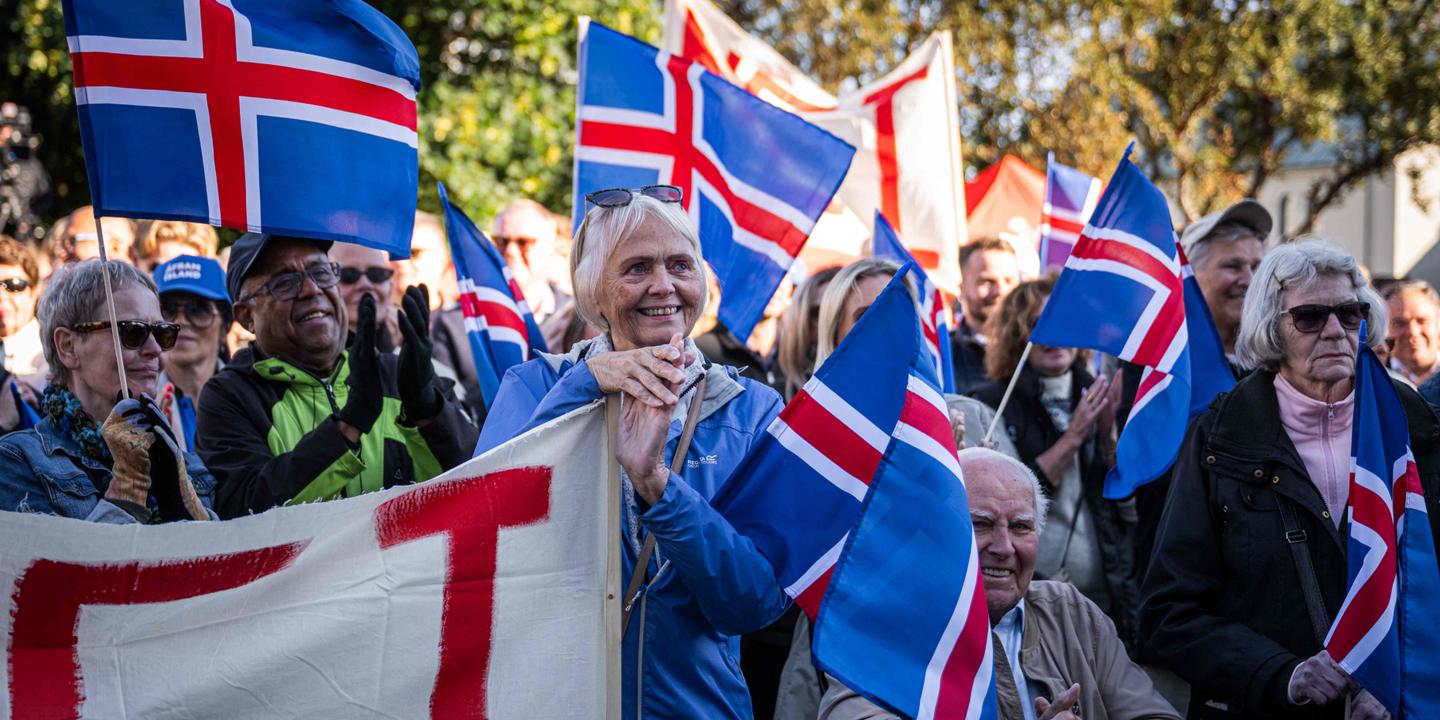
For Brussels, the message is difficult to ignore.
Prime Minister Kristrún Frostadóttir had presented the referendum as an important opportunity to reconsider Iceland’s relationship with Europe in a dramatically changed geopolitical environment. Russia’s war against Ukraine, uncertainty surrounding transatlantic relations and growing strategic competition in the Arctic had all contributed to renewed interest in EU membership.
But voters ultimately decided that the risks of membership outweighed the potential benefits.
The result also demonstrates that Iceland’s relationship with the European Union is far more complicated than a simple choice between isolation and integration.
Iceland is already deeply connected to Europe.
Through the European Economic Area, it participates in the EU single market. It is also part of the Schengen area, allowing passport-free travel across much of Europe. Iceland maintains extensive economic and political cooperation with EU countries without being a member of the bloc.
For many voters, that arrangement offers the best of both worlds.
They can trade freely with Europe and benefit from close cooperation while retaining control over areas they consider particularly important to national sovereignty.
At the centre of the referendum campaign was one issue above almost all others: fishing.
Iceland is a small island nation whose economy and national identity have long been closely connected to the sea. Fishing remains a major source of export income and an important part of the country’s economic independence.
Opponents of EU membership warned that joining the bloc could ultimately threaten Iceland’s control over its fishing waters.
The argument proved extremely powerful.
For many Icelanders, fishing is not simply another economic sector. It is tied to sovereignty. Control over fishing quotas means control over a valuable national resource, and many voters were unwilling to risk transferring any part of that authority to European institutions.
The “No” campaign therefore had a straightforward message: Iceland already has access to the European market without surrendering control of its fisheries.
Why change a system that appears to work?
Supporters of reopening negotiations offered a different answer.
They argued that Iceland’s current arrangement leaves the country vulnerable in an increasingly uncertain world. EU membership, they said, could provide greater economic stability, closer political coordination and stronger influence over decisions that already affect Iceland through its participation in the single market.
The war in Ukraine has also changed the security debate.
Iceland does not maintain a standing army. Its defence relies heavily on NATO membership and its longstanding security relationship with the United States.
Supporters of EU accession argued that closer European integration could give Iceland another layer of political and strategic security.
But that argument failed to overcome concerns about sovereignty.
The referendum was particularly significant because voters were not being asked directly whether Iceland should become an EU member.
They were asked whether accession negotiations should resume.
In theory, voting “Yes” would simply have reopened the negotiating process. Icelanders would eventually have had another opportunity to approve or reject the final membership agreement.
But many voters treated the referendum as something much bigger.
The possibility of eventual EU membership was clearly understood to be the destination of renewed negotiations. As a result, the campaign became a de facto debate over whether Iceland should move towards full membership.
That helped the “No” campaign.
A negotiation can sound uncertain and complicated. Rejecting negotiations, by contrast, is a much simpler political proposition.
The result is particularly awkward for the Icelandic government because it had framed the referendum as a response to a changing international environment.
The geopolitical argument was compelling on paper.
Iceland occupies a strategically important position in the North Atlantic and Arctic regions. Growing interest in the Arctic has made the country’s location more significant than ever. With tensions between Russia and Western countries remaining high and questions continuing over the future of US-European security cooperation, Iceland faces a different strategic environment from the one that existed when its previous EU accession process was suspended.
Yet voters did not conclude that EU membership was necessary.
Instead, they appear to have judged that NATO, existing bilateral relationships and the European Economic Area provided sufficient security and economic integration.
That decision could have implications far beyond Iceland.
The EU has been attempting to demonstrate that enlargement remains a powerful force in Europe. Countries including Ukraine, Moldova, Montenegro and others have pursued closer relationships with the bloc, while Brussels has repeatedly presented enlargement as a strategic tool for strengthening European stability.
Iceland was different.
It is already wealthy, democratic and highly integrated into European institutions.
If such a country decides that full EU membership is unnecessary, critics can use the decision to question the attractiveness of the bloc’s model.
That is particularly relevant for Norway, another wealthy Nordic country that remains outside the EU while participating in the EEA.
Norway has historically had its own fierce debate over EU membership, particularly around fishing, agriculture and national sovereignty.
Iceland’s rejection could strengthen those arguments.
If Iceland can maintain close access to the European single market without joining the EU, Norwegian Eurosceptics may ask why their country should make the same leap.
There is also a message here for Brussels.
European integration does not necessarily mean political integration.
Many countries want access to the EU’s economic opportunities while remaining cautious about transferring additional powers to European institutions.
Iceland’s decision demonstrates that sovereignty remains a powerful force even in countries that are already deeply connected to the European economy.
The result also exposes a geographical divide inside Iceland.
Reykjavík and other urban areas were generally more receptive to closer European integration, while rural regions were more concerned about protecting traditional industries and national control.
That divide reflects a broader European political pattern.
Large cities often benefit disproportionately from international trade, mobility and integration. Rural communities can be more sensitive to questions involving agriculture, fishing, national identity and local control.
The Icelandic vote therefore cannot simply be described as an anti-European rebellion.
Many people who voted “No” may have strong economic, cultural and personal connections with Europe.
They simply do not believe those connections require EU membership.
That distinction is important.
The referendum was not a vote to leave Europe.
Iceland has not abandoned the European Economic Area. It has not withdrawn from Schengen. It has not rejected NATO. It has not turned its back on European trade.
Instead, voters chose to maintain the existing arrangement.
In that sense, the result was as much a vote for the status quo as it was a rejection of Brussels.
For Prime Minister Frostadóttir, the outcome is an important political setback, but the scale of the defeat also matters.
The margin was relatively narrow.
A difference of just 5.6 percentage points means Iceland remains divided over the question. Almost half of voters wanted negotiations to continue.
That means the European question is unlikely to disappear permanently.
A future Icelandic government could revisit the issue.
But for now, the political door has been firmly closed.
The government has accepted the result and indicated that accession talks will not be pursued during the current term.
For Brussels, the immediate response will probably be cautious.
European officials know that Iceland remains an important partner regardless of its membership status. The country is already economically integrated with the EU and remains closely aligned with European democracies on many international issues.
The EU therefore has little reason to treat the result as a diplomatic crisis.
But strategically, it matters.
The bloc wanted Iceland to show that European integration remained attractive even in an era of geopolitical uncertainty.
Instead, Iceland has demonstrated that uncertainty can produce the opposite reaction.
When the world becomes more unstable, some countries may seek deeper alliances.
Others may respond by protecting their independence.
Iceland has chosen the latter path.
The referendum is therefore unlikely to end Europe’s debate about enlargement. But it has complicated the story Brussels wants to tell.
The EU can point to countries seeking membership because they see the bloc as a source of security, prosperity and stability.
Iceland offers the counterexample.
Here is a country already enjoying many of the economic benefits of European integration, yet still unwilling to accept the political consequences of full membership.
The reason is simple: sovereignty still matters.
Fishing still matters.
And for a significant majority of Icelandic voters, those considerations outweighed the promise of a closer relationship with Brussels.
The “now or never” moment promised by supporters of reopening negotiations has therefore produced a very different outcome.
For the European Union, it is a warning that enlargement cannot be taken for granted.
For Iceland, it is a declaration that close cooperation with Europe does not necessarily require membership.
And for the rest of the continent, the message is perhaps even more significant.
At a time when Europe is asking how far political integration should go, Iceland has chosen to stop at the line it already knows.
The country wants Europe.
It simply does not want the European Union.