
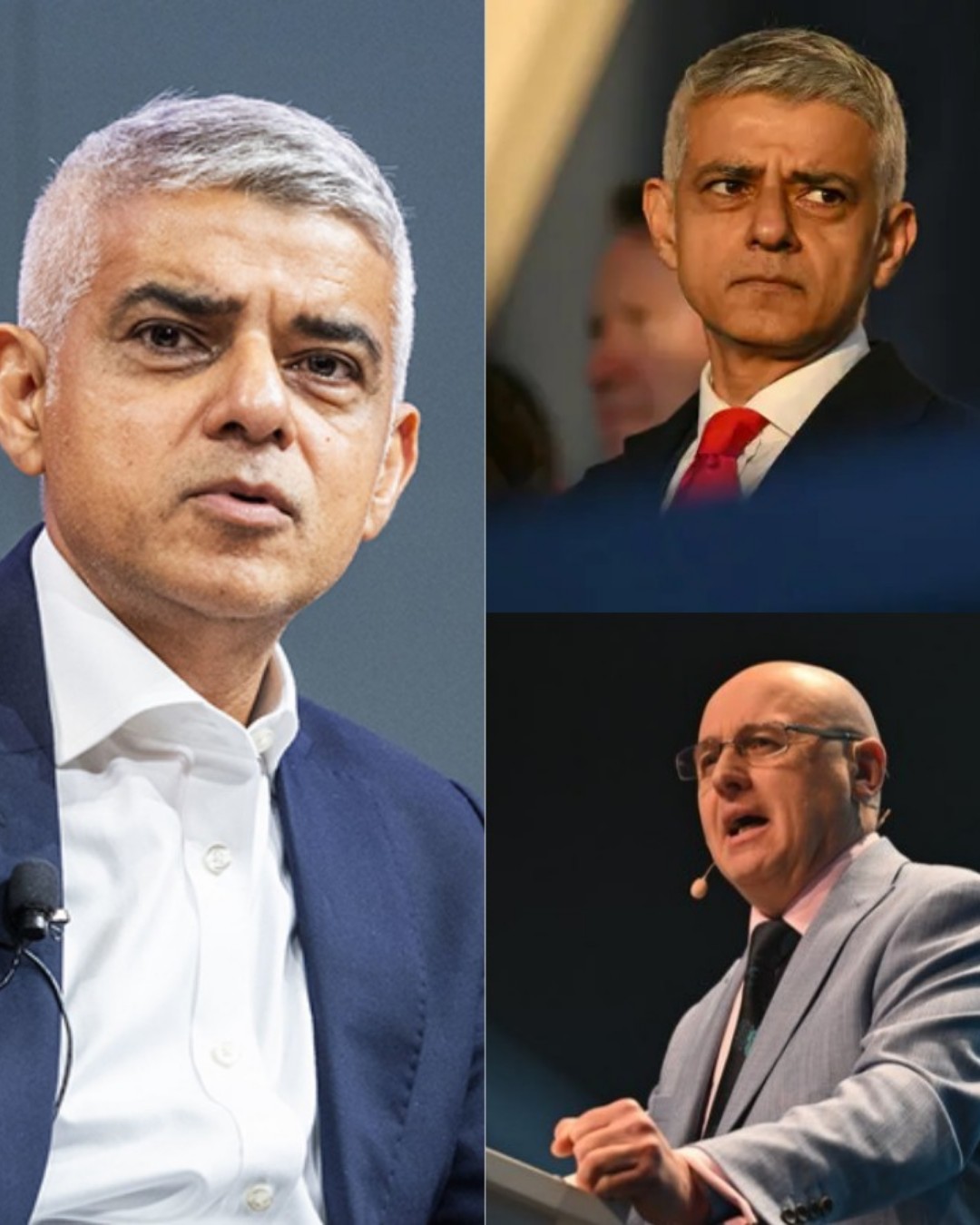

Andy Burnham has good reasons to go for broke with a snap election (Image: Getty)
We’ve had small, popular measures, such as cutting VAT on electricity bills, capping bus fares at £2, and vague talk about easing the cost-of-living crisis. Big decisions on defence spending, social care and council house building have been pushed down the road. Many have seen this as a sign of weakness. That Burnham would rather court cheap popularity than tackle the tough decisions facing Britain today. But could it be something else?
There’s growing speculation that our new PM has something else up his sleeve, and is deliberately avoiding anything that could derail it. He’s enjoying his bounce, and would rather build the Burnham brand with voters by pumping out easy-going TikTok videos than start fights he might lose. That’s because he’s saving it up for the big one. A snap general election. Not in the spring, as many have assumed, but in November.
Get the latest politics news – straight from our team in Westminster and more
You agree you are 18 or over. We use your sign-up to provide content in ways you’ve consented to and to improve our understanding of you. This may include adverts from us and third parties based on our knowledge of you. You can unsubscribe at any time. More Info.
That could see the nation trudging to the polls in just two months’ time. The more I think about it, the more attractive it must look from Burnham’s point of view. But it relies on a few things going right first. So the PM will have to hold fire, before making his move.
First, we have the Labour Party conference in Liverpool, from Sunday September 27 to Wednesday September 30. Burnham will use it to rally the faithful and deliver a set-piece speech designed to convince the nation he’s prime minister material. If that goes well, he moves onto the second stage of his plan.
On October 8, there’s a by-election in Holborn and St Pancras, triggered by former PM Keir Starmer stepping down. Green Party leader Zack Polanski is contesting the seat, but if Labour sees off mad Zack, Burnham will feel emboldened to go for the big one. The shortest an election campaign can legally last is 25 working days. The Daily Telegraph has suggested Thursday November 19 as a possible date.
The Budget is due on October 28, so Burnham will have to decide what to do about that. It might be possible to postpone it until after the election. Otherwise, it won’t contain much more than a few basics and cheap giveaways. And Burnham has another reason to go for broke. In fact, I think it’s the strongest of all.
We’re heading towards a winter of discontent. Global inflation and energy prices are soaring, thanks to the wars in Iran and Ukraine. That will drive gas, electricity and food bills even higher, while four predicted interest rate hikes next year could push up mortgage costs too. All of which will make voters very grumpy, and less likely to vote for the incumbent PM.
An early election before the crisis strikes could be a sound pre-emptive move. Especially with Kemi Badenoch growing in authority by the day, while Nigel Farage’s Reform UK is distracted by rows over donations. If Burnham goes for it and gets his mandate, then we’re in trouble.
Burnham rode his luck to get into Westminster, and will be hoping it holds for a couple more months. But this could be bad luck for the rest of us.
Yesterday, one of Burnham’s former allies warned that he’s leading an old-style socialist tax-and-spend government. Now we could be facing five years of it, if the PM has his way.
If Burnham calls and wins an election, he can ditch Labour’s manifesto pledge not to hike income tax, national insurance and VAT, and really go for it. That’s when the tough decisions will start rolling in. And they’ll be especially tough for taxpayers, who’ll pay the price of a Labour victory. For years.
Andy Burnham on Brink of Huge Decision – And the Question of Five More Years
Andy Burnham is facing growing speculation over one of the biggest political decisions of his short premiership: whether to call a snap general election.
The Prime Minister has repeatedly indicated that he does not want an early election. Yet the question has refused to disappear, with political commentators examining whether a successful Labour conference, a favourable result in the upcoming Holborn and St Pancras by-election and the government’s handling of the autumn Budget could alter the calculation.
For Burnham, the stakes are considerable.
A general election could give him a fresh parliamentary mandate and potentially reset the political landscape. But it would also expose Labour’s existing majority to a national vote only months after he became prime minister.
And despite the dramatic language surrounding the debate, there is currently no confirmed decision to hold an early election.
A prime minister who did not win a general election
Burnham’s position is unusual.
He became Labour leader in July after returning to Westminster through the Makerfield by-election and subsequently succeeded Keir Starmer as prime minister on 20 July. The official government record confirms that he became prime minister on that date.
He therefore inherited a parliamentary majority created by the 2024 general election rather than winning a general election himself as Labour leader.
That has fuelled arguments about whether he should eventually seek a direct mandate from voters.
There is, however, no constitutional requirement for a newly appointed prime minister to call an immediate election. Full Fact noted during the leadership transition that a prime minister does not have to have been elected in a general election in order to hold office.
Burnham has also made his own position clear.
In an interview with the BBC shortly after entering Downing Street, he said: “There’s no early general election. I don’t think people want it.”
He argued that voters had already voted for a Labour manifesto in 2024 and that his priority should be getting Britain “back where it should be”.
That statement is important because it directly contradicts the idea that an election has already been decided.
So why is the speculation continuing?
The answer is timing.
Burnham has only been prime minister for around two months, but the political environment around him is changing rapidly.
The Labour Party conference in Liverpool begins on September 27 and runs until September 30. It will give Burnham his first major opportunity to address the wider Labour movement as prime minister and set out the direction of his government.
Then comes the Holborn and St Pancras by-election on October 8.
That contest has attracted particular attention because Green Party leader Zack Polanski is standing, creating a test of Labour’s support on the left of the political spectrum.
A strong Labour performance could provide Burnham with useful political momentum. A disappointing result, by contrast, could complicate any argument for immediately asking the country for a new mandate.
The Irish Times reported on September 17 that Burnham continued to face speculation about an early election, while noting that a poll at this stage would carry significant political risks.
November has entered the conversation
The most specific speculation concerns November.
The Telegraph has reported on the possibility of a November 19 election, with a Labour victory in Holborn and St Pancras and a strong party conference potentially contributing to the calculation.
An opinion article published by AOL has gone further, suggesting that Burnham could be considering a sequence of events involving the Labour conference, the October by-election and then a possible November election.
But that is analysis and speculation, rather than confirmation from Downing Street.
The distinction matters.
Political journalists routinely examine possible election strategies long before a prime minister makes a decision. The existence of such speculation does not establish that an election has been scheduled.
The Budget creates another complication
One of the biggest obstacles is the government’s economic position.
Chancellor John Healey is preparing for the October 28 Budget at a difficult moment for the British economy.
Reuters reported that UK inflation reached 3.1% in August, while government borrowing costs had risen sharply amid higher global inflation and energy-price pressures. Burnham has said his government is prepared to make difficult decisions to keep the economy on track.
Other reporting has suggested that the Treasury could face a substantial fiscal gap, potentially requiring tax rises or spending reductions.
The Times reported that the government could need to find around £10 billion through some combination of higher taxes and spending cuts, although the eventual position depends on the Office for Budget Responsibility’s forecasts.
That creates an obvious political dilemma.
If the government produces a difficult Budget before an election, Labour could be forced to defend unpopular decisions during a campaign.
If an election were held before the Budget, however, voters could reasonably ask why they were being asked to make a decision before seeing the government’s full financial plans.
Either way, the timing would be politically sensitive.
What would a fresh mandate actually change?
The strongest argument for an early election would be the opportunity to give Burnham a personal mandate.
His first Downing Street speech promised what he called a “circuit breaker” for Britain, with major changes to the country’s political and economic model.
He argued for greater regional power and stronger public control over what he described as life’s essentials.
An election victory could give him additional political authority to pursue those objectives.
But an election would also create the possibility of a very different parliamentary arithmetic.
The current political environment is fragmented, with Labour, Reform UK, the Conservatives, Liberal Democrats and Greens competing for support in different parts of the country.
That makes an early election inherently unpredictable.
ING has described a snap election as a major wildcard, while noting the risk that Labour could lose a substantial portion of its existing parliamentary majority. Its analysis also pointed to the possibility of significant market disruption from an early contest.
Reform UK remains part of the calculation
Nigel Farage’s Reform UK is an important factor in any discussion about the timing of a general election.
Reform has been challenging Labour particularly strongly in working-class areas that have traditionally provided Labour with much of its electoral support.
Burnham’s return to Westminster through Makerfield was therefore closely watched.
He defeated Reform’s candidate there by more than 9,000 votes, demonstrating that Labour could still compete successfully against Reform in a constituency where the party faced a serious challenge.
But one by-election does not establish what would happen across the country.
A general election would involve hundreds of constituencies with different political dynamics.
That uncertainty is one reason an early election would be a major gamble for every party involved.
Five years is not guaranteed
The most dramatic part of the debate concerns what would happen if Burnham called an election and Labour won.
A successful election campaign could potentially give him a new parliamentary mandate lasting for a full parliamentary term.
But even that would not mean five years of uninterrupted political control.
Parliamentary majorities can change. Governments can face rebellions, economic crises, by-election defeats and changes in public opinion.
Nor is there evidence that five years under Burnham would necessarily produce the “total misery” suggested by the headline.
That is a political judgement rather than an established fact.
What can be established is that Burnham’s government is facing difficult decisions over taxation, public spending, energy prices, defence and the wider economy.
His own government has acknowledged that difficult choices will be required.
The decision may come down to risk
For Burnham, the central question is therefore not simply whether he can call an election.
It is whether the political benefits of seeking a fresh mandate would outweigh the risks of putting Labour’s existing parliamentary position back before voters.
An election could strengthen his authority.
It could also weaken it.
It could provide a clear mandate for the programme he outlined when he entered Downing Street.
Equally, it could interrupt that programme only months after he promised to deliver it.
This is why the next several weeks matter.
The Labour conference will provide the first major test of Burnham’s ability to define his government.
The Holborn and St Pancras by-election will provide another indication of the political mood.
The Budget will then expose the government’s economic choices to much closer scrutiny.
Only after those events would the circumstances surrounding a possible November election become clearer.
Burnham’s biggest decision
For now, the evidence does not show that Burnham has decided to call a snap general election.
Indeed, his public position remains that there will be no early election and that his government should concentrate on delivering the manifesto for which Labour was elected in 2024.
But that does not make the speculation irrelevant.
A new prime minister who arrived in Downing Street through an unusual succession process will inevitably face questions about his mandate.
Burnham has already promised major changes to Britain. His supporters will want him to deliver them; his critics will scrutinise the cost and consequences.
The coming months will therefore be important regardless of whether an election is called.
The real political question is not whether Britain is guaranteed “five more years of misery”.
It is whether Burnham can persuade voters, MPs and financial markets that his government has a credible plan for the difficult economic and political choices ahead.
And if the Prime Minister eventually decides that only a fresh national vote can provide the authority he needs, the decision would represent one of the most consequential moments of his premiership.
For now, however, November remains a possibility discussed by commentators — not a confirmed election date.