
Andy Burnham Should Call an Election Before the Budget Bursts His Bubble, Writes Susan Hall
Andy Burnham is facing renewed pressure over the question of whether he should call an early general election, with Conservative politician Susan Hall arguing that the Prime Minister should go to the country before the autumn Budget exposes the full scale of the economic challenges facing his government.
Hall’s intervention comes as attention turns increasingly towards the government’s financial position and the decisions Chancellor John Healey will have to make in the coming weeks. The Budget, scheduled for October 28, is expected to become a defining moment for the new government, particularly as ministers attempt to balance spending commitments, economic growth and pressure on the public finances.
The argument advanced by Hall is straightforward: if Burnham currently benefits from political goodwill, he should use that position before difficult economic decisions potentially change the public mood.
But the Prime Minister has already rejected the prospect of an early election.
That makes Hall’s argument as much a political challenge as a prediction about what may happen next.
The election question returns
Speculation over an early election has followed Burnham since his arrival at the centre of national politics.
Earlier reports suggested that some Labour figures believed a fresh election could provide a new mandate for a prime minister who had entered Downing Street after a change in Labour leadership rather than through a general election. Other Labour MPs have warned against such a move, concerned about the possibility of losing seats if voters were asked to return to the polls too soon.
Burnham’s position has subsequently become clearer.
He has ruled out an early election, arguing that the country needs political and economic stability rather than another period of uncertainty.
His government is instead preparing for the Budget and seeking to demonstrate that it can manage the country’s finances while pursuing Labour’s wider programme.
That position is directly at odds with Hall’s argument.
For the Conservative politician, the timing of the Budget is precisely why an election question has become relevant again.
Why the Budget matters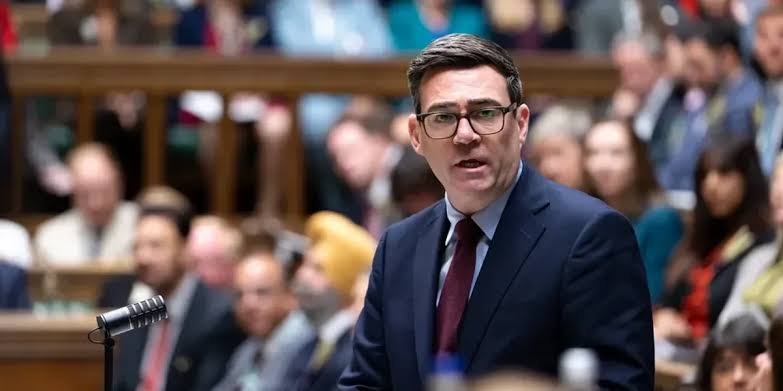
The government’s financial room for manoeuvre is under pressure.
Recent reporting has highlighted higher borrowing costs, weak economic growth and concerns over the amount of money available to ministers once debt interest and existing spending commitments are taken into account. The Financial Times has reported that the government’s fiscal buffer could be significantly reduced by rising debt-servicing costs and other pressures.
These circumstances create a difficult environment for any government.
Ministers face demands for better public services and support for households while financial markets continue to scrutinise Britain’s borrowing and debt position.
Tax rises could provide additional revenue, but they can also become politically contentious.
Spending cuts present a different set of difficulties, particularly for a government elected on promises to improve public services.
And borrowing more heavily could create concerns about the sustainability of the government’s financial plans.
The October Budget will therefore be closely watched not only for individual announcements but also for what it reveals about the government’s broader economic strategy.
Burnham’s promise of stability
Burnham has attempted to reassure voters and financial markets that his government will act cautiously.
During his first parliamentary exchanges with Conservative leader Kemi Badenoch, he defended the government’s economic approach and blamed the previous Conservative administration for leaving Britain vulnerable to market turbulence.
Burnham pointed to economic growth, falling borrowing and efforts to reduce the deficit as evidence that his government was taking a disciplined approach. He also declined to rule out tax increases ahead of the Budget, saying that the details belonged to the Chancellor.
The Prime Minister’s approach is therefore based on waiting for the Budget rather than bringing forward a general election.
That strategy gives the government time to establish its economic plans and demonstrate that its policies can work.
It also means that Burnham will have to accept the political consequences of whatever decisions are announced.
Hall’s argument
Hall’s intervention takes the opposite approach.
She argues that Burnham should not wait until the Budget has exposed the government’s financial difficulties.
Her case rests on the idea that a prime minister’s political standing can change rapidly when difficult economic decisions begin to affect voters.
An administration can enjoy strong approval when promises dominate the political conversation. But once taxes, spending reductions, public-sector settlements and household costs become the central issues, political circumstances can become considerably more difficult.
Hall therefore sees the period before the Budget as important.
Her argument is not simply that an election should be held because of the government’s current position. Rather, she is suggesting that Burnham could face a less favourable environment after the Budget if the economic choices prove unpopular.
That is a political assessment attributed to Hall, rather than an established forecast of what voters will do.
The Conservatives’ dilemma
The Conservative Party itself faces a complicated political environment.
Kemi Badenoch remains Conservative leader, while the party attempts to rebuild after its previous period in government and respond to competition from other parties.
Recent reporting has described pressure on the Conservatives to develop a credible economic message, particularly as voters remain concerned about living standards and the performance of the British economy.
An early general election would therefore present both opportunities and risks for all parties.
For Labour, it could provide an opportunity to seek a fresh mandate for Burnham’s government.
For the Conservatives, it could provide an opportunity to challenge Labour over taxation, spending and economic management.
But it could also expose weaknesses within either party.
That uncertainty is one reason Burnham has rejected the argument for going to the country early.
The question of mandate
There is also a constitutional and political question behind the debate.
Burnham became Prime Minister after a change in Labour leadership, meaning the electorate did not directly vote for him to become prime minister at a general election.
That has led some politicians and commentators to argue that he should seek a fresh mandate.
However, changing prime minister without immediately holding an election is a normal feature of the UK’s parliamentary system. A governing party can replace its leader while continuing to command a majority in the House of Commons.
The question is therefore political rather than simply constitutional.
Burnham can legally remain Prime Minister without calling an immediate election. The issue is whether he believes seeking a new mandate would strengthen or weaken his government.
His current answer appears to be that stability is more important.
What could happen after the Budget?
The October Budget will inevitably become an important test of that strategy.
If the government succeeds in presenting a coherent financial plan while maintaining confidence in the economy, Burnham could argue that waiting was justified.
If, however, the Budget involves politically difficult tax increases or spending decisions, critics will argue that the government should have sought an electoral mandate before introducing them.
That does not establish that an early election would produce any particular result.
Nor does it demonstrate that the Budget will necessarily damage Labour’s position.
Those outcomes depend on how the measures are received by voters, businesses, financial markets and Parliament.
What is clear is that the Budget will provide a significant opportunity for the opposition to challenge the government.
Burnham’s political calculation
For Burnham, the decision is ultimately about timing.
Calling an election would immediately shift the government’s attention away from governing and towards campaigning. It would also expose Labour to the judgement of voters at a time when the economic picture remains uncertain.
Waiting, by contrast, allows the government to implement its plans and demonstrate results over a longer period.
But waiting also carries risks.
If economic conditions deteriorate, the government could face a more difficult political environment later.
This is the calculation behind Hall’s intervention.
Her argument is that Burnham’s current position should not be taken for granted and that the Budget could change the political conversation.
Burnham has effectively made the opposite calculation: that Britain needs the government to focus on economic management rather than immediately returning to an election campaign.
A test of the new government
Whatever happens with the election question, the Budget will be an important test of Burnham’s government.
The Prime Minister has sought to present himself as a pragmatic leader focused on economic stability and public confidence.
The opposition will attempt to test that message against the realities of taxation, spending and living costs.
For Hall, the argument is that Burnham should act before those realities become harder for his government to manage politically.
For Burnham, the response has been to reject an early election and concentrate on governing.
The coming weeks will therefore provide an important indication of whether the government’s strategy can withstand mounting economic pressures.
An election may not be imminent, and Burnham has publicly ruled one out for now. But Hall’s intervention ensures that the question of timing remains part of Britain’s political debate.
Ultimately, the Budget will not automatically determine the government’s political future.
It will, however, provide voters and Parliament with a clearer picture of the choices the government is making — and of the economic constraints within which those choices must be made.