
Nigel Farage Unveils Yet Another Tory as Latest Defector to Reform
Nigel Farage has once again welcomed a former Conservative politician into the ranks of Reform UK, underlining the continuing movement of former Tories towards his increasingly prominent political organisation.
The latest arrival is Jane Stevenson, the former Conservative MP for Wolverhampton North East. Stevenson was elected as a Conservative in 2019 but lost her parliamentary seat to Labour at the 2024 general election. After leaving the Conservative Party several months ago, she announced following Reform UK’s September conference that she had joined Farage’s party.
Her decision is particularly notable because it comes despite an earlier commitment from Reform chairman Zia Yusuf that the party would stop accepting former Conservative politicians after a May 2026 deadline. Yusuf declared on social media in May that the deadline had passed and that there would be “no more Tories”. Stevenson’s arrival therefore immediately raised questions about Reform’s approach to former Conservative politicians and whether the party’s recruitment policy has changed.
For Farage, however, the arrival of another experienced former Conservative politician represents another opportunity to expand Reform’s political network at a time when the party is seeking to establish itself as a serious national political force.
Who Is Jane Stevenson?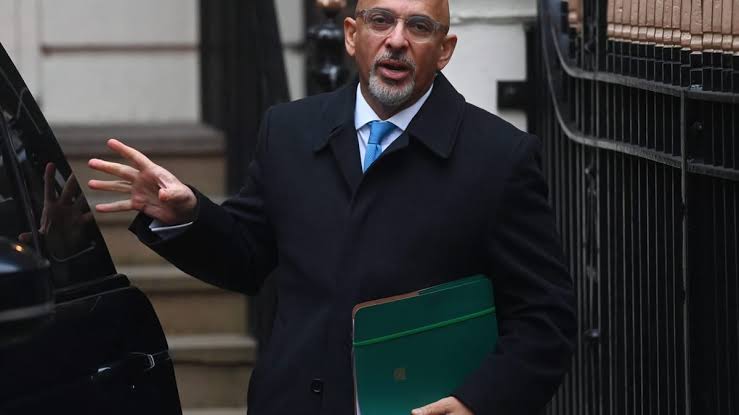
Jane Stevenson was first elected to Parliament in 2019 as the Conservative representative for Wolverhampton North East. Her time in Westminster coincided with a period of considerable political turbulence, including Brexit, changes of Conservative leadership and the 2024 general election.
Although she did not retain her parliamentary seat in 2024, Stevenson remained involved in politics after leaving the Conservatives.
Explaining her decision to join Reform, she said that she wanted to pursue what she described as “more radical solutions to our country’s problems”. She also highlighted Reform’s work led by Danny Kruger on reducing and reorganising Whitehall and quangos, as well as strengthening ministerial power and accountability.
Her explanation provides an indication of the issues that influenced her decision. Rather than presenting her move simply as a change of party label, Stevenson pointed specifically to government structures, accountability and the organisation of the state.
Her decision therefore adds another example to the growing list of politicians who have moved away from the Conservatives and towards Reform.
Reform’s Former Tory Problem
Stevenson’s arrival is significant because Reform has spent considerable time attempting to balance two different political identities.
On one hand, the party presents itself as an alternative to the established political parties. Farage has repeatedly argued that Reform is not simply another version of the Conservative Party.
On the other hand, Reform has attracted a substantial number of people who previously belonged to the Conservatives.
That contradiction has generated debate among Reform supporters. Some have questioned how a party can describe itself as an outsider movement while recruiting politicians who previously held elected office as Conservatives.
The issue became particularly visible earlier in 2026 when Zia Yusuf announced that Reform would no longer accept former Conservatives after 7 May. His declaration was explicit: “THE MAY 7 TORY DEADLINE HAS PASSED! NO MORE TORIES!”
Stevenson’s subsequent arrival therefore attracted immediate attention.
The episode demonstrates that Reform’s relationship with former Conservative politicians remains complicated. The party may want to maintain an outsider identity while simultaneously recognising the experience and political knowledge that former Conservative politicians can bring.
A Long List of Defections
Jane Stevenson is far from the only former Conservative to have moved towards Reform.
Earlier in 2026, a series of high-profile defections dramatically increased the party’s visibility.
Nadhim Zahawi, the former Conservative chancellor, joined Reform in January. He had served under four Conservative prime ministers and became one of the most senior former Conservative figures to associate himself with Farage’s party.
Robert Jenrick also defected to Reform in January after serving as a senior Conservative politician. His departure attracted substantial attention because he had previously contested the Conservative leadership election against Kemi Badenoch.
Former home secretary Suella Braverman followed soon afterwards. Reuters reported that Braverman joined Reform on 26 January, accusing the Conservatives of having failed to deliver on immigration.
Andrew Rosindell, the long-serving Conservative MP for Romford, also moved to Reform in January. He cited his opposition to the government’s policy concerning the Chagos Islands as one of the reasons for his decision.
By January, ITV reported that Reform had attracted around 21 former Conservative MPs since March 2024, although not all remained sitting MPs at Westminster.
Stevenson’s move therefore forms part of a much broader pattern rather than being an isolated event.
Why Former Conservatives Are Joining
The reasons given by former Conservatives for joining Reform vary.
For some, immigration has been central. Braverman, for example, made immigration a major part of her explanation for leaving the Conservatives.
For others, disagreements have focused on constitutional questions, government reform, public spending, taxation or Britain’s relationship with international institutions.
Stevenson’s comments point towards another theme: dissatisfaction with the structure and operation of government.
She specifically praised Reform’s proposals concerning Whitehall and quangos, arguing that the party’s approach offered more radical solutions to the country’s problems.
These different explanations demonstrate that there is no single reason why former Conservatives are moving towards Reform.
Nevertheless, the cumulative effect is politically significant. Each new arrival adds another person with experience of Conservative politics, campaigning and public office to Reform’s expanding network.
Farage’s Strategy
For Nigel Farage, recruiting politicians with Conservative backgrounds can provide several practical advantages.
Former MPs understand parliamentary procedures, constituency campaigning, government departments and the demands of national political communication.
This experience could become particularly relevant if Reform continues to expand its elected representation.
Farage himself was re-elected as the MP for Clacton in an August 2026 by-election, receiving 22,239 votes. The result returned him to Parliament after his resignation from the seat the previous month.
The combination of Farage’s parliamentary presence and the arrival of experienced former Conservative politicians gives Reform a larger pool of people with Westminster experience.
At the same time, the recruitment of former Tories creates an obvious political question: how different is Reform from the Conservative establishment it has spent years criticising?
That question is likely to remain part of the debate surrounding every future Conservative defection.
Reform’s Growing Political Organisation
The latest defection also comes as Reform continues to develop its organisation beyond Westminster.
The party has expanded its presence in local government and has sought to establish candidates and campaign structures across the country.
Its financial position has also changed substantially. Large donations reported during September 2026 have provided Reform with significant resources as it builds its organisation and prepares for future electoral contests.
This expansion means that Reform increasingly needs people with practical political experience.
Stevenson’s arrival may therefore be viewed not only through the lens of Conservative defections but also as part of Reform’s wider attempt to build an organisation capable of operating across national and local politics.
The Conservative Challenge
For the Conservative Party, continued defections create an additional organisational challenge.
The Conservatives remain one of Britain’s two historically dominant parties, but Reform has established itself as a separate competitor on the political right.
The movement of former Conservative politicians towards Reform can intensify debates inside the Conservative Party about its future direction.
At the same time, a politician changing parties does not automatically mean that all of their former supporters will follow them.
Voters make their own decisions, and the reasons that lead an individual politician to leave a party can be very different from the considerations influencing that party’s electorate.
Polling research from YouGov has nevertheless found that Reform’s current coalition includes a substantial proportion of people who previously supported the Conservatives. Its July 2026 voter study found that 26% of current Reform supporters had voted Conservative in 2024.
The same research found that immigration was the most frequently cited issue attracting Reform supporters, while some voters also identified dissatisfaction with the established political parties and a desire for political change.
What Stevenson’s Move Represents
Jane Stevenson’s defection is therefore about more than one former MP changing political allegiance.
It highlights the continuing transformation of Britain’s political landscape.
Reform is attracting politicians who previously belonged to the Conservative Party while simultaneously attempting to preserve its identity as an alternative to the established political system.
That creates both opportunities and challenges.
Former Conservatives can bring experience, political contacts and knowledge of Westminster. But their presence can also create questions about Reform’s claim to represent a break from traditional politics.
For Farage, the recruitment of another former Tory demonstrates that the flow of politicians towards Reform has not completely stopped, despite previous declarations that the party would close the door to further Conservative defectors.
For the Conservatives, it is another reminder that Reform remains a significant competitor for political attention and support.
For Stevenson herself, the move marks a new phase in her political career after losing her parliamentary seat in 2024.
Whether her decision will have a significant impact beyond the immediate headlines remains to be seen. What is already clear is that the boundary between Britain’s traditional Conservative politics and Reform’s emerging political movement continues to shift.
As Reform develops its organisation and the Conservatives seek to redefine their own political identity, further movement between the parties could remain an important feature of British politics.
The latest defection therefore adds another piece to a much larger political story: the emergence of Reform UK as a major challenger and the continuing realignment of politicians who once operated within the Conservative Party.
For Nigel Farage, every new recruit provides another opportunity to demonstrate Reform’s growing reach. For the Conservatives, each departure raises new questions about the party’s future. And for British voters, the continuing movement of politicians between parties is another indication that the country’s political landscape remains in a period of substantial change.