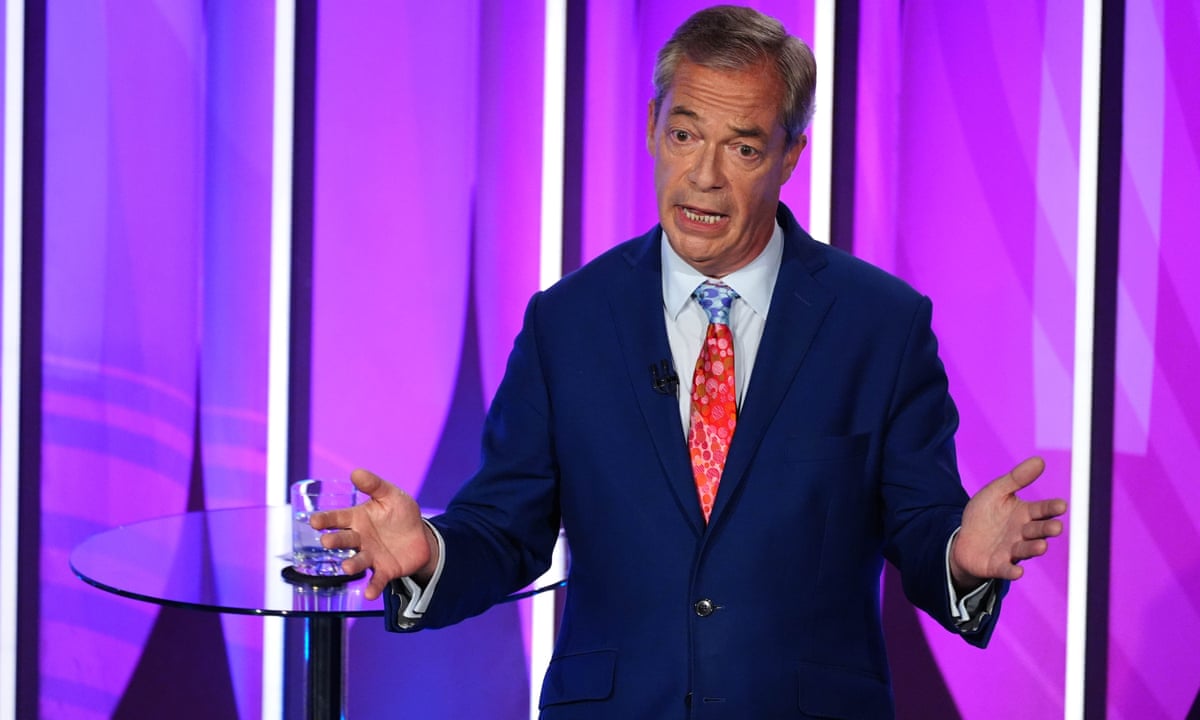
BBC Question Time Audience Member Hits Out at Immigration Fears Being Called ‘Far-Right’
A heated immigration debate on BBC Question Time has reignited arguments over whether concerns about illegal migration are too readily dismissed as “far-right”, after an audience member challenged the language being used to describe people protesting against small boat arrivals.
The exchange came during the September 24 edition of the programme, which was broadcast from Cambridge and featured Business Secretary Jonathan Reynolds, Conservative shadow work and pensions secretary Helen Whately, Liberal Democrat president Josh Babarinde, broadcaster Andrew Neil and political commentator Ash Sarkar. The discussion focused heavily on immigration, protests and the increasingly tense debate surrounding small boat crossings.
At the centre of the discussion was a question from the audience asking whether the public should be more concerned about protesters than people arriving in small boats.
The question reflected a wider argument taking place across Britain, where concerns about immigration have increasingly intersected with debates about public order, asylum policy and political protest.
A debate over the language of immigration
The audience exchange highlighted one of the most difficult aspects of the immigration debate: how to distinguish legitimate political concerns from hostility towards migrants.
Sarkar argued during the programme that there was a legitimate range of views on immigration and that people had the right to protest within the law. She nevertheless drew a distinction between peaceful opposition to immigration policy and what she described as violent or racist behaviour by some far-right activists.
Her comments came against the backdrop of protests in parts of southern England connected to concerns about asylum seekers and small boat arrivals.
Sarkar argued that some of the groups involved in recent demonstrations had gone beyond political protest. She referred to masked men, alleged intimidation and incidents involving boats carrying migrants.
She subsequently described the behaviour she was discussing as “small penis behaviour”, a remark that generated considerable reaction online and became one of the most widely reported moments from the programme.
The language itself became part of the controversy.
Critics argued that describing protesters in such terms risked dismissing genuine concerns about immigration by associating them with extremism. Supporters of Sarkar’s argument, meanwhile, maintained that peaceful political disagreement should be separated from intimidation and violence.
The audience challenge
The audience member’s intervention reflected the frustration felt by some people who believe immigration concerns are increasingly treated as evidence of extremism.
The broader argument is not new.
People who support tighter controls on immigration frequently argue that concern about border security, pressure on public services and the scale of migration should not automatically be treated as evidence of racism or far-right politics.
Opponents respond that immigration debates can become discriminatory when migrants are collectively blamed for social problems or when political rhetoric encourages hostility towards particular groups.
The Question Time exchange therefore touched on a question that extends well beyond the programme itself: where should the line be drawn between legitimate political disagreement and rhetoric that contributes to hostility?
There is no single answer accepted across British politics.
Protests add another layer
The discussion took place after a series of demonstrations connected to asylum accommodation and small boat arrivals.
The Guardian reported that hundreds of people had gathered in Gosport, Hampshire, following rumours that asylum seekers would be brought to the area. The newspaper also reported the presence of far-right activist Daniel Thomas and masked followers, while noting that some local residents expressed support for the demonstration and others were uncomfortable with the presence of masked activists.
The Guardian’s reporting also described incidents involving children chanting hostile slogans towards migrants and the appearance of far-right posters in the town.
These events help explain why immigration protests have become such a contentious subject.
For some residents, demonstrations represent an expression of frustration over government policy and concerns about how asylum accommodation is being handled.
For others, the participation of organised far-right activists changes the character of those protests and raises concerns about intimidation and racism.
Those perspectives can coexist within the same community.
The distinction between policy and people
One of the most important distinctions in the debate is between opposition to immigration policy and hostility towards immigrants themselves.
A person can support lower immigration, tighter border controls or faster asylum decisions without necessarily holding hostile views towards migrants.
Equally, opposition to immigration policy does not prevent individuals or groups from engaging in racist or threatening behaviour.
The challenge for politicians and commentators is therefore to discuss evidence and specific behaviour rather than automatically assigning an ideological label to everyone who expresses concern.
Sarkar herself acknowledged during the Question Time exchange that people can hold a variety of legitimate views about immigration. Her criticism was directed at what she described as violent and racist activism rather than simply opposition to immigration.
That distinction was important because it demonstrated that the argument was not necessarily about whether immigration could be debated, but about how that debate should be conducted.
The continuing small boats controversy
Small boat crossings remain one of the most politically sensitive immigration issues in Britain.
The issue combines questions about border control, asylum law, international cooperation and the treatment of people arriving in the UK.
It has also become a major political dividing line.
Reform UK has made reducing illegal immigration one of its central political themes, while Conservative politicians have also argued for tougher controls. Labour has faced pressure from voters and political opponents over the government’s handling of the Channel crossings.
At the same time, humanitarian organisations have stressed the circumstances in which many people make dangerous journeys across the Channel and have called for safe and legal routes.
The political disagreement therefore involves both practical questions about controlling borders and broader arguments about Britain’s responsibilities towards asylum seekers.
Why the “far-right” label causes controversy
The use of the term “far-right” has itself become controversial.
In political analysis, the term generally refers to movements or organisations positioned significantly beyond conventional right-wing politics, often involving forms of extreme nationalism or authoritarianism.
But in everyday political debate, the label can be used much more broadly.
Some people who oppose high immigration argue that they are unfairly described as far-right simply for supporting stronger borders or lower migration.
That concern was reflected in the Question Time exchange.
At the same time, researchers and journalists have documented the involvement of far-right activists in some anti-immigration demonstrations, meaning that the term is not necessarily applicable only because someone happens to disagree with immigration policy.
The key issue is therefore evidence: whether a particular person or organisation is actually associated with extremist politics, racist activity, intimidation or violence, rather than assuming that position solely from an individual’s views on immigration.
The role of Question Time
Question Time has long provided a platform where politicians, journalists and members of the public confront each other over contentious subjects.
Immigration has repeatedly produced some of the programme’s most intense exchanges.
The format gives audience members an opportunity to challenge politicians directly, but it also means individual remarks can quickly circulate online without the broader context of the discussion.
That was evident after the latest programme.
Clips of Sarkar’s comments were widely shared, while different viewers interpreted the exchange in sharply different ways.
Some focused on her criticism of far-right activism. Others focused on her description of people involved in protests and argued that concerns about immigration were being dismissed.
Both reactions illustrate the wider polarisation surrounding the subject.
A debate unlikely to disappear
The underlying issues raised on Question Time are unlikely to disappear.
Britain continues to debate the appropriate level of immigration, how the asylum system should operate, how illegal Channel crossings should be addressed and how communities should respond when accommodation for asylum seekers is proposed locally.
At the same time, the country must confront questions about political protest and public order.
There is a legitimate distinction between peaceful demonstrations and intimidation or violence. There is also a distinction between opposing government immigration policy and expressing hatred towards migrants.
Keeping those distinctions clear is important because the two sides of the debate often talk past each other.
People concerned about immigration want their concerns to be heard without being automatically associated with extremism. People concerned about racism and intimidation want those problems to be recognised without legitimate immigration debate being suppressed.
The Question Time exchange demonstrated how difficult it can be to maintain that distinction in a highly charged political environment.
Ultimately, the programme was less significant because of one heated exchange than because it reflected a much wider national argument.
Immigration remains an issue on which voters, politicians and communities hold strongly different views. Some want substantially tighter controls, while others place greater emphasis on humanitarian obligations and integration.
The challenge for public debate is to allow those disagreements to be expressed openly while distinguishing peaceful political opinion from racism, threats and violence.
That distinction — rather than simply deciding who deserves a particular political label — is likely to remain at the heart of Britain’s immigration debate for some time.