
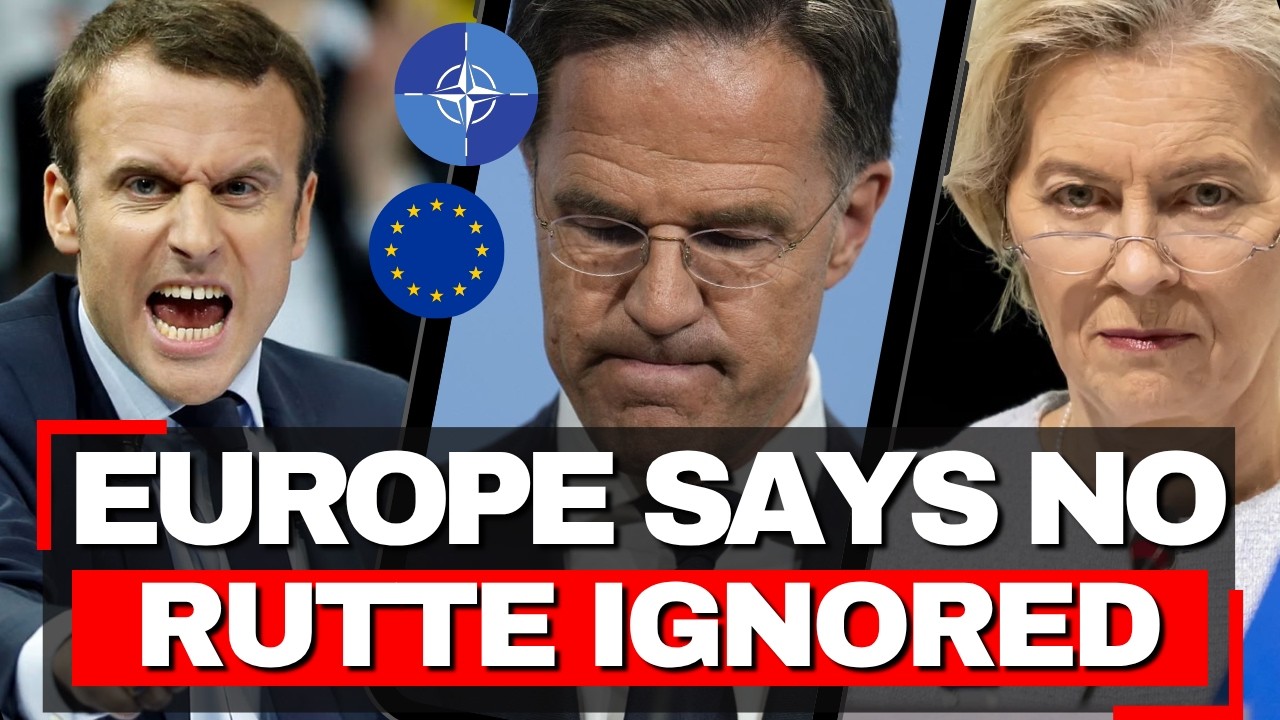
The halls of NATO headquarters in Brussels are usually a place of carefully choreographed unity and diplomatic consensus. However, in the wake of the escalating conflict between the United States and Iran, those halls are now echoing with the sound of a transatlantic alliance fracturing in real-time. At the center of this storm is NATO Secretary General Mark Rutte, who finds himself in an increasingly isolated and “awkward” position, accused by European capitals of prioritizing the appeasement of President Donald Trump over the sovereign interests of the nations he is supposed to represent.
The Spark: Rutte’s “Face the Nation” Bombshell
The controversy ignited following Rutte’s appearance on CBS’s “Face the Nation,” where he suggested that European allies would eventually come together to deploy naval assets to the Strait of Hormuz. This deployment would be in direct support of President Trump’s military operations in Iran. Rutte went as far as to praise the President’s decision to bomb Iran, stating, “He’s doing this to make the whole world safe”.
The problem, according to diplomats and data analysts alike, is that Europe has already said “no.” Germany, France, Italy, and Spain, along with the EU’s chief diplomat Kaja Kallas, have all explicitly rejected involvement. Their message has been blunt and unified: “This is not our war”.
A Europe Divided: “Politically Disastrous Mistakes”
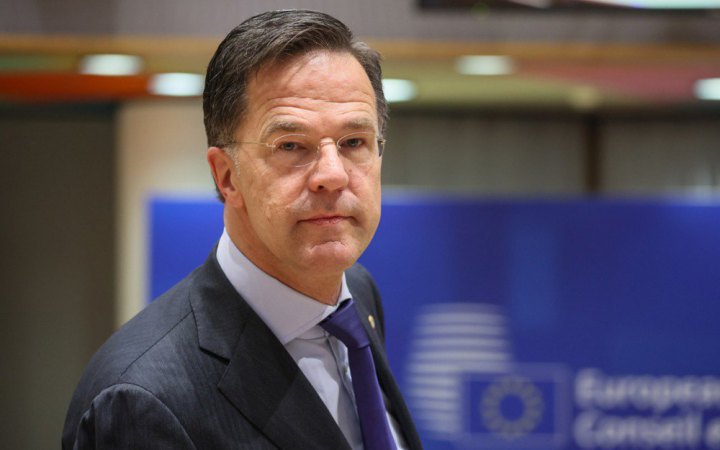
The divergence between Rutte’s optimistic predictions and the reality in European capitals is staggering. German President Frank-Walter Steinmeier did not mince words, calling the war a “politically disastrous mistake” and a “truly avoidable, unnecessary war”. This sentiment is echoed across the continent, where leaders feel sidelined by an increasingly “unpredictable” Washington that fails to consult its closest allies before launching major military operations.
EU foreign policy chief Kaja Kallas highlighted the core of the frustration, noting that many Europeans had actively tried to convince the U.S. and Israel not to start this war in the first place. Now, they are being asked to put their own people “in harm’s way” to secure a situation they believe was preventable.
The Trump Factor: Cowards and Paper Tigers
Adding fuel to the fire is the rhetoric coming from the White House. President Trump has reportedly called NATO allies “cowards” for their hesitation and warned that NATO is a “paper tiger” without U.S. support. He specifically singled out the United Kingdom, expressing his displeasure that they haven’t joined the effort “enthusiastically”.
This “brutal” approach to diplomacy—demanding help while simultaneously insulting those being asked—has left European leaders like former French Ambassador Sylvie Bermann questioning the future of the relationship. “Allies… aren’t willing to be at the beck and call of a demand from Donald Trump,” Bermann noted, especially when that demand is delivered in such a demeaning manner.
The Economic Consequences: Our War, Their Bill
While Europe may not be participating in the combat, they are certainly feeling the consequences. Oil prices have surged more than 40%, with crude sitting above $110 per barre. The resulting energy shocks and supply chain disruptions are being felt in every household from Berlin to Rome. European officials are pointing out a bitter irony: they had no say in the decision to start the war, yet they are bearing the brunt of its economic fallout.
This economic pressure is accelerating a shift away from U.S. dollar dominance, as Europe and even Canada begin to position themselves behind alternative financial architectures to protect their interests from unilateral U.S. actions.
Rutte’s Credibility Gap
Mark Rutte’s strategy has long been to praise Trump in order to keep the U.S. engaged in NATO. However, by endorsing a war that most European governments oppose, he has created a significant credibility gap. A NATO official recently attempted to distance the institution from Rutte’s personal comments, clarifying that “NATO is not involved in the war in Iran”.
This institutional distancing suggests that Rutte’s position may become untenable if he continues to speak for a Europe that refuses to follow. The Secretary General’s role is to represent the consensus of the alliance, yet in this instance, consensus simply does not exist.
Looking Ahead: Three Key Developments
As the conflict continues, observers are watching for three critical signals:
-
Naval Deployment: Will any major European power actually send ships to the Strait of Hormuz? If not, Rutte’s predictions will be exposed as mere “wishful thinking”.
-
Public Contradiction: Will European leaders move from quiet concern to public calls for Rutte’s resignation?
-
U.S. Withdrawal Threats: Will Trump follow through on hints that he might reconsider U.S. involvement in NATO if Europe continues to “hesitate”?.
The ultimate tragedy, as many analysts see it, is that the alliance is being torn apart not by an external enemy, but by internal mismanagement. When the leader of the world’s most powerful military alliance calls his own partners “useless” while demanding they join an unpopular war, no amount of diplomatic language can paper over the cracks. The fracture is no longer just political; it is institutional.