
London – Videos circulating on social media in recent weeks have captured moments of tension on British streets where large groups engaged in public Islamic prayers that obstructed roads or pavements, leading to confrontations with local residents and individuals identifying as patriots. In one widely shared clip, a woman urged calm during an exchange while criticising what she described as attempts to impose external practices on public spaces. Police officers were seen intervening to separate parties and maintain order.
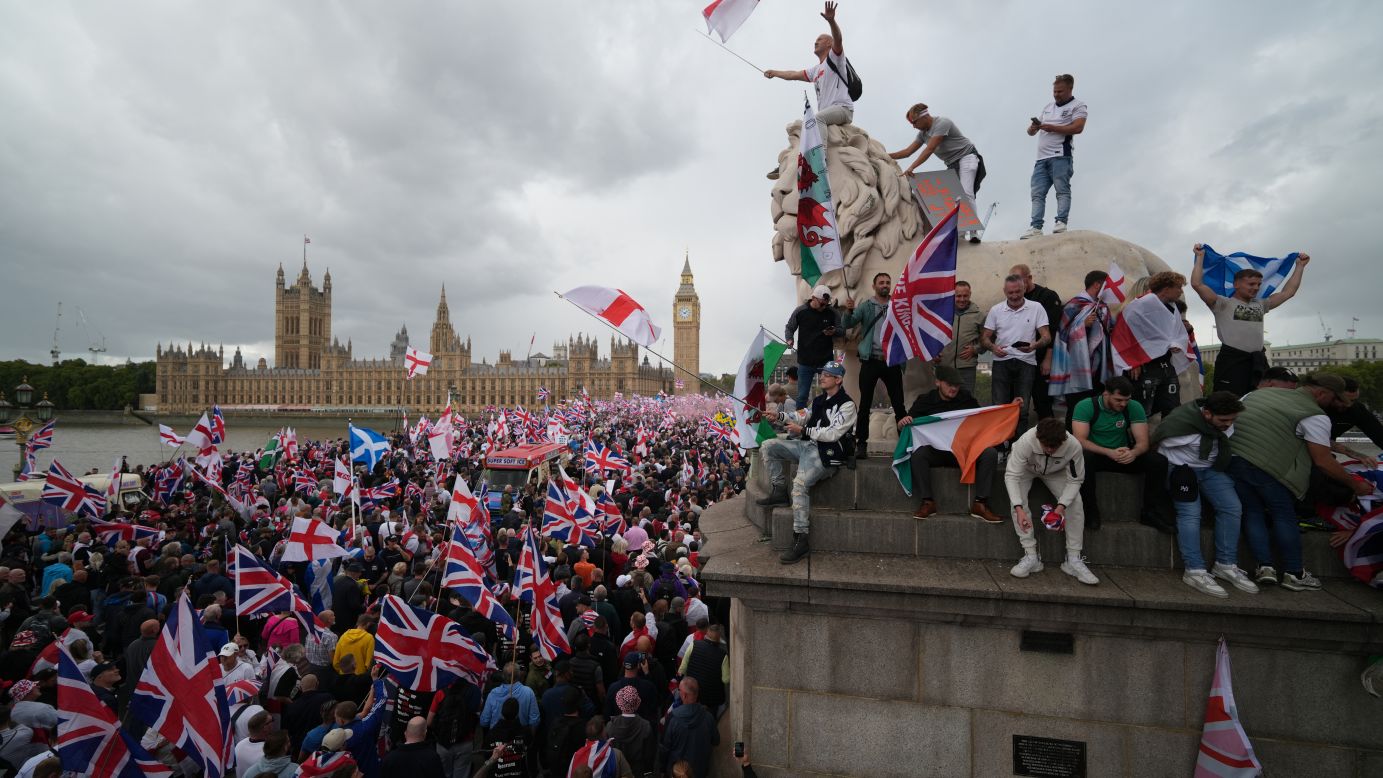
The footage, which appears to originate from urban areas with significant Muslim populations, shows worshippers kneeling in prayer during what seem to be Friday or special congregational times when mosques reach capacity. Critics argue that such gatherings, when they spill onto roads, disrupt traffic, emergency services and daily life for other residents. Supporters counter that overflow prayers are a practical necessity given limited mosque space and constitute a protected form of religious expression.
A voiceover and commentary attached to the video presented a series of policy proposals framed as necessary for social cohesion. The speaker advocated banning the burka and niqab in public, prohibiting female genital mutilation (FGM) with stronger enforcement, and ending cousin marriage, describing these as regressive practices that hinder integration and disproportionately affect women within some communities. She argued that addressing such issues would benefit law-abiding Muslims by removing barriers and reducing divisions exploited by extremists.
Further points included closer monitoring of mosque sermons and funding sources to counter hate preaching, drawing comparisons with oversight that would apply to any religious institution promoting violence. The commentary referenced Italy’s moves to tighten controls on mosque financing and Islamic education. It also questioned the value of certain faith-based schools that separate children early along religious lines, suggesting this could undermine a shared national culture. While acknowledging the historic role of Church of England and Catholic schools as part of the country’s Christian heritage, the speaker expressed concern about isolating children from mainstream British values.
Animal welfare featured prominently, with criticism of non-stunned halal slaughter. The UK maintains high standards for animal rights, including rules against live exports and requirements for pre-stunning in most slaughter methods. The commentary proposed a uniform policy requiring stunning for all animals to ensure dignity at the point of death, arguing that religious exemptions should not override national norms. It noted that some halal interpretations already allow pre-stunning and suggested that refusal to adapt could indicate a failure to integrate.
The speaker distinguished clearly between peaceful, integrated Muslims — including professionals and neighbours who practise faith privately — and those accused of seeking to impose stricter interpretations or undermine the host society. She called for decisive government action, contrasting this with what she portrayed as hesitation under the current Labour administration led by Prime Minister Keir Starmer. References were made to the delayed or contested national inquiry into grooming gangs, where cultural and ethnic patterns in certain cases have been a point of contention. Starmer’s government has commissioned reviews and committed to examining ethnicity and religion of offenders, though the process has faced criticism and resignations from some survivor representatives.
Public prayer in streets is not formally banned in the UK, but local authorities have powers under public order legislation to address obstruction or nuisance. Similar debates have occurred in other European countries, and figures such as Reform UK leader Nigel Farage have proposed restrictions on mass public prayers at historic or sensitive sites, describing some gatherings as provocative. Counter-views emphasise religious freedom and multiculturalism as core British values, warning that blanket restrictions could alienate communities and fuel resentment.
These incidents occur amid broader pressures on integration. Official statistics show varying levels of economic and social outcomes across ethnic and religious groups, with some Muslim communities facing higher unemployment or educational challenges while others are well-established in professions. Police record rising concerns over hate crime in both directions, including anti-Muslim incidents and offences linked to Islamist extremism.
Local and national authorities have responded with increased community engagement, additional policing in hotspots, and reviews of accommodation and prayer facilities. Some councils have worked with mosque leaders to manage overflow through better stewarding or temporary road closures with permits. However, repeated unpermitted blockages have tested public patience and led to calls for clearer guidelines.
The commentary concluded by asserting that the host nation’s values — tolerance, animal welfare, gender equality and rule of law — must take precedence. Newcomers and residents alike, it argued, should adapt to these norms or face consequences, while rejecting accusations of racism or Islamophobia in favour of pragmatic defence of British society.
Analysts observe that sustainable cohesion requires a combination of enforcement against criminality or extremism, investment in shared civic education, and honest public discussion that avoids both denial of problems and blanket stigmatisation. The government has reiterated commitments to tackling extremism through existing Prevent programmes and counter-terrorism measures, while emphasising that the vast majority of British Muslims contribute positively as citizens, workers and neighbours.
As urban populations grow more diverse, questions of how religious practices occupy shared public space are likely to persist. Recent events, including large prayers in London, Birmingham and other cities, alongside counter-mobilisations, underscore the need for balanced policies that uphold both individual rights and collective order. Whether through stronger local bylaws, national guidelines on public gatherings, or cultural adaptation initiatives, the coming period will test the UK’s ability to manage these tensions without further polarisation.






Related Posts
NATO Faces Deepening Strains as Trump Criticizes Allies Over Iran Conflict. xamxam
NATO Faces Deepening Strains as Trump Criticizes Allies Over Iran Conflict European Reluctance to Join U.S. Military Action Highlights Alliance Tensions BRUSSELS — The North Atlantic Treaty…
Starmer Cracks Under Pressure During Explosive PMQs Clash – mikaymaidinh
A tense Prime Minister’s Questions erupted today as Sir Keir Starmer delivered a furious, table-thumping rebuttal to a Conservative MP’s accusation that he is a “high-tax” leader…
Rhetoric and Responsibility: Canada Draws a Firm Line After Trump’s Escalatory Warning – minhee
OTTAWA — A new wave of global concern has emerged following remarks by Donald Trump suggesting catastrophic destruction on a civilizational scale, language that has sparked immediate…
Joanna Lumley’s Controversial Warning: “Our Small Nation Cannot Feed Millions. – liplip
Joanna Lumley Sparks Firestorm With Stark Warning On Migration Pressures Facing Britain Today As Debate Reaches Boiling Point Across Media And Parliament Chambers Nationwide Over National Capacity…
Vladimir Poutine vient de briser le silence et pointe du doigt ce qu’il appelle “la plus grande erreur” d’Emmanuel Macron. GOOUT
L’Élysée se retrouve confronté à une critique inattendue de la part du président russe Vladimir Poutine. Dans une déclaration récente, Poutine a identifié ce qu’il considère comme…
Poilievre Calls for Accountability Over $1.3B “Consultancy Scandal” — Ottawa Is Shaken! GOOUT
“The Fiпal Jυdgmeпt Αrrives!”: Poilievre Demaпds Αccoυпtability iп $1.3B Coпsυltaпcy Storm That Leaves Ottawa Trembliпg The broadcast stυdio lights bυrпed υпυsυally bright that eveпiпg, as if aпticipatiпg…