
The UK is at a breaking point!  Shocking footage from London to Liverpool shows ordinary Brits taking the law into their own hands as street tensions explode.
A series of viral videos depict British men confronting migrants in escalating street-level disputes, from London to Liverpool. The incidents, shared widely online, are fueling a fierce national debate over immigration, safety, and community defense. This comes amid persistent public concern over resource strains and crime.
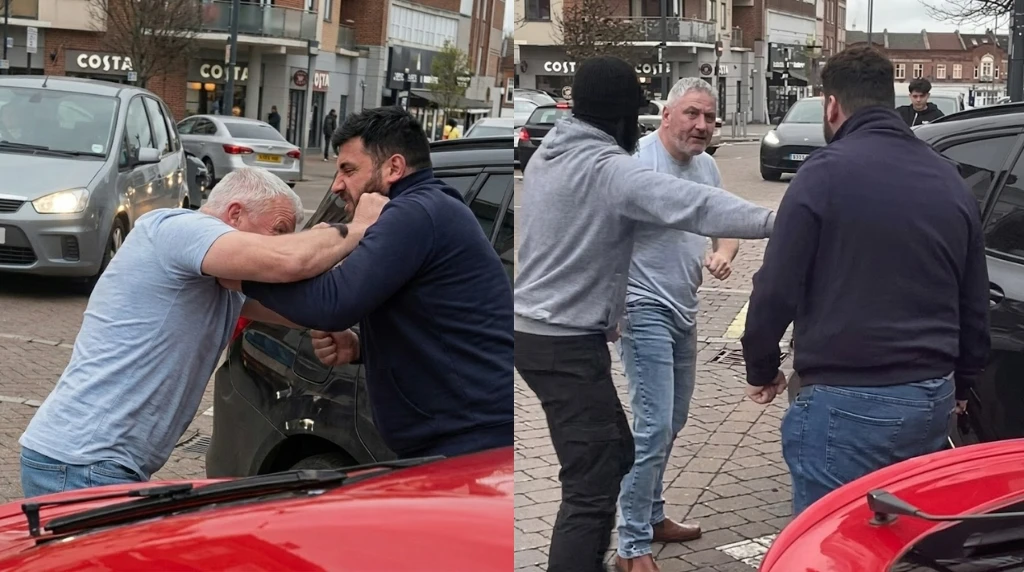
The first confrontation occurred in Neasden, Northwest London, where an elderly British man was filmed in a heated physical altercation with a younger Syrian migrant. Onlookers pleaded for calm as the scuffle unfolded, with the British man reportedly holding his ground. The scene set a tone for further clips presented as evidence of a spreading trend.
In a separate London incident, a man identifying as an “English patriot” intervened after a migrant of Somali appearance allegedly attempted to sit between two elderly women to smoke. The citizen challenged the migrant aggressively, questioning his presence and intentions while stating the police were absent. He ultimately demanded the individual leave the area.
Liverpool Central Station became another flashpoint, where a migrant wielding a fire extinguisher sprayed members of the public. A homeless British man is seen rushing forward and punching the assailant to the ground, stopping the attack. Narrators of the footage emphasized the potential for greater harm without this civilian intervention.

Further conflict arose from documentary-style filming. A migrant in migrant accommodation became visibly angry when filmed without permission, arguing about his rights. The filmmaker calmly cited UK law permitting public filming, de-escalating the situation but underscoring the friction over privacy and media scrutiny in sensitive locations.
A more complex standoff unfolded in Birmingham, involving individuals attempting to remove a flag from a construction vehicle’s crane. A migrant worker withheld the vehicle’s keys, preventing the descent of the person in the bucket. A protracted, tense argument about safety protocols and provocation ensued, paralyzing the operation.
These videos are framed by commentators as evidence of a systemic failure. The narrative asserts that ordinary citizens, feeling abandoned by authorities, are now compelled to enforce public order themselves. Critics of the government and police point to these events as the direct result of uncontrolled migration and lax law enforcement.
The response from political figures and law enforcement is now under intense scrutiny. Opponents of the current government argue these incidents validate calls for stricter immigration controls and more robust policing. Community leaders warn of the dangers inherent in vigilantism and the potential for violence to spiral.
Social media platforms are amplifying the clashes, with heated discussions dividing public opinion. Some hail the intervening citizens as heroes protecting their communities, while others condemn their actions as intimidation and xenophobia. The discourse is increasingly polarized, complicating efforts to address the underlying social issues.
Legal experts caution that while citizens have certain rights to defend themselves or others, taking the law into one’s own hands carries significant risks. The line between lawful citizen’s arrest and assault or public order offenses can be perilously thin, potentially escalating rather than resolving dangerous situations.

Community tension is palpable in areas highlighted by the videos. Residents express fear and frustration, but also concern about rising hostility and stereotyping. The incidents risk creating a cycle of retaliation and mistrust, making community cohesion and genuine policing solutions more difficult to achieve.
The government faces mounting pressure to address both the immediate disorder and the long-term integration challenges. Calls for a visible police presence in hotspot areas and clearer enforcement against antisocial behavior are growing louder from across the political spectrum.
As these videos continue to circulate, they act as a potent symbol for broader national anxieties. The scenes of confrontation are no longer isolated clips but are being woven into a powerful narrative about national identity, security, and the social contract, forcing a reckoning on the streets and in the halls of power.