
Study Finds Widespread Negative Framing of Muslims in UK Media Amid Rising Hate Crime Concerns

London — A new report by the Centre for Media Monitoring (CfMM) has raised concerns about what it describes as systemic bias in British media coverage of Muslims, warning that negative portrayals may contribute to social division as anti-Muslim hate crimes increase across the United Kingdom.
The nonprofit organisation, which tracks representation of Muslims and Islam in news reporting, said it analysed approximately 40,000 articles published by 30 media outlets. According to the findings, around 70% of the articles assessed associated Muslims or Islam with negative behaviours, themes, or social problems. The report also concluded that nearly half of all articles examined showed what it described as a “high degree of bias.”
CfMM director Rizwana Hamid described the study as the largest of its kind conducted in the UK, arguing that its findings reflect a structural issue within the country’s media ecosystem.
“When entire communities are repeatedly framed through lenses of suspicion or threat, it inevitably shapes public attitudes, political debate and the everyday lives of British Muslims,” Hamid said in a statement released alongside the report.
Background Context
The report comes amid growing concern about religious hate crimes in Britain. Government data released in recent months indicates that anti-Muslim incidents have risen significantly, with the Home Office reporting a 19% increase in hate crimes targeting Muslims during the year ending March 2025 compared with the previous reporting period.
Community groups and monitoring organisations have argued that social media misinformation, polarising political rhetoric, and inflammatory public commentary have contributed to an increasingly hostile environment. Several mosques have been targeted in recent incidents, and British Muslims, alongside other minority groups, have reported heightened anxiety about safety and public hostility.
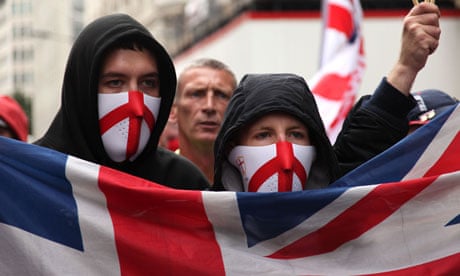
The rise in far-right political messaging has also become a key part of the wider debate. Analysts note that growing anti-immigration sentiment has created fertile ground for identity-based narratives, including claims linking Islam to national security threats or cultural decline.
Prime Minister Keir Starmer has previously warned that rising racism and division risk undermining social cohesion, describing the trend as harmful to national unity.
What the Study Found
CfMM said its analysis focused on five categories of bias: negative framing, generalisations, misrepresentations, contextual omissions, and problematic headlines.
The organisation identified a number of outlets it described as performing poorly across these categories, including The Spectator and GB News, which it labelled among the “worst across all five bias categories.” The report also cited several national newspapers as frequent sources of biased reporting, including The Telegraph, Daily Express, The Sun, Daily Mail, The Times, and the Jewish Chronicle.
The report argued that negative coverage was not random, but consistent across outlets that heavily target right-wing audiences.
At the opposite end of the scale, the report listed outlets it claimed were least likely to publish biased reporting about Muslims. These included ITV, Metro, the BBC, PA Media, The Guardian, the Associated Press, the London Evening Standard, and Sky News.
CfMM said its methodology aimed to measure patterns of portrayal rather than individual editorial decisions, suggesting that the issue is best understood as systemic rather than isolated.
Why It Matters: Media Narratives and Social Outcomes

The report argues that repeated negative framing can influence public opinion and political priorities, potentially increasing support for restrictive policies and intensifying discrimination.
“Extensive research has shown correlations between negative portrayals of Muslims and rising hate crime, employment discrimination, and support for restrictive policies,” the organisation said.
While causation remains difficult to prove directly, experts in media studies have long argued that persistent associations between minority groups and threat narratives can contribute to stereotyping and social mistrust. Critics of the current media landscape argue that the effect becomes stronger when sensational headlines circulate widely online, where audiences often engage with headlines without reading full articles.
Case Example: ‘Sharia Law’ Claims and Reporting Standards
CfMM highlighted one case study involving claims made by U.S. President Donald Trump, who alleged publicly that London was moving toward governance under “Sharia law.” The report said some outlets treated the claim as misinformation and responded with fact-checking and contextual analysis, while others framed the claim as credible or debatable.
The organisation argued that when unfounded narratives are presented as legitimate political debate, misinformation can become normalised, contributing to distrust and heightened community tensions.
“Presenting baseless claims as matters of debate normalises misinformation and fuels anti-Muslim narratives,” the report stated.
Political and Institutional Implications
The findings are likely to intensify debate over media responsibility and editorial accountability in the UK. Critics of the report may argue that press freedom includes the right to publish controversial commentary and that the public benefits from open debate on immigration, integration, and cultural policy.
Supporters of the study, however, argue that criticism of policy is distinct from framing a religious community through persistent negative generalisations. They warn that when a minority group is repeatedly linked with threat narratives, it can affect both individual security and broader national cohesion.
The issue is particularly sensitive in Britain’s current political environment, where debates over immigration and national identity remain central to electoral strategy. Observers note that media framing can influence how such debates unfold, shaping the boundaries of what is considered acceptable mainstream discourse.
Forward-Looking Analysis
The report is likely to raise renewed calls for higher editorial standards, stronger correction mechanisms, and more consistent use of contextual reporting when discussing minority communities. Some advocates may push for expanded media literacy initiatives, arguing that public resilience against misinformation is becoming as important as regulation.
However, any push toward tighter oversight may also trigger resistance from press freedom advocates who argue that government or institutional intervention risks political censorship.
For now, CfMM’s findings add new weight to a growing concern in British society: whether media narratives are reinforcing division at a time when public institutions are already struggling to manage social cohesion.
As Britain confronts rising political polarisation, the report highlights a long-term question with national significance — whether the UK media environment can maintain robust debate while avoiding repeated framing that marginalises entire communities.






Related Posts

Orbán kündigt Aufkündigung aller EU-Verträge an – Schock in Brüssel. phunhoang
Ungarns Ministerpräsident Viktor Orbán hat im ungarischen Parlament die Aufkündigung aller EU-Verträge erklärt. In einer historischen Rede sprach er von einem unwiderruflichen Schritt, der Ungarn aus der…

El Ocaso de Alejandro Eder: ¿El Fin del “Alcalde Viajero” de Cali?DB9
La capital del Valle del Cauca atraviesa uno de sus momentos más oscuros y convulsos de la historia reciente. Lo que comenzó como una promesa de “revivir…

« SÉISME AU SOMMET DE L’AUDIOVISUEL ! » — UNE POLÉMIQUE SUR LES FINANCES DE FRANCE TÉLÉVISIONS DÉCLENCHE UNE ONDE DE CHOC NATIONALE.hanghang
Une nouvelle controverse d’ampleur nationale éclate autour de la gestion des finances publiques, alimentée par des accusations spectaculaires qui circulent à grande vitesse et plongent l’opinion dans…
Reform UK is on top, but a brand-new rival has appeared out of nowhere to snatch the crown!.3232
The latest YouGov poll just dropped and it’s absolute CHAOS! 📉 Reform UK is on top, but a brand-new rival has appeared out of nowhere to snatch…

Débat sous tension : Sarah Knafo laisse les journalistes sans réponse en direct – mycay
Sarah Knafo a humilié la télévision publique en direct ! Elle a révélé la vérité cachée sur la gouvernance parisienne et a laissé les journalistes sans voix….

ROLLS-ROYCE OFFERS CANADA GRIPEN ENGINE DEAL, CHALLENGING F-35 DOMINANCE – xhs7
ROLLS-ROYCE OFFERS CANADA GRIPEN ENGINE DEAL, CHALLENGING F-35 DOMINANCE OTTAWA — On a frozen Arctic runway where temperatures plunged to 50 degrees below zero, a sleek Swedish Gripen…