

During his Middle East tour, UK Prime Minister Keir Starmer delivered a speech from Qatar outlining Britain’s diplomatic and security priorities following the ceasefire between the United States and Iran. However, his remarks were quickly met with sharp criticism from conservative media at home over the UK’s actual military capabilities.
Gulf Perspective and the Ceasefire
Speaking to reporters, Starmer said his discussions with Qatari leaders focused on the fragile nature of the current ceasefire. He emphasized that Gulf nations strongly agree the Strait of Hormuz must remain open and cannot be subject to restrictions or transit fees.
Starmer also revealed that he held a direct phone call with U.S. President Donald Trump the previous evening. The conversation centered on conveying the views of Iran’s neighboring countries and developing a “practical plan” to ensure continued navigation through the Strait of Hormuz.
He added that the UK is leading a coalition of more than 30 countries to develop both diplomatic and military responses to maintain stability in the region.
NATO Commitment and Backlash
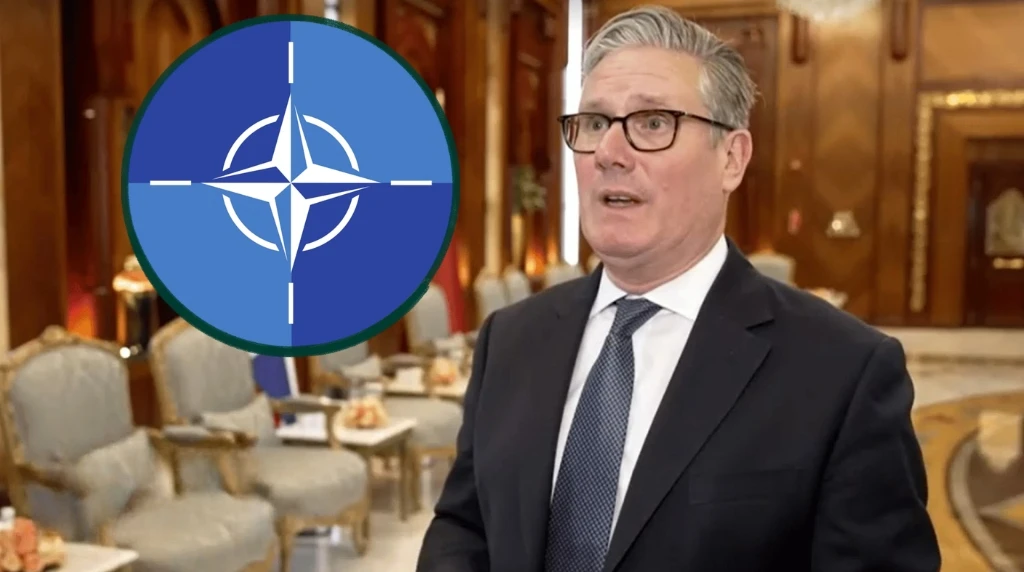
When asked about Trump’s past threats to withdraw from NATO, Starmer defended the alliance, calling it “the most effective military alliance the world has ever known.” He reaffirmed the UK’s commitment and urged European nations—including Britain—to “do more” and increase their contributions to NATO’s collective defense.
However, these comments were immediately criticized by British Stand. Right-leaning commentators accused Starmer of “throwing stones from a glass house,” arguing that he is lecturing others on defense spending while his own government is “shrinking the army and scrapping warships.”
Criticism Over UK Military Readiness
Critics pointed to recent examples to highlight what they describe as a lack of action. These include reports that the UK had to borrow a vessel from Germany to meet NATO commitments.
They also referenced the recent crisis involving Cyprus—a location with British sovereign bases—where the Royal Navy reportedly took two weeks to deploy the destroyer HMS Dragon, which then required maintenance shortly after arrival.
A Deepening Divide at Home
The situation once again underscores the deep political divide within the UK. While Starmer is attempting to strengthen Britain’s diplomatic standing internationally and reinforce the importance of NATO, he continues to face intense domestic pressure over what critics describe as the “hollowed-out” state of the UK’s armed forces after years of budget cuts.
As global tensions rise, the gap between Britain’s diplomatic ambitions and its perceived military capacity remains a central point of contention.