
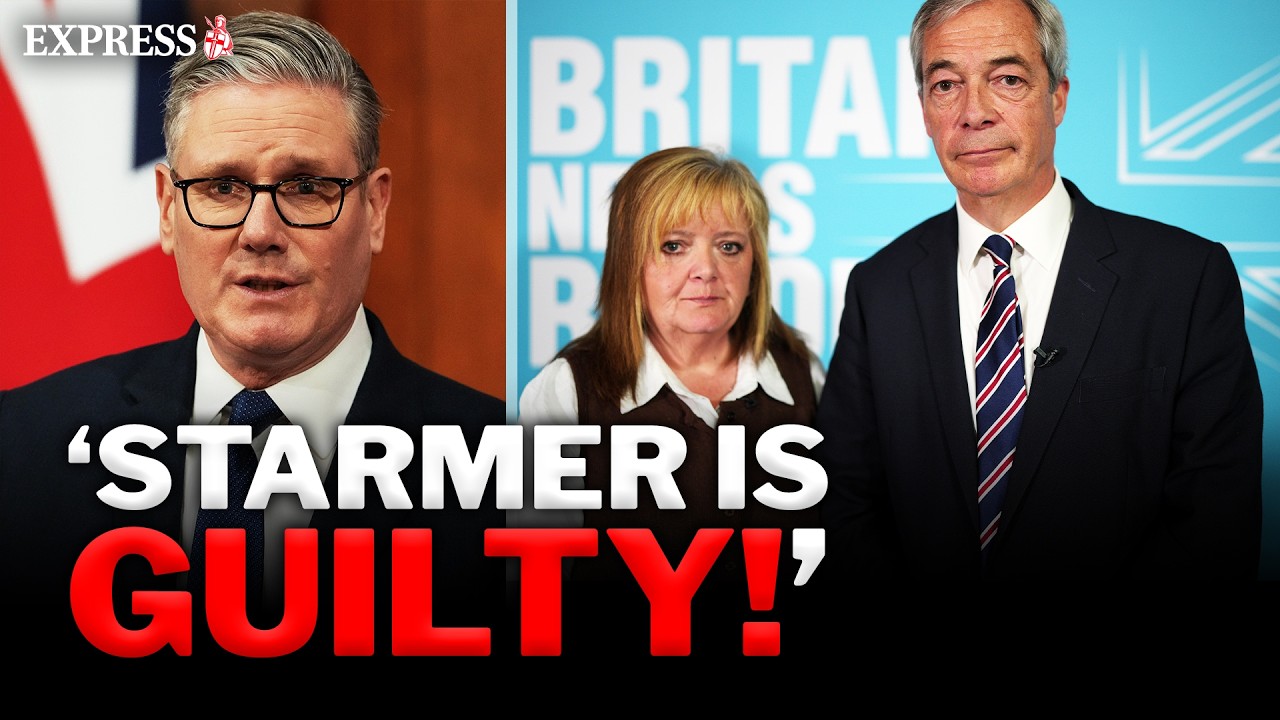
The mother of Rhiannon Whyte has publicly expressed profound grief and criticism of the UK’s approach to small boat arrivals following the murder of her 27-year-old daughter in October 2024. Siobhan Whyte spoke at a press conference organised by Reform UK, where she stood alongside party leader Nigel Farage to highlight perceived failures in migration policy under both the previous Conservative administration and the current Labour government led by Sir Keir Starmer.
Rhiannon Whyte, a hotel worker and mother-of-one, was attacked at Bescot Stadium railway station in Walsall after finishing her shift at the Park Inn by Radisson Hotel. The perpetrator, Deng Chol Majek, a Sudanese national, followed her from the hotel where he was being housed as an asylum claimant. He stabbed her 23 times with a screwdriver in a frenzied assault lasting around 90 seconds. Whyte died in hospital three days later.
In January 2026, Majek was sentenced at Coventry Crown Court to life imprisonment with a minimum term of 29 years. The court heard he had arrived in the UK via small boat less than three months prior to the attack and claimed asylum in July 2024. No clear motive was established for the killing, though CCTV footage captured Majek following the victim and later seen laughing and dancing shortly after the incident.
During the press conference, Farage stated that ultimate responsibility for such incidents lies with the British government for failing to halt irregular crossings despite public demand. He referenced promises by the previous administration to stop the boats and the current government’s commitment to dismantle smuggling gangs. Siobhan Whyte directly attributed responsibility to Starmer and the government when prompted.
The case has drawn attention to the use of hotels for housing asylum seekers, with the Park Inn serving that purpose at the time. Official statistics indicate that thousands of individuals have been accommodated in such facilities while claims are processed, contributing to significant public expenditure estimated in the billions annually.
Successive governments have faced challenges in managing channel crossings. Small boat arrivals reached record levels in some recent years before showing fluctuations. The previous Conservative government introduced the Rwanda deportation scheme, which aimed to deter crossings but encountered legal and operational hurdles before being scrapped by the incoming Labour administration in 2024.
The current government has prioritised international cooperation to target smuggling networks, increased returns agreements with certain countries and accelerated asylum processing. Ministers have argued that these measures represent a more humane and effective strategy than previous deterrent-focused policies, while emphasising that the vast majority of arrivals claim asylum legitimately under international conventions.
Critics, including Reform UK, maintain that the lack of swift removals for failed claimants and the continued flow of crossings signal policy shortcomings. They point to the speed with which Majek entered the country and was accommodated as evidence of inadequate vetting or risk assessment in the asylum system.
The family of Rhiannon Whyte described the perpetrator in court statements as demonic and inhuman, expressing devastation at the loss of a young woman who was simply going about her daily work. Siobhan Whyte has questioned when further tragedies might occur if systemic issues remain unaddressed.

Broader context includes ongoing parliamentary and public debate over border security. Official data from the Home Office shows varying monthly small boat arrivals, with efforts focused on disrupting criminal networks operating from northern France. The government has reported some successes in seizures and arrests but acknowledges the challenge of a global migration phenomenon influenced by conflict, poverty and people-smuggling operations.
Reform UK has positioned the case within its wider campaign on immigration control, arguing for measures such as immediate returns, offshore processing and tighter legal frameworks. Farage has used the platform to call for a fundamental reset of policy, suggesting that current approaches leave communities vulnerable.
The Labour government has responded to such criticisms by stressing the complexity of the issue, including legal obligations under the Refugee Convention and the European Convention on Human Rights. Officials note that individual criminal acts by asylum claimants, while tragic, do not reflect the overall cohort, many of whom are later granted protection or contribute to society.
Nevertheless, high-profile cases continue to fuel public concern. Polling consistently shows immigration ranking among the top issues for voters, with particular anxiety around irregular entries and their management.
The Walsall incident also highlights operational aspects of asylum accommodation. Hotels have been used as a temporary measure due to pressures on housing stock and dispersal systems. The government has signalled intentions to reduce reliance on such expensive options through faster decision-making and alternative sites, though progress has been incremental.
Legal proceedings against Majek concluded with a life sentence, underscoring the justice system’s response to the crime itself. The judge described the attack as sadistic, bringing devastation to the victim’s family. Majek’s defence included claims about his age and background, which were contested.
Siobhan Whyte’s participation in the Reform event marks a visible alignment between a grieving family and political advocacy for stricter controls. Such moments often amplify calls for policy review, even as authorities maintain that sweeping changes risk undermining humanitarian principles.

In the wider landscape, the Home Office continues to process backlogs of asylum claims, with recent efforts aimed at clearing older cases. Returns to countries of origin remain limited for certain nationalities due to diplomatic and safety considerations, including Sudan, where ongoing conflict complicates removals.
The case has prompted renewed questions in Parliament about risk assessments for individuals housed in community settings and the speed of claim determinations. Ministers have defended the system’s integrity while acknowledging the need for continual improvement.
For the family, the focus remains on honouring Rhiannon Whyte’s memory and seeking assurances that lessons are learned to prevent similar losses. Public discourse around the tragedy reflects deeper societal divisions on migration: balancing compassion for those fleeing danger with the imperative to maintain secure borders and protect residents.
As political parties prepare for future electoral tests, including local and potential general election cycles, the handling of small boat arrivals and associated incidents is expected to feature prominently. The government maintains that its strategy of smashing the gangs through international partnerships offers the most sustainable path forward.
Reform UK counters that only decisive domestic action, including potential legislative overrides of international obligations, can deliver the control demanded by many citizens. The press conference served to keep these arguments in the spotlight.
Ultimately, the murder of Rhiannon Whyte represents a profound personal tragedy for her loved ones and a policy challenge for the state. While the perpetrator has been held accountable through the courts, the surrounding debate on migration governance continues without easy resolution.
Authorities stress that every effort is made to safeguard the public while fulfilling legal duties. Families affected by such crimes, however, often perceive a gap between stated intentions and lived outcomes.
The coming months may see further announcements on border measures, asylum reform or returns agreements, each likely to be scrutinised against cases that capture national attention.
In a democracy, such high-visibility interventions by families and political figures play a role in shaping priorities, even as detailed policymaking occurs through established channels and evidence-based analysis.
The story of Rhiannon Whyte underscores the human cost when systems intersect with individual actions, prompting reflection on how best to prevent future harm while upholding broader principles.






Related Posts
Scandale Sur Le Service Public : Patrick Sébastien Lâche Une Bombe Sur Les Pratiques De France Télévisions Et Les Marges De Nagui.T.F
Scandale Sur Le Service Public : Patrick Sébastien Lâche Une Bombe Sur Les Pratiques De France Télévisions Et Les Marges De Nagui L’univers feutré et souvent opaque…

Betrayal of the Elite: SAS Veterans and Top Generals Launch Fierce Rebellion Against Starmer’s “Show Trials” – mycay
The bond between the British Crown and its most elite warriors is facing an unprecedented rupture. In a move that has sparked fury across the military establishment,…

🚨 Mark Carney SHUTS DOWN Trump’s “America First” Agenda LIVE 🇨🇦🇺🇸 — A Dramatic Clash That Turns Into One of the Biggest Political Backfires of 2026!!! 😳🔥chitam
The Resurgent North: How Trump’s Pressure Campaign Built a Canadian Majority OTTAWA — For the better part of a year, the political oxygen in the Canadian capital…

The 9-Minute Reset: How Mark Carney’s “Arctic Clause” Outmaneuvered Washington-liplip
At 9:41 a.m. Eastern time, the world of international finance shifted on its axis, not with a bang, but with a measured, nine-minute address from Ottawa. Standing…

„Die deutsche Politik kann alles von Milei lernen“ – Energieexperte Fritz Vahrenholt und Ulrich Reitz rechnen mit der Bundesregierung ab. phunhoang
Berlin – Javier Milei hat Argentinien mit radikaler Marktwirtschaftspolitik in kürzester Zeit spürbar verändert. Zum ersten Mal seit 123 Jahren erzielt das Land einen Haushaltsüberschuss, die Armutsrate…

Diplomatischer Eklat in Budapest: Peter Magyar beleidigt Staatspräsident Tamás Sulyok und fordert dessen sofortigen Rücktritt. phunhoang
Budapest – Nur wenige Tage nach seinem Wahlsieg hat der designierte ungarische Ministerpräsident Peter Magyar für einen schweren diplomatischen Zwischenfall gesorgt. Bei einem offiziellen Besuch im Präsidentenpalast…