

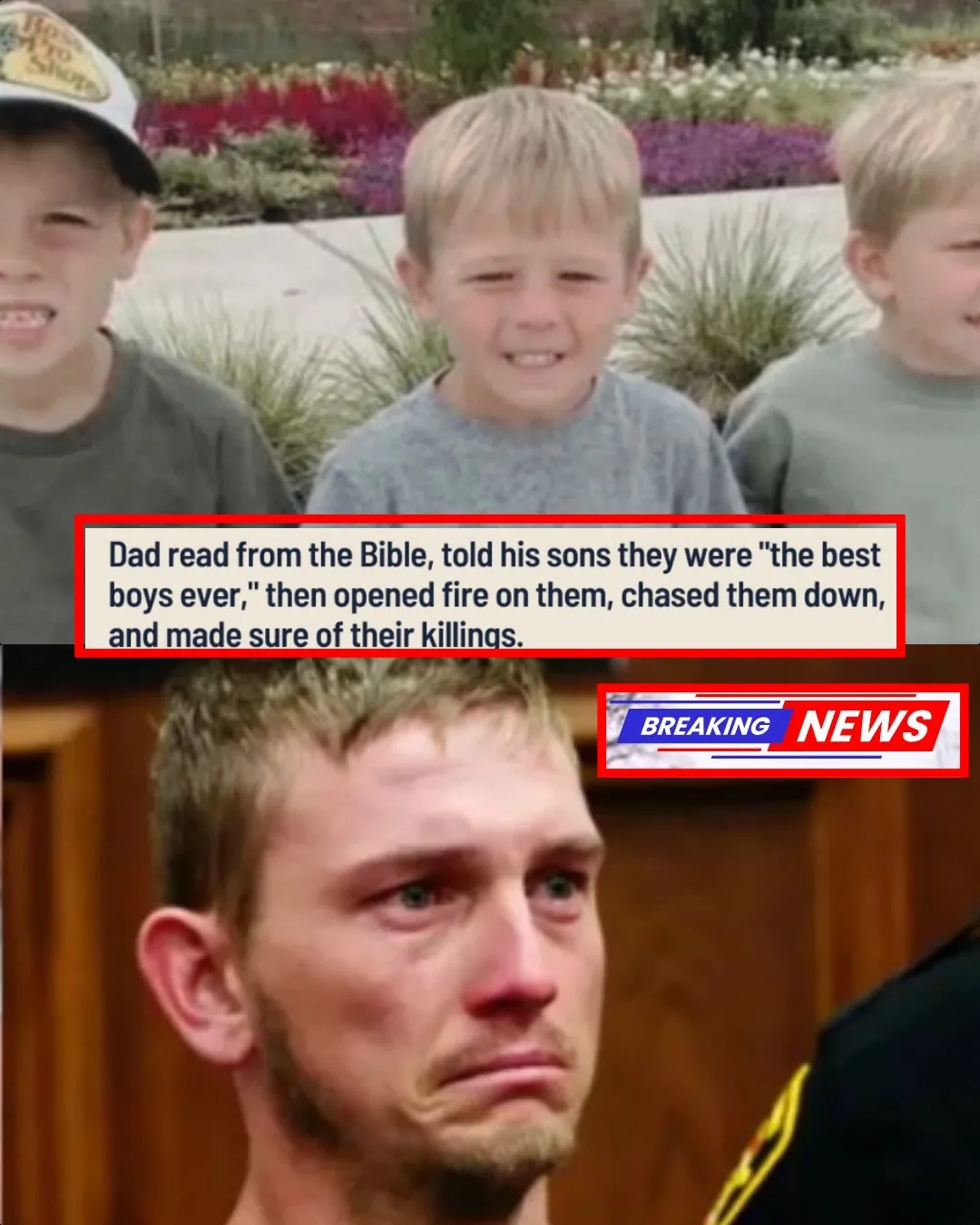
Chad Doerman, a 32-year-old father, lived in the home with his wife and their blended family. To outsiders, he appeared unremarkable—soft-spoken, reserved, and deeply religious. Inside the home, however, something was unraveling. Investigators would later describe the events of that day as calculated, prolonged, and marked by moments when the violence could have been stopped, but was not.
In the hours leading up to the killings, Doerman’s behavior began to alarm his wife. According to court records and police statements, he was seen pacing the house, holding a Bible, and muttering phrases that made little sense. One statement stood out to investigators: “Chad knows what’s right.” The repetition of this phrase suggested a mindset increasingly detached from reality.
At one point, Doerman began accessing the family’s gun safe, which was located in the master bedroom. His wife noticed immediately and confronted him. She told police she felt frightened by his actions and told him she would contact his parents because she did not feel safe. This moment would later be scrutinized closely, as it marked a clear warning sign and an opportunity for intervention.
In response, Doerman abruptly changed his demeanor. He told his wife he was “just kidding,” attempting to dismiss her fears. He then lay down in the master bedroom, creating the impression that the crisis had passed. His wife and one of their sons joined him, believing the tension had eased.
Moments later, that illusion collapsed. Without warning, Doerman retrieved the firearm and shot his son at close range. The shock of the act sent his wife into immediate panic. She fled the room and called 911, leaving the line open as she screamed for her children to run.
The open emergency call captured the terror that followed. Her voice, frantic and breaking, could be heard urging the children to escape. Chaos erupted inside the home as the remaining children scattered in fear, attempting to flee from a danger they could not comprehend.
Two of Doerman’s sons, Clayton, age seven, and Hunter, age four, ran outside, believing distance might protect them. Chase, just three years old, followed. But safety did not come. According to investigators, Doerman pursued them, chasing his sons down with the rifle.
What happened next unfolded over several minutes, a fact that deeply disturbed both law enforcement and the public. Each child was hunted, caught, and shot. The weapon—a .22 caliber rifle—required deliberate action for each round fired, leaving no doubt about the intentional nature of the killings.
Deputies responding to the 911 call arrived at the scene to find Doerman sitting calmly on the front steps of the house. The rifle was beside him. He did not attempt to flee. He did not resist arrest. According to the sheriff’s department, his demeanor was eerily composed, standing in stark contrast to the horror surrounding him.
All three boys were pronounced dead at the scene. Their mother was injured, reportedly while attempting to intervene during the attack. Her injuries were not life-threatening, but the emotional trauma was incalculable.
As the investigation unfolded, authorities pieced together a timeline that revealed chilling intent. Prosecutors emphasized that Doerman had multiple opportunities to stop. Instead, he chose to continue. The pursuit of the children outside the home became a central element in the case, demonstrating forethought rather than impulse.
Doerman was formally indicted on a sweeping list of charges: nine counts of aggravated murder, eight counts of kidnapping, and four counts of felonious assault. The kidnapping charges stemmed from the act of restraining and pursuing the children before killing them, a legal distinction that underscored the brutality of the events.
Early in the proceedings, Doerman entered a plea of not guilty by reason of insanity. His defense argued that severe mental illness rendered him incapable of understanding the wrongfulness of his actions at the time. This claim prompted extensive psychological evaluations and expert testimony.
Mental health professionals examined Doerman’s history, including reports of depression, paranoia, and religious fixation. While some experts acknowledged signs of mental instability, prosecutors argued that his actions showed planning, awareness, and control—elements inconsistent with legal insanity.
The case drew national attention, reigniting debates about mental health, firearm access, and the limits of the insanity defense. Many questioned how someone displaying visible warning signs was able to access a weapon and carry out such an act without interruption.
In August 2024, the case reached its conclusion. Doerman ultimately admitted to three counts of aggravated murder and two counts of felonious assault. In exchange, prosecutors dropped the remaining charges, though the sentence would still reflect the severity of the crimes.
The judge sentenced Doerman to three consecutive life sentences without the possibility of parole. The ruling ensured he would spend the remainder of his life in prison, with no chance of release. In delivering the sentence, the court emphasized the deliberate nature of the killings and the irreversible harm caused.
Family members of the victims addressed the court, speaking of lives stolen before they had truly begun. They described Clayton’s curiosity, Hunter’s laughter, and Chase’s innocence. Their words painted a picture of children who were loved, vibrant, and completely unaware of the danger that awaited them.
The community of Monroe Township mourned collectively. Vigils were held. Toys and flowers lined the streets near the home. Schools offered counseling. For many residents, the tragedy permanently altered their sense of safety and trust.
Beyond the courtroom, the case left unanswered questions. Could earlier intervention have prevented the killings? Were warning signs missed or dismissed? What responsibility does society hold when mental health crises escalate behind closed doors?
The Doerman case stands as a haunting example of how quickly ordinary life can collapse into irreversible loss. It exposed the devastating intersection of untreated mental illness, access to weapons, and moments when fear was recognized but not acted upon decisively enough.
For the mother who survived, life will forever be divided into before and after. For the community, the memory of three small boys running for their lives will never fade. And for the justice system, the case remains a stark reminder that even the harshest sentences cannot undo what was lost.
Long after the headlines fade, the story of Clayton, Hunter, and Chase continues to echo—raising painful questions about prevention, responsibility, and whether the signs that preceded their deaths will be recognized sooner the next time warning turns into tragedy.