
The evening shift at the Chili’s restaurant in Florida had begun like countless others—busy, loud, and filled with the familiar rhythm of clinking glasses and hurried footsteps. For the server at the center of this controversy, it was just another night of juggling tables, smiling through complaints, and following the procedures he had been trained to follow. By the end of the night, however, his decision to act on what he believed was a serious safety risk would cost him his job and ignite a debate about responsibility, liability, and the role service workers play when alcohol and public safety intersect.
According to the former server, who later shared his story online under the username @powerupmyah, the situation began when two adult women arrived at the restaurant with a group of seven children. The party was large, noisy, and immediately demanding, he said, expressing frustration about wait times and service while ordering alcoholic drinks. From his perspective behind the bar and on the floor, the adults’ behavior quickly stood out.
As the evening progressed, the server claims he noticed one of the women drinking heavily. He described her demeanor as increasingly loud, unsteady, and confrontational. In his retelling, she appeared far beyond what he considered a reasonable level of intoxication. “She’s good and drunk,” he later said in a video recounting the events. “Real intoxicated. She had herself a good little time at Chili’s.”
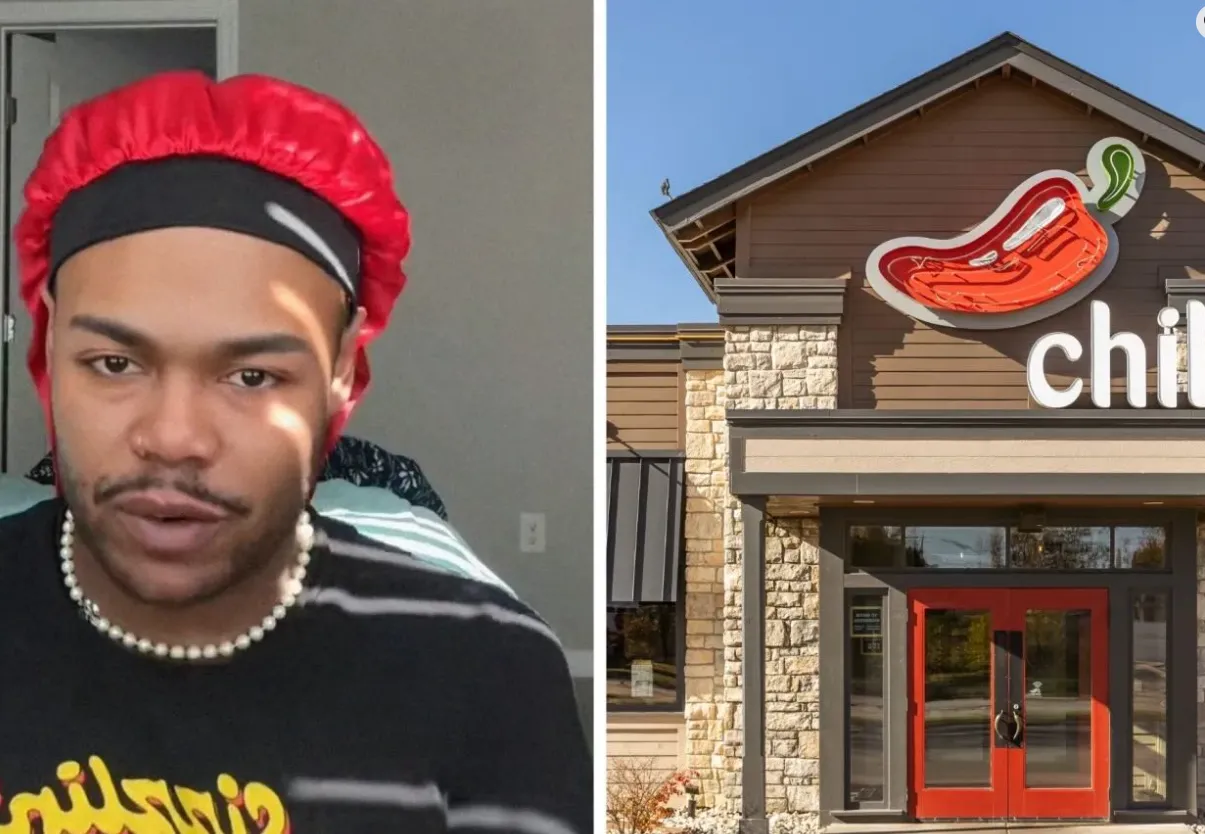
The server says he did not take the situation lightly. Only weeks earlier, Chili’s had required him to complete alcohol service safety training—a course designed to teach staff how to identify intoxication, limit service when necessary, and understand the potential legal consequences if a visibly impaired guest were allowed to drive. According to him, the training emphasized that restaurants could be held liable if staff knowingly allowed an intoxicated person to leave and drive, especially when others were put at risk.
Near closing time, the group gathered their belongings and headed toward the parking lot. It was there, the server says, that his concern escalated into alarm. From inside the restaurant, he watched through the windows as one of the women stumbled, yelled at the children, and began loading them into a minivan. To him, the scene was chaotic and frightening—seven children being placed into a vehicle by someone he believed was clearly impaired.
“Oh no,” he recalls thinking. “She’s drunk. She’s about to go drive seven children home.” In that moment, he says, his training and instincts collided. He felt he had a responsibility not only as an employee, but as a human being, to prevent what he believed could become a tragedy on the road.
The server made a decision that would change everything. He called 911 and reported a suspected intoxicated driver preparing to leave the Chili’s parking lot with seven children in her vehicle. He provided a description of the van, the adults involved, and the situation as he understood it. In his view, the call was not an act of malice or overreaction, but an attempt to protect lives.
Police arrived quickly. According to the server’s account, officers surrounded the minivan and spoke with the adults while the children remained inside. The scene drew attention from nearby staff and patrons, turning the quiet close of business into a tense and public encounter with law enforcement.
After speaking with the women, officers ultimately allowed the group to leave—but not before arranging for a different, sober driver to take over. To the server, this outcome validated his concerns. In his mind, the police response confirmed that there had been enough risk to warrant intervention, and that his call had potentially prevented a dangerous situation.
Believing he had done the right thing, the server returned to work and continued with his shift. He documented the incident, as he says he had been instructed to do under company policy, and informed management of what had occurred. At that point, he did not anticipate any negative consequences for himself.
Hours later, however, his perspective changed dramatically. According to the server, his general manager called him in and informed him that his employment was being terminated. The reason, he claims, was directly tied to his decision to call 911. The dismissal came swiftly, leaving him stunned and confused.
“I did exactly what that training told us to do,” he later said. “And I got fired for it.” In his telling, the contradiction between corporate training and real-world consequences was stark. On one hand, employees were warned about liability and encouraged to take action if a guest was intoxicated. On the other, he says, he was punished for acting on that guidance.
The firing prompted the server to take his story public. In a series of videos posted online, he described the incident in detail, expressing frustration and disbelief. His account quickly gained traction, drawing comments from fellow service workers, parents, and legal observers who weighed in on both sides of the issue.
Many service industry employees expressed support, saying they had long felt caught between company policies and management expectations. Some shared stories of being pressured to keep customers happy, even when alcohol consumption crossed into dangerous territory. To them, the server’s experience reflected a broader problem within the restaurant industry.
Others questioned whether the server may have misjudged the situation or acted outside the scope of his role. They argued that calling law enforcement could escalate situations unnecessarily and potentially put guests at risk of public embarrassment or legal trouble without clear evidence of wrongdoing. The debate quickly grew complex and emotional.
At the center of the controversy lies a fundamental question: what responsibility do restaurant employees have once a customer leaves the building? Alcohol safety training often stresses vigilance, but the line between responsible action and overreach can be blurry. The server insists that the presence of seven children made the situation unmistakably urgent.
Legal experts note that dram shop laws and alcohol liability statutes vary by state, but many do impose responsibility on establishments that knowingly serve intoxicated patrons. In that context, employees are often told to err on the side of caution. Yet enforcement of these principles can clash with business interests and customer relations.

Chili’s corporate parent has not publicly responded to the server’s specific allegations. Without an official statement, it remains unclear whether the firing was directly related to the 911 call or whether management cited other factors. The lack of transparency has only fueled speculation and public interest.
For the former server, the experience has left him disillusioned. He says he believed he was protecting children and following company policy, only to be treated as a liability himself. Losing his job, he says, felt like punishment for choosing safety over silence.
The incident has also sparked conversations among parents, many of whom expressed gratitude that someone might intervene if their children were ever in danger on the road. Others worried about the potential for misunderstandings and the impact of police involvement in situations that may not be as clear-cut as they appear.
As the story continues to circulate online, it highlights the uneasy balance between corporate policy, employee judgment, and public safety. Service workers are often placed in positions where they must make split-second decisions with limited information, knowing that any choice could carry serious consequences.
Ultimately, the case raises uncomfortable questions about how much responsibility society places on frontline workers—and how much support they receive when they act. For one former Chili’s server, a single phone call made out of concern has become a defining moment, one that cost him his job but, in his view, upheld his conscience.
Whether the incident leads to policy changes or remains a cautionary tale depends on how companies, lawmakers, and the public interpret its lessons. What is clear is that the intersection of alcohol, responsibility, and child safety remains a deeply sensitive issue—one where the stakes can be measured not just in jobs or lawsuits, but in human lives.
For now, the former server’s story stands as a reminder of the difficult choices faced by workers every day, choices made in moments of uncertainty, where doing what feels right may come at a personal cost.