
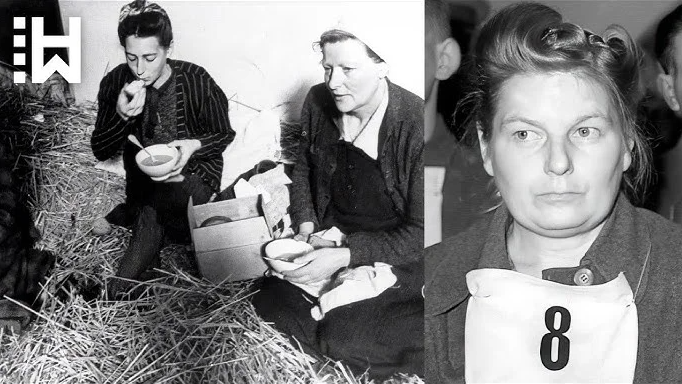
The Holocaust remains one of the darkest chapters in human history, defined by extreme persecution and mass suffering. Among the many people who worked within the Nazi camp system, Herta Ehlert (born Herta Liess, March 26, 1905) is often discussed because her record is disputed and raises difficult questions about responsibility, coercion, and choice. She served as a female guard (Aufseherin) in several concentration camps, including Ravensbrück, Majdanek, Auschwitz, and Bergen-Belsen. This article summarizes her background, her wartime postings, her trial, and what is known about her later life in a clear, non-sensational way.
Early life and entry into camp service
Before World War II, Ehlert worked as an assistant baker. On November 15, 1939, she entered SS-related service through the Labor Office system. In later statements, she described herself as assigned rather than volunteering, portraying her role as compulsory. Her first posting was Ravensbrück, a women’s concentration camp, where she began in lower-level duties and later supervised work details.
Ehlert’s claim that she was consistently punished for being “too lenient” has been challenged by other accounts. For example, transfers and improved conditions reported in connection with later assignments are sometimes cited as inconsistent with a narrative of constant reprimand. This gap between self-description and other records is central to why her case remains controversial.
Postings and reported conduct in the camps
Over the course of the war, Ehlert served at multiple camps. Each transfer placed her in settings defined by harsh control, deprivation, and routine abuse of prisoners.
At Majdanek (from 1942), Ehlert later claimed her transfer was disciplinary. However, testimonies and later trial discussions have been used to argue the move may not have been a punishment in the way she suggested.
By 1944, she was at Płaszów (near Kraków). Survivor testimony presented after the war described her as a strict and intimidating guard, associated with harsh supervision and intrusive searches for valuables. These descriptions contrast strongly with Ehlert’s later efforts to present herself as restrained or humane, and they have shaped how historians and readers interpret her role.
Ehlert later worked in Auschwitz and the Rajsko subcamp, supervising women’s labor details. Her final posting was Bergen-Belsen, where she served in a senior supporting role under well-known camp staff as conditions collapsed near the end of the war. Bergen-Belsen became notorious for catastrophic overcrowding and mass death from starvation and disease as the conflict ended.
The Belsen Trial and sentencing
After the liberation of Bergen-Belsen in 1945, British authorities arrested Ehlert and prosecuted her in the Belsen Trial. In court, she denied many accusations, including theft and direct participation in extreme violence. The tribunal convicted her for crimes connected to Bergen-Belsen, while she was not convicted for charges linked to Auschwitz. She received a 15-year prison sentence, later reduced to 12 years, and was released early on May 7, 1953.
Her case illustrates the legal and evidentiary difficulties of post-war prosecutions: many defendants held meaningful authority within an abusive system, yet specific acts could be difficult to prove in court years later, especially when records were incomplete and testimonies varied.
Later life and legacy
After prison, Ehlert remarried and lived under the name Herta Naumann. She died on April 4, 1997, aged 92. The fact that many former camp personnel returned to ordinary life has remained a painful aspect of Holocaust history for survivors, families, and scholars.
Herta Ehlert’s story is often discussed not to sensationalize her, but to understand how persecution systems functioned through thousands of individuals—some coerced, some compliant, some opportunistic, and many claiming innocence after the fact. Reviewing such cases carefully is part of how we confront historical responsibility and reinforce the need to protect human rights and prevent future atrocities.