
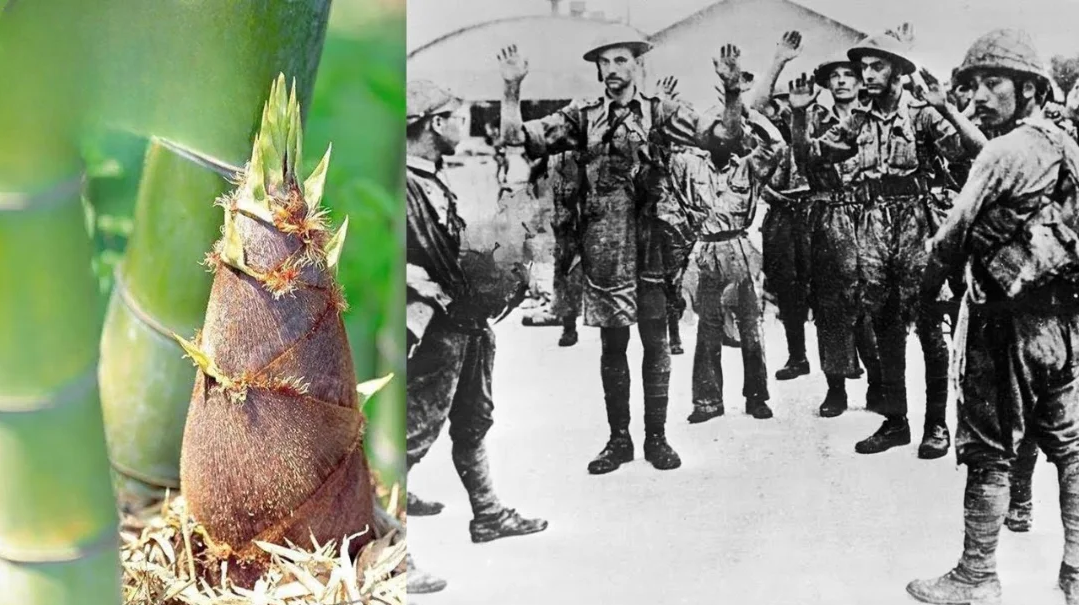
Content note: This article refers to a widely repeated historical claim involving torture and execution in wartime contexts. It is presented for educational purposes and source evaluation, and avoids graphic detail. It does not endorse or justify violence, torture, or extremism.
“Bamboo Torture” — Documented History or a Popular Legend? An Analysis of Credibility
“Bamboo torture” is a story that circulates widely in popular culture. In the most common version, it is described as an exceptionally painful method of execution linked to the rapid growth of bamboo. Because of its sensational and unusual premise, the story appears in television programs, films, and online articles, leading many people to assume it was widely practiced in history.
However, when examined through reliable sources and historical method (primary documents, legal records, medical–forensic evidence, and corroborated testimony), the claim becomes far less certain. So is “bamboo torture” a verified historical practice, or mainly a legend amplified by wartime propaganda and cultural stereotypes?
This analysis considers: early references, biological plausibility, the strength of historical evidence (especially regarding World War II), and why the story remains so persistent.
Origins and early descriptions
Some 19th-century travelogues and memoirs include second-hand references to punishments involving plant sprouts (similar to bamboo or palms). These accounts often rely on indirect observation or local hearsay during periods of conflict and repression. While they can be useful for cultural context, they typically lack independent verification (administrative records, court documents, medical files, multiple matching witnesses). For that reason, they are weak foundations for concluding that this was a systematic or widespread execution method.
Biological plausibility and modern testing
Bamboo is among the fastest-growing plants under suitable conditions. Some entertainment-oriented experiments have tested whether bamboo shoots can exert physical force over time in tissue-like materials. The takeaway is usually that, mechanically, bamboo can generate meaningful pressure as it grows.
But “physical plausibility” is not the same as “historical proof.” For such a scenario to occur as popularly described, many difficult conditions would need to be maintained, and it would likely leave clear traces in medical records, witness testimony, or legal documentation—evidence that is rarely found in serious historical research.
Links to World War II and claims about Japanese forces
The bamboo torture story is sometimes tied to claims that Japanese forces used it against Allied prisoners in Southeast Asia during World War II. It is true that wartime abuses against prisoners have been extensively documented across many theaters of the war.
Yet for bamboo torture specifically, a key problem remains: the lack of strong primary evidence to confirm real, systematic use. In archives that otherwise document wartime crimes in great detail (investigations, trial testimonies, official reports, academic studies), the absence of solid documentation for this particular method is notable. As a result, many historical discussions treat it as wartime folklore or a claim amplified beyond the available evidence.
Possible reasons the story became “attached” or expanded include:
-
Wartime propaganda portraying the enemy as “barbaric” or “exotic.”
-
Cultural stereotypes that encourage lurid, mysterious narratives about Asia.
-
Confusion with other documented abuses that were later misdescribed or embellished.
Why the story persists
“Bamboo torture” endures because:
-
It has strong symbolic power: “nature” becomes the instrument of harm over time.
-
It feels “plausible”: bamboo really can grow quickly, making the rest easier to believe.
-
Films, TV, and social media reward shocking content more than careful verification.
Educationally, the story is a useful case study in how wartime legends form and spread—often starting with a small kernel of truth (bamboo’s growth rate) and growing into a widely accepted “fact” through repetition.
Conclusion
“Bamboo torture” is a disturbing concept often presented as historical fact. But judged by standards of historical evidence, it lacks strong, credible primary documentation to support claims of widespread or systematic use—especially in the World War II context. It is therefore more likely a legend or an embellished claim, strengthened by propaganda and popular media.
Distinguishing verified crimes from unproven stories is not about minimizing history. It is about protecting the integrity of historical memory—and focusing attention on preventing and condemning documented forms of torture and abuse.
References (for cross-checking):
Wikipedia: “Bamboo torture” (review the citations listed there).
All That’s Interesting: article on “Bamboo Torture” (updated 11/2025).
BBC WW2 People’s War archive: selected personal recollections/discussions (2005).
MythBusters (2008): an experiment related to bamboo growth in simulated materials.
Synthesized discussions from r/AskHistorians and academic perspectives noting the lack of primary evidence.