
CONTENT WARNING: This post discusses war crimes, crimes against humanity, and post-war trials. It is shared for historical education and in remembrance of victims.
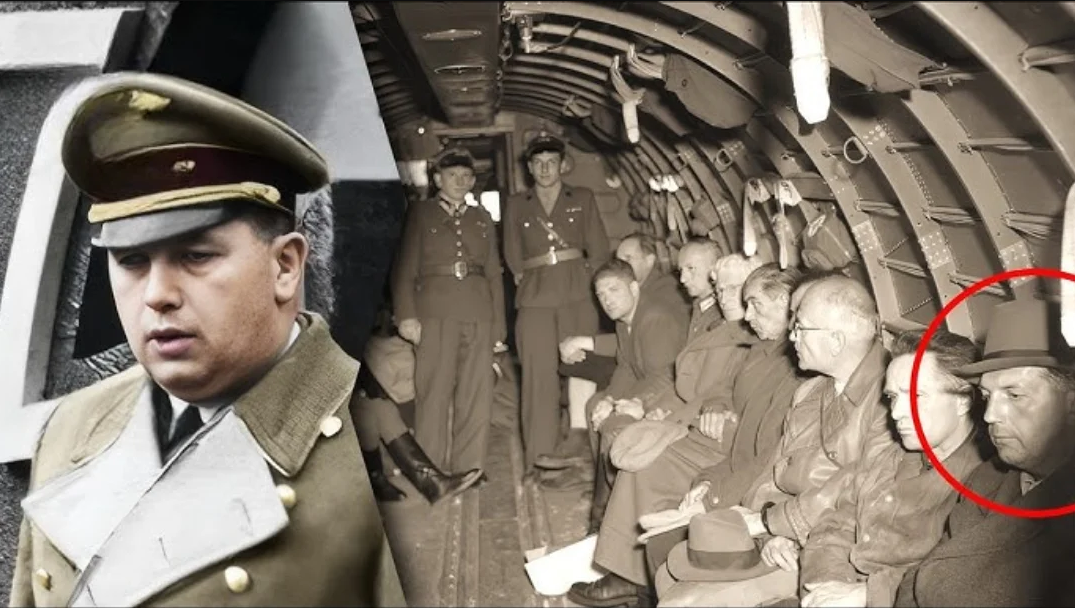
Josef Bühler – A Senior Official and the Paperwork of Persecution
Not every participant in Nazi persecution was a front-line soldier. Many crucial decisions were implemented through offices, decrees, and administrative orders. Josef Bühler (1904–1948) was a high-ranking official whose work helped translate ideology into policy.
Born in Bavaria and trained as a lawyer, Bühler rose quickly after 1933 and became a close deputy to Hans Frank, the Governor-General of occupied Poland (the “General Government”). From 1940 onward, as State Secretary, he played a central administrative role in measures that targeted Jewish communities and other persecuted groups, including segregation, forced labor, ghettoization, and deportations.
On January 20, 1942, Bühler attended the Wannsee Conference, where leading officials coordinated plans for the mass deportation and murder of Europe’s Jews. During the meeting, he urged that the operation begin as soon as possible in the General Government, arguing that it could be carried out there without major logistical obstacles.
After the war, Bühler was captured and later tried in Poland. He presented himself as a subordinate “following orders,” but the court cited documents and testimony indicating he held significant responsibility in the administration of occupation policies.
In 1948, in Kraków—where he had once worked as a senior official—Bühler was convicted by Poland’s Supreme National Tribunal of war crimes and crimes against humanity. He was sentenced to death, and the sentence was carried out that same year.
His case is a reminder that mass atrocities can depend not only on violence in the field, but also on decisions made in offices—when officials choose to use the power of government to harm entire communities.
Today, we remember the victims of Nazi occupation in the General Government and across Europe, and we honor their memory through historical truth and vigilance against hatred and authoritarianism.